


Welcome to Hall Pass, a newsletter written to keep you plugged into the conversations driving school board governance, the politics surrounding it, and education policy.
In today’s edition, you’ll find:
- On the issues: The debate over technology in the classroom
- School board filing deadlines, election results, and recall certifications
- California will elect a new state superintendent of schools this year. Here’s a look at the candidates running in the June 2 primary.
- Extracurricular: education news from around the web
- Candidate Connection survey
Reply to this email to share reactions or story ideas!
On the issues: The debate over technology in the classroom
In this section, we curate reporting, analysis, and commentary on the issues school board members deliberate when they set out to offer the best education possible in their district. Missed an issue? Click here to see the previous education debates we’ve covered.
What role should technology play in classroom learning?
Michael Rose, the headmaster of a classical charter school in Cincinnati, says that what he calls “device-based education” has failed to improve academic outcomes or create more thoughtful, focused students. He says technology diminishes the role teachers ought to play in inspiring a love of learning and turns education into skill acquisition rather than a pursuit of truth through dialogue and inquiry. Rose says it is revealing that some tech executives send their children to technology-free schools, and says the purpose of education is to develop thoughtful citizens.
Richard Culatta, the CEO of education consulting organization ISTE+ASCD, says that legislation intending to remove technology from classrooms goes too far, and that, when thoughtfully deployed, technology can enhance learning and prepare students for a digital economy. He says that the critics of education technology unhelpfully conflate applications and hardware designed for learning with social media and other forms of entertainment. Culatta says America risks being left behind if schools don’t find a way to responsibly integrate technology into the classroom.
The False Promises of Device-Based Education | Michael Rose, Cincinnati Classical Academy
“If we are to reclaim education from the clutches of the digital-industrial complex, we must first recognize its false promises for what they are: marketing gimmicks masquerading as innovation. We must insist on the primacy of teachers and the centrality of content. And we must remember that the purpose of education is not to produce efficient workers or compliant consumers but thoughtful, virtuous citizens capable of leading meaningful lives.”
Some States Are Banning Much More Than Phones in Schools. That’s a Huge Mistake | Richard Culatta, The 74
“While America’s state legislatures debate whether to let elementary students touch a keyboard, other countries are doubling down on teaching students how to use technology — including artificial intelligence —to solve complex problems. They recognize that technology can enhance curiosity, critical thinking and other essential skills, ensuring their graduates can thrive in the workplace and beyond.”
School board update: filing deadlines, election results, and recall certifications
In 2026, Ballotpedia will cover elections for more than 30,000 school board seats. We’re expanding our coverage each year with our eye on covering the country’s more than 80,000 school board seats.
Election results from the past week
May 19
Alabama: Ballotpedia covered primaries in Jefferson County Schools and Mobile County Public Schools. School board elections in Alabama are partisan. Click here to view results.
Georgia: Ballotpedia covered primaries in four districts and general elections in six: Cherokee County School District, Clayton County Public Schools, Cobb County School District, DeKalb County School District, Forsyth County Schools, Fulton County Schools, Gwinnett County Public Schools, Henry County Schools, Muscogee County School District, Savannah-Chatham County Public School System. Georgia law allows for school board members to be elected either in partisan elections with party primaries or in nonpartisan elections without primaries. Click here to view results.
New York: Ballotpedia covered a general election in the Lackawanna City School District. School board elections in New York are nonpartisan. Click here to view results.
Upcoming school board elections
Ballotpedia’s staff is covering school board elections for 107 seats in 72 districts.
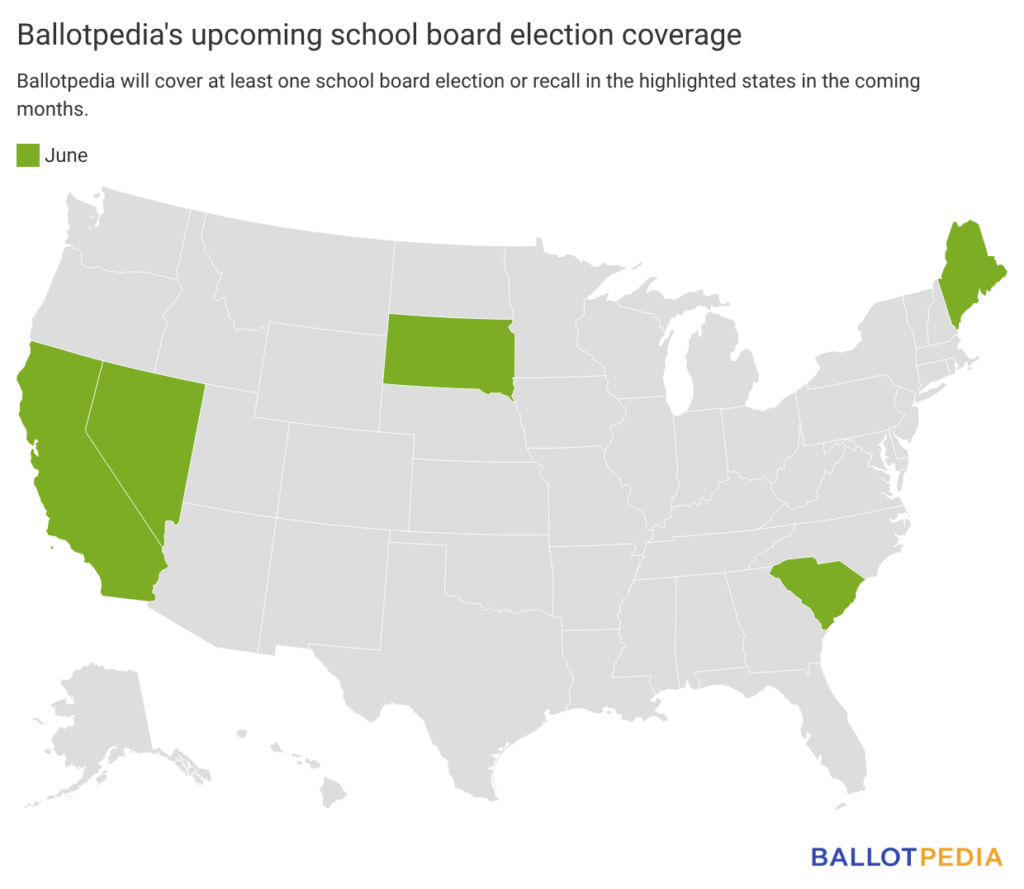
Watch future editions of Hall Pass for the following June primary and general election results:
- California: Primaries in three districts and general elections in five on June 2
- South Dakota: General elections in 25 districts on June 2
- Maine: General elections in 22 districts on June 9
- Nevada: Primaries in 15 districts on June 9
- South Carolina: Primaries in one district and a general election in one district on June 9
California will elect a new state superintendent of schools this year. Here’s a look at the candidates running in the June 2 primary.
Who will oversee the largest K-12 public school system in the country? Voters in California will narrow down the choices on June 2 in the nonpartisan primary for California Superintendent of Public Instruction. Unlike California’s other statewide primaries, in which the top-two vote-getters advance to a November general election, a primary candidate for Superintendent of Public Instruction can win outright with a majority of the vote. If no candidate receives more than 50% in the primary, however, then the two candidates with the most votes will face off at the November general election.
Ten candidates are running to succeed two-term Superintendent of Public Instruction Tony Thurmond, who is term-limited and running for governor. Superintendents are elected every four years.
The election is taking place against the backdrop of declining school enrollment and a bill — AB 2117 — making its way through the California State Legislature that would remove the superintendent as the head of the Department of Education and narrow the office’s duties.
Here’s what the superintendent of public instruction does
The California Superintendent of Public Instruction is the state’s chief school officer, carrying out the governor-appointed California Board of Education’s policies and enforcing federal and state laws and regulations related to education. As the head of the California Department of Education, the superintendent also manages the operational side of the school system — licensing teachers, dispersing funding, collecting data on student performance, maintaining school property, and fulfilling other administrative duties.
Meet the candidates
California Teachers Association (CTA) President David Goldberg said, “The superintendent race is off the radar because the governor’s race has taken up so much bandwidth. Although the superintendent’s impact is deeply felt by those who work in public education, it’s not widely known outside public education.” Click here to read Ballotpedia’s in-depth coverage of the gubernatorial primary.
Six of the 10 candidates have completed Ballotpedia’s Candidate Connection survey. The following information draws on those responses, when available, and other public information and reporting. Although the race is officially nonpartisan, we have listed next to each candidate’s name the political party with which they have been associated.
Richard Barrera (Democratic Party): Barrera is the chair of the San Diego Unified School District school board. He was first elected in 2008. Before becoming a school board member, Barrera worked as a labor organizer. Barrera has worked as a special policy advisor to Thurmond since 2024. The CTA, the state’s largest teachers union, and the California Charter Schools Association (CCSA) endorsed Barrera. The two organizations have tended to back competing candidates in the past.
Wendy Castaneda Leal: Leal, who has worked as a teacher, is the superintendent of the Semitropic School District. Click here to read Leal’s Ballotpedia survey responses.
Nichelle Henderson (Democratic Party): Henderson is a member of the Los Angeles Community College Board of Trustees who has worked as a teacher and professor. She was first elected in 2020. The California Legislative Black Caucus has endorsed Henderson.
Frank Lara (Peace and Freedom Party): Lara is the Executive Vice-President of the United Educators of San Francisco, a labor union, and a 4th grade teacher in the San Francisco Unified School District. United Educators of San Francisco endorsed Lara. Click here to read Lara’s Ballotpedia survey.
Ainye Long: Long teaches middle school mathematics in the San Francisco Unified School District.
Gus Mattammal (Republican Party): Mattammal runs Advantage Testing of Silicon Valley, a tutoring company. Click here to read Mattammal’s ballotpedia survey responses.
Al Muratsuchi (Democratic Party): Muratsuchi is a Democratic member of the California State Assembly and the former chair of the chamber’s Education Committee. He was first elected to that office in 2016. Muratsuchi previously served as a member of the Torrance Unified School District school board. The California Federation of Teachers, the state’s second-largest teachers union, endorsed Muratsuchi.
Josh Newman (Democratic Party): Newman served as a Democratic member of the California State Senate from 2016 to 2018. Newman once again served in the Senate from 2020 to 2024. Newman previously ran an organization that helped veterans find jobs. The California Building Trades Council endorsed Newman. Click here to read Newman’s Ballotpedia’s survey responses.
Anthony Rendon (Democratic Party): Rendon served as a Democratic member of the California State Assembly between 2012 and 2024. Between 2016 and 2023, Rendon was the speaker of the California State Assembly. AFSCME California and SEIU California, two labor unions, endorsed Rendon. Click here to read Rendon’s Ballotpedia survey responses.
Sonja Shaw (Republican Party): Shaw is the president of the Chino Valley Unified School District. She was first elected in 2022. The California Republican Party and Moms for Liberty endorsed Shaw. Click here to read Shaw’s Ballotpedia survey responses.
None of the candidates associated with the Democratic Party received enough votes during the California Democratic Party’s February endorsing convention to secure an official endorsement. Here’s how the vote broke down, from highest to lowest: Henderson (25%), Muratsuchi (22%), Newman (17%), Rendon (17%), and Barrera (13%).
According to a Public Policy Institute of California poll conducted March 26-April 3, 32% of likely voters said they were undecided. None of the candidates received more than 10% support in the poll.
According to an EdSource analysis, Mattammal, Shaw, Newman, and Barrera lead in fundraising. They are the only candidates who’ve raised more than $100,000.
In 2018, the race for superintendent centered on debates about charter schools and was the most expensive in the office’s history, with outside groups spending more than $50 million.
This year, no single issue has dominated the race in the same way charter schools defined the 2018 election. Candidates associated with the Democratic Party have often sought to distinguish themselves based more on their experience than policy stances.
Candidates associated with the Democratic Party have called for increasing school funding, decreasing class sizes, retaining teachers, and improving civic education. Henderson said she would use her influence as superintendent to encourage work “with the Governor and Legislature to secure the full, stable funding our schools are constitutionally owed under Proposition 98.” Barrera said he would encourage districts to provide teachers with affordable housing, pointing to a San Diego Unified School District initiative he helped put in place. Newman said he would “ensure that every California student will graduate not just ready for the workforce, but properly motivated and equipped to fully participate in the civic affairs of their communities as well.”
Candidates associated with the Republican Party have called for improving reading and math instruction, putting families first, and banning phones in school. Shaw said, “Radical ideologies distract from learning, while teacher shortages strain classrooms. Schools must refocus on essentials: reading, writing, and math. Families deserve better than a system that leaves kids behind.” Mattammal said districts must use “evidence-based pedagogy, including the science of reading and balanced mathematics frameworks.” Mattammal said the superintendent should provide model curricula to districts and require all districts to adopt science of reading instruction.
Here’s what the candidates are saying about AB 2117
Seven of the candidates are on record opposing AB 2117, which would recast the role of the superintendent, while the remaining three have yet to take a public position.
AB 2117 passed the California State Assembly 45-4 (with 31 not voting) on May 11, and is now awaiting action in the Senate. The bill would create a new governor-appointed Education Commissioner to oversee the Department of Education. The superintendent would no longer head the Department of Education and instead “serve as an independent evaluator and cross-sector coordinator for public education, covering preschool through higher education.”
In January, California Gov. Gavin Newsom (D) released a plan for shifting control of the Department of Education to the State Board of Education, citing a December 2025 report from Policy Analysis for California Education (PACE). PACE is a nonpartisan research center associated with Stanford University. The report stated “The SPI [Superintendent of Public Instruction] is elected independently of the governor, which at times throughout California’s history has led to institutional misalignment between the CDE [California Department of Education] — which is under the direction of the SPI — and the SBE [State Board of Education] — which is under the direction of the governor.”
The California School Boards Association supported Newsom’s plan but has not yet taken a position on AB 2117. The California Federation of Teachers testified in favor of AB 2117, while the Association of California School Administrators testified against it.
Muratsuchi was one of the four Assemblymembers to vote against AB 2117.
Among those who oppose the bill, Shaw said, “Moving the Department of Education under the governor’s control just gives even more power to the same Sacramento insiders who have turned our schools into some of the worst in the country.” Rendon said the changes would “be bad for democracy at a time when we see the demise of democracy, threats to democracy all over the world.”
Eight states, including California, will elect a new state superintendent of schools this year
Voters in eight states — Arizona, California, Georgia, Idaho, North Dakota, South Carolina, Oklahoma, and Wyoming — will select a new chief state school officer in 2026. Offices in Arizona, Georgia, Idaho, Oklahoma, and South Carolina are partisan, and they are held by Republicans. In California, North Dakota, and Wyoming, the offices are officially nonpartisan.
The chief state school officer is an elected office in 12 states. In most states, the state board of education or the governor appoints the chief state school officer.
Extracurricular: education news from around the web
This section contains links to recent education-related articles from around the internet. If you know of a story we should be reading, reply to this email to share it with us!
- What A.I. Did to My College Class | The New York Times
- Voters get competitive State Board of Education primaries in northern and eastern Alabama | Alabama Reflector
- How Medicaid Helps Fund K–12 Education | Urban Institute
- Democrats Should Not Ignore the Federal Tax Credit Scholarship | RealClearEducation
- NYC teachers say phone ban in classrooms has caused ‘jaw dropping’ change in students’ attention | New York Post
- CTU, billionaire donor clash over Chicago School Board | WGNTV 9
- The more hours in school, the higher the achievement, study finds | K-12 Dive
Take our Candidate Connection survey to reach voters in your district
Today, we’re looking at survey responses from two of the three candidates who ran in the May 19 primary to represent District 2 on the DeKalb County School District school board, in Georgia.
Incumbent Whitney McGinniss defeated Ruth Goldstein and Charlie McAdoo II with 54.3% of the vote. Both McGinniss and Goldstein completed the survey.
DeKalb is the third-largest district in Georgia, with roughly 92,000 students. It is located east of Atlanta.
McGinniss was first elected in 2023. McGinniss’ career experience includes working as a grants manager for Atlanta Legal Aid Society and Partnership Against Domestic Violence. Here’s how McGinniss answered the question, “What areas of public policy are you personally passionate about?”
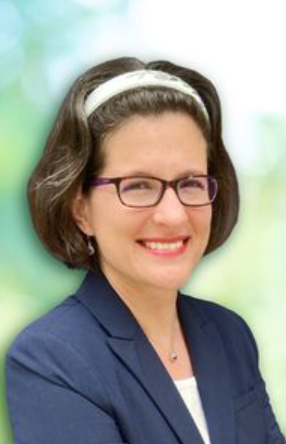
“Whitney has been a consistent voice for steady review of district policies and formal adoption of a 5-year review cycle for all district policies and procedures. Currently, DCSD has many policies in place that have not been updated in more than a decade. These policies are out of date, hamper innovation and creativity, and make it more difficult for DCSD staff to do their jobs effectively.”
Click here to read the rest of McGinniss’ responses.
Goldstein’s career experience includes working as an investment manager. Here’s how Goldstein answered the question, “What areas of public policy are you personally passionate about?”
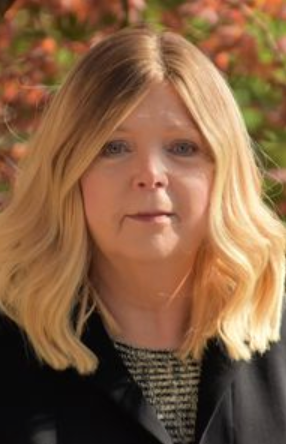
“Financial accountability in public education is the issue I am most passionate about. School boards are fiduciaries. They hold public dollars in trust for students, families, and taxpayers, and must ensure those dollars are spent with discipline and transparency.
DeKalb County Schools manages a budget of over one billion dollars. That level of public investment demands independent audits, publicly accessible spending records, and a board willing to ask hard questions before signing off.”
Click here to read the rest of Goldstein’s responses.
As a reminder, if you're a school board candidate or incumbent planning to run this year, click here to take the survey. If you complete the survey, your answers will appear in your Ballotpedia profile. Your responses will also appear in our sample ballot. If there is an election in your community, share the link with your candidates and urge them to take the survey!