


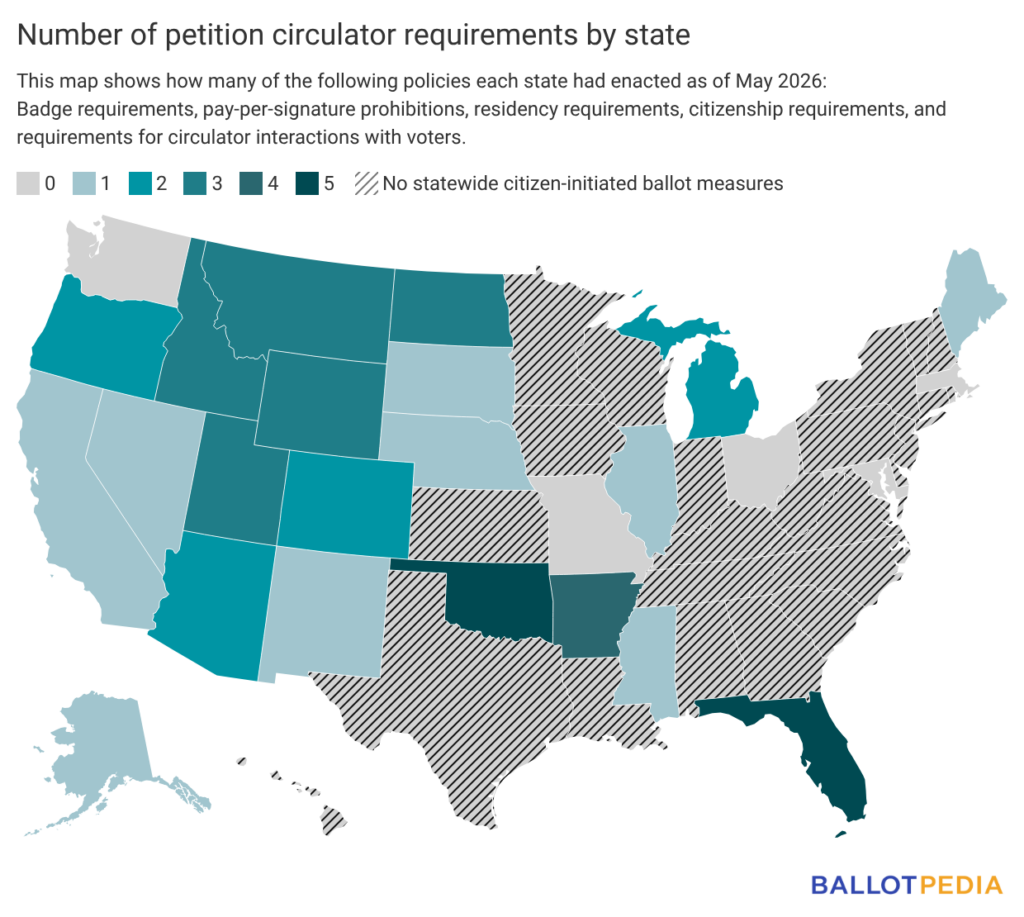
In states across the country, groups are gathering signatures to place initiatives or referendums on the 2026 ballot. Of the 26 states that allow citizen initiatives, 21 have at least one law setting requirements for petition circulators.
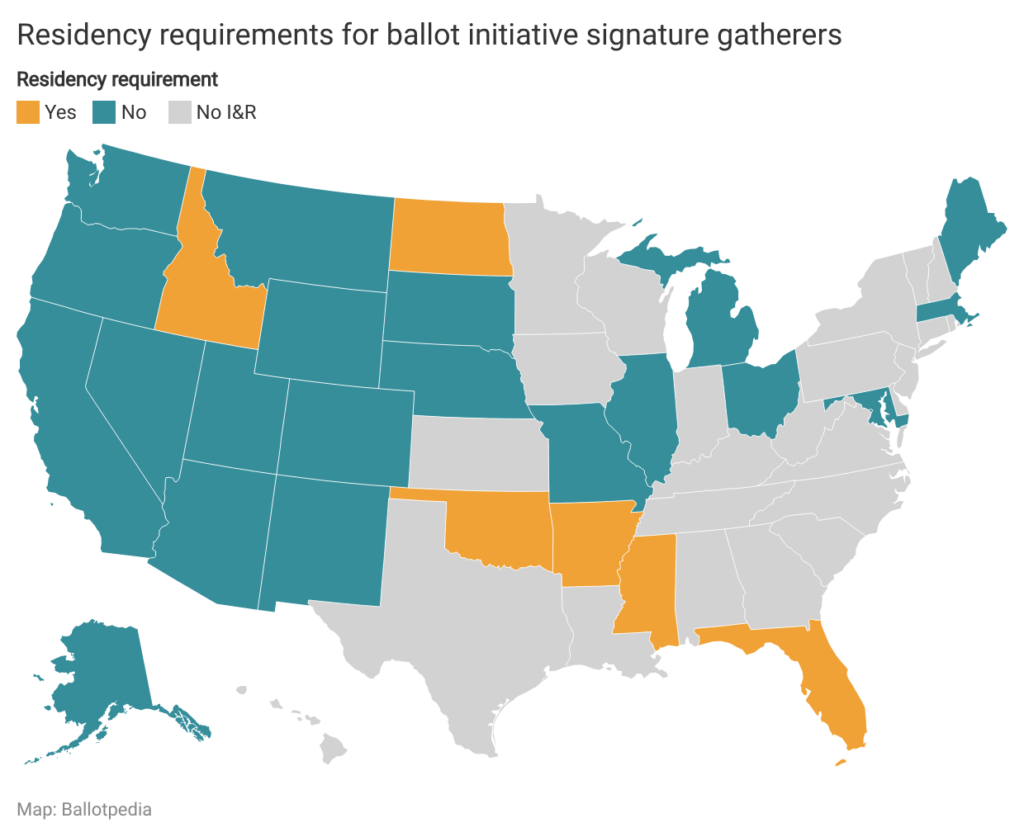
Six states have laws requiring signature gatherers to be state residents. Nine states have laws directly or indirectly requiring signature gatherers to be U.S. citizens.
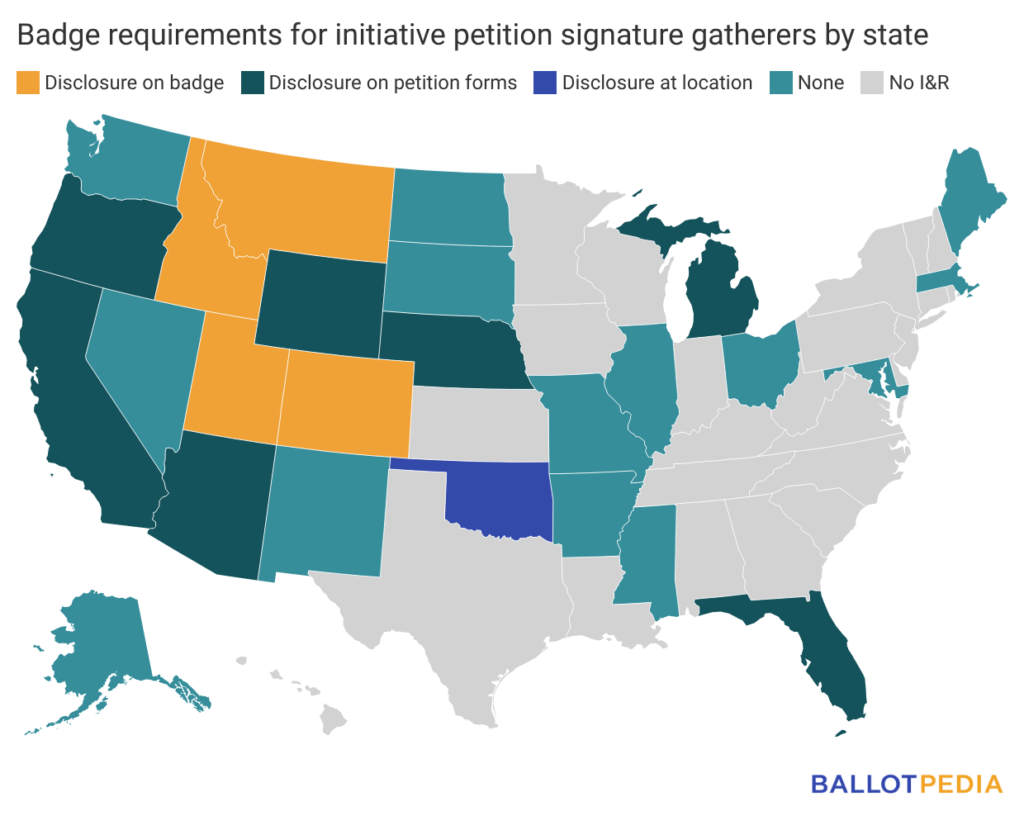
Twelve states require signature gatherers to communicate whether they are paid or volunteer. Four states require circulators to wear physical badges, while in seven others, circulators must include identifying information on petitions. Oklahoma requires a conspicuous notice to be displayed at any location where a person is collecting signatures.
Ten states prohibit pay-per-signature, a method of compensating circulators based on the number of signatures they collect.
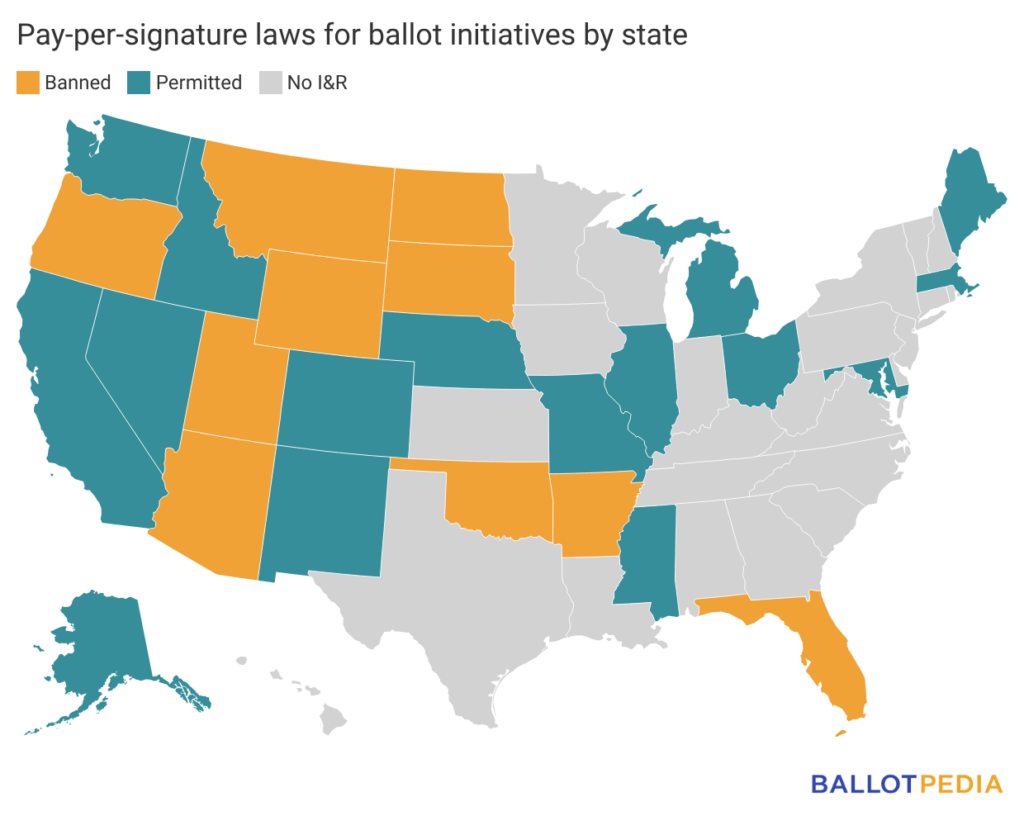
Nine states have additional laws governing how circulators must interact with voters when gathering signatures.
These policies can include requirements that circulators read information about the measure or give voters the opportunity to do so. Other states require circulators to obtain information or identification from signers beyond their name, address, and signature.
Florida and Oklahoma have all five of the policies listed above, while Massachusetts, Maryland, Missouri, Ohio, and Washington have none of them.
No state has passed one of these requirements in 2026. Arkansas, Florida, Oklahoma, and Montana approved new policies for petition circulators in 2025.
For more information on petition circulator requirements, click here.