


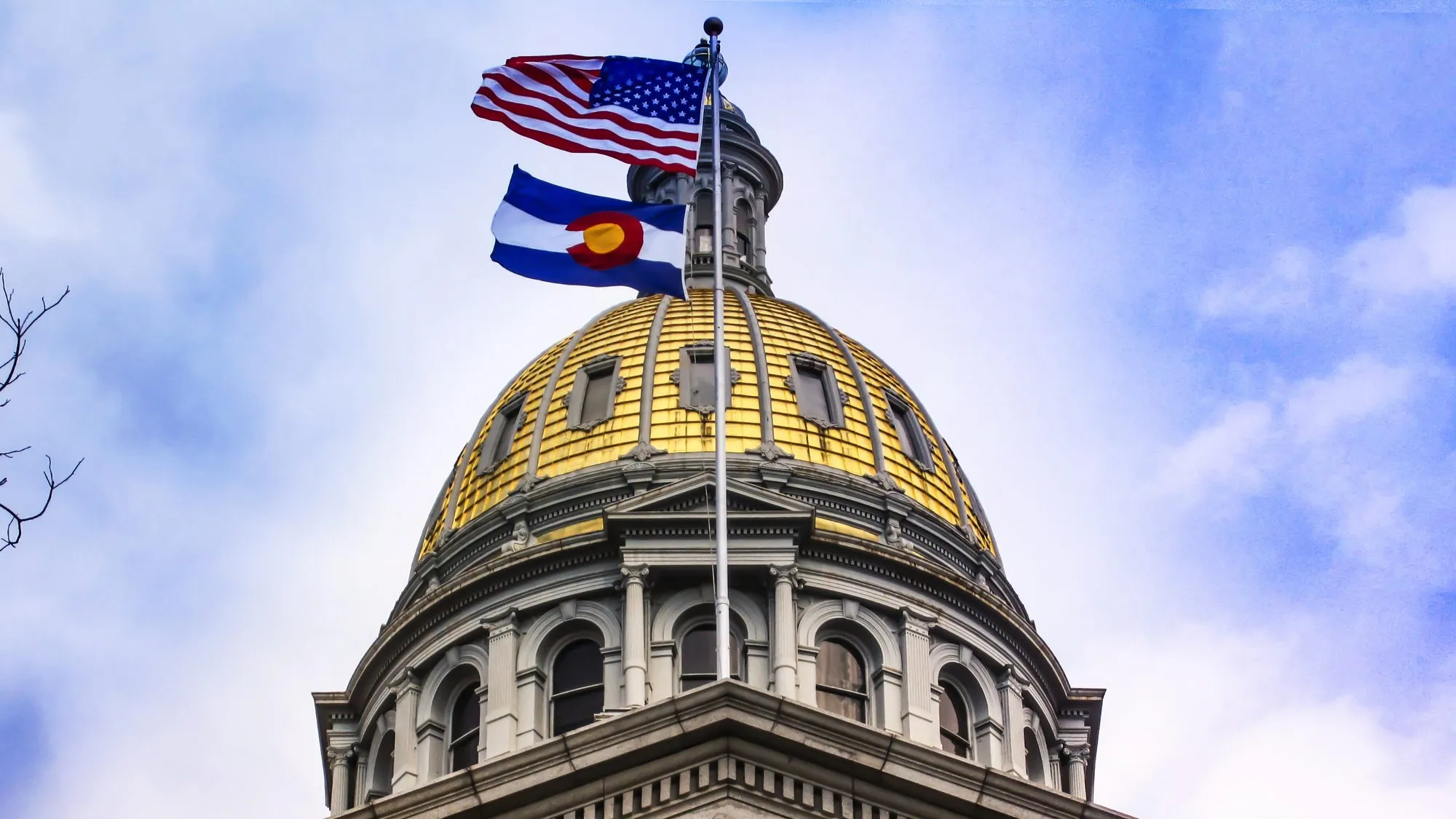
The Colorado General Assembly adjourned its 2026 regular session on May 13 after passing eight election-related bills. Gov. Jared Polis (D) signed all eight bills between April and June.
Among those bills was HB 1113, an omnibus bill making a number of changes to Colorado’s election laws.
Those changes included:
- Requiring election officials to mail ballots to voters between 29 and 25 days before the election, rather than between 22 and 18 days before the election.
- Requiring institutions of higher education that use electronic course registration to provide voting hours and locations and information on ballot drop boxes to students via email before election day.
- Allowing employees two hours off from work to vote on any day when voter service and polling centers are open, rather than only on election day.
- Requiring counties to measure and record the wait time at each voter service and polling center and report the data to the secretary of state within 30 days after the election. Counties with a polling place that had wait times of longer than one hour must submit a report to the state.
- Permitting a registered voter to protest the registration of another voter on the grounds that the person is not a citizen, is not at least fifteen years old, is deceased, or is no longer a resident of the state. The bill outlines procedures for filing and adjudicating a protest.
The Senate approved the final version of HB 1113 on May 4 along party lines, with 23 Democrats voting in favor and 12 Republicans voting against. On May 7, the House also approved the bill along party lines, with 42 Democrats voting in favor and 22 Republicans voting against. Polis signed the bill on June 1.
Other election bills enacted in 2026 include:
- HB 1023, which requires parties to provide alternate means of participating in party caucuses or assemblies, such as a conference call or video call.
- HB 1038, which establishes standards and processes for county commission redistricting.
- HB 1084, which requires the ballot information booklet to include information on an initiated measure's impact on state expenditures if it is deemed to likely increase state expenditures and doesn't provide for revenue or a reduction in state spending to account for the increased expenditures.
- HB 1320, which requires the ballot titles of proposed constitutional amendments to be written in plain language.
- SB 142, which requires voters in a municipality to approve or reject the sale of a thermal energy network.
- SB 145, which establishes requirements for the consideration of charter school capital construction needs when a school district is preparing a ballot question.
Legislators enacted eight election-related bills in 2025, seven in 2024, and three in 2023.