


Welcome to Hall Pass, a newsletter written to keep you plugged into the conversations driving school board governance, the politics surrounding it, and education policy.
In today’s edition, you’ll find:
- On the issues: The debate over reducing chronic absenteeism
- School board filing deadlines, election results, and recall certifications
- Newsom signs bill overhauling California’s public school governance
- Extracurricular: education news from around the web
- Candidate Connection survey
On the issues: The debate over reducing chronic absenteeism
In this section, we curate reporting, analysis, and commentary on the issues school board members deliberate when they set out to offer the best education possible in their district. Missed an issue? Click here to see the previous education debates we’ve covered.
The U.S. Department of Education defines chronic absenteeism as missing 10% or more of the school year, or roughly 16 to 19 days depending on the state. According to FutureEd, a think tank, chronic absenteeism nearly doubled during the pandemic, rising from about 15% of all students in the 2018-19 school year to 28% in 2021-22. Since then, chronic absenteeism has declined in the majority of states, with the national rate falling to 22% as of the 2024-25 school year — still above the pre-pandemic average.
Today, we look at differing perspectives on the root causes of the rise in chronic absenteeism, and what to do about it.
Nate Malkus, a senior fellow and deputy director of the American Enterprise Institute’s (AEI) Education Policy Studies, says that parents and students appear to have taken a more relaxed approach to school attendance since the COVID-19 pandemic, driving elevated rates of chronic absenteeism. He says that while schools and policymakers will need to address structural barriers to attendance like transportation gaps, those steps alone won’t solve the problem. Instead, Malkus says they will need to foster a culture of daily attendance and make it clear there are consequences for missing school.
Sarah Winchell Lenhoff, a professor of educational leadership and policy studies at Wayne State University, and Jeremy Singer, an assistant professor of education at the University of Michigan–Flint, say that chronic absenteeism, especially in districts with a high percentage of low-income students, is chiefly a consequence of structural inequality in society, leaving schools with few tools at their disposal for making serious progress on the issue. Instead, Lenhoff and Singer say policymakers will need to devote greater resources to making housing more affordable, healthcare more accessible, and transportation more reliable. Lenhoff and Singer say schools should create a welcoming environment for students and avoid relying on punishment as a tool for combating chronic absenteeism.
Progress on Absenteeism Is Stalling. What Can We Do About It? | Nate Malkus, Education Week
“Consequences for students and families are essential, rather than optional, for any serious attempt to dramatically improve attendance. The pandemic opened the door for students to miss school for reasons that would not have been condoned six years ago. Reasonable consequences—loss of privileges, school-based detentions, or mandatory parent conferences—are essential to both communicate the expectation of consistent attendance and the disincentives to breaking it. Discussing supports for families is popular while talk of consequences is often not, but acknowledging how tough the fight to change attendance behaviors at scale is requires recognition that we will not reverse this trend with one hand tied behind our backs.
Reestablishing these norms is difficult work, but unless we fight chronic absenteeism now, the problem won’t go away. Instead, it will likely settle to a new normal of around 20%—meaning 2.5 million more chronically absent students each year compared with pre-pandemic levels.”
Rethinking Chronic Absenteeism in California | Sarah Winchell Lenhoff and Jeremy Singer, Policy Analysis for California Education
“Policymakers and community leaders must commit to improving the conditions for student attendance outside of school, just as schools are committed to improving conditions inside schools.
This means that policymakers must allocate additional resources and facilitate collaboration across multiple sectors (e.g., health care, housing, transportation, social services) to meet students’ and families’ needs. There is no getting around the fact that deep social and economic inequalities are the fundamental cause of high chronic absenteeism rates in districts like Detroit, such as the many California districts with ‘high’ or ‘extreme’ chronic absenteeism rates. Cross-sector coordination is a necessary condition for connecting families with resources and services that can remove barriers to student attendance, but better coordination alone will be insufficient in many contexts. Thus, to truly address chronic absenteeism, policymakers must make substantial investments in reducing material inequalities—for example, by increasing families’ economic security, housing affordability and stability, access to health care and healthy environments, and access to transportation. This can be done through a combination of new resources and services provided directly to families, investments to improve existing systems and programs, and more coordination between school systems and other policy sectors.”
School board update: filing deadlines, election results, and recall certifications
In 2026, Ballotpedia will cover elections for more than 30,000 school board seats. We’re expanding our coverage each year with our eye on covering the country’s more than 80,000 school board seats.
Upcoming school board elections
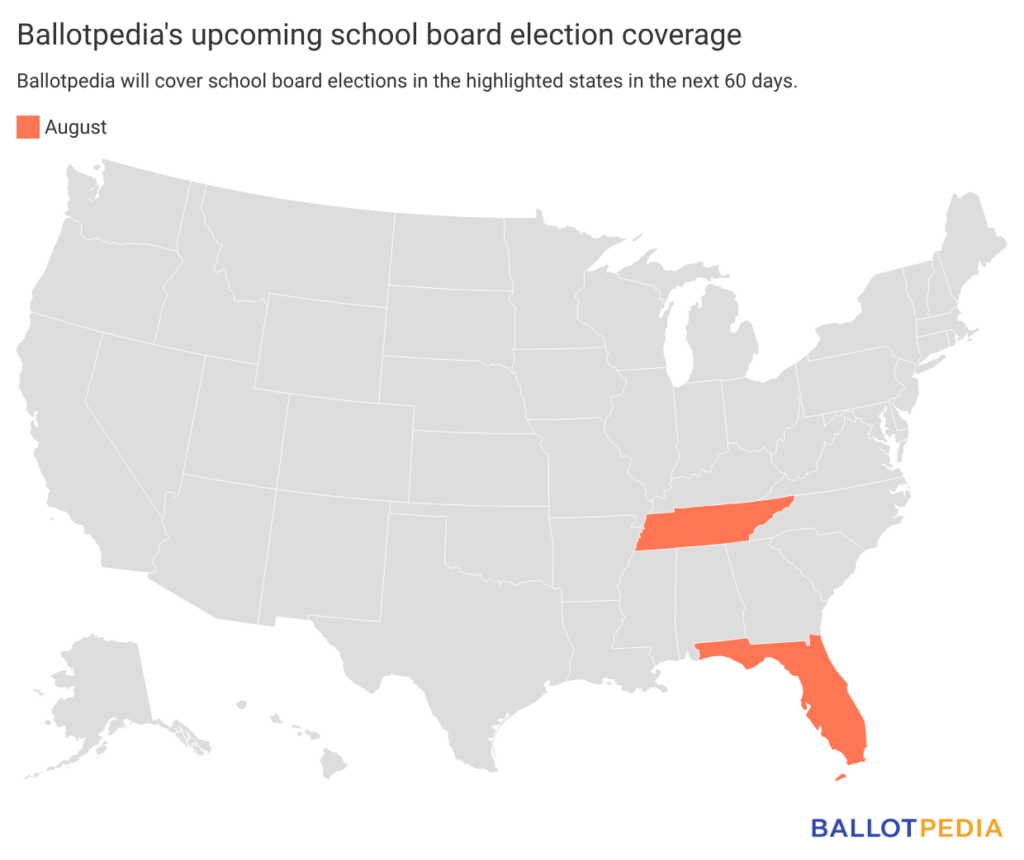
Click here to learn more about this year’s school board elections.
Newsom signs bill overhauling California’s public school governance
In November, California voters will elect a new Superintendent of Public Instruction. Historically, that role, the state’s chief school officer, has overseen the California Department of Education. But because of a bill Gov. Gavin Newsom signed on July 10, the role will look considerably different when the eventual winner of the election takes office in 2027.
AB 181 will restructure California’s education governance model, placing day-to-day control of the Department of Education in the hands of a new governor-appointed education commissioner. The Superintendent of Public Instruction will assume a more evaluative role, monitoring education programs on behalf of voters and serving as a liaison to California’s lawmakers.
According to Lupita Cortez Alcalá, the executive director of the nonpartisan research center Policy Analysis for California Education (PACE), which advocated for the changes included in AB 181, “This represents one of the most significant education governance reforms in California’s history.” Critics, including California’s largest teachers union, have said the law weakens the public’s voice in the state’s school system.
California’s public education governance model has long been the subject of recurring debate
Since 1912, California has divided responsibility for managing its K-12 public education system between a governor-appointed State Board of Education (SBOE), which devises the regulations and policies to which schools and districts must adhere, and an elected Superintendent of Public Instruction, who manages the California Department of Education and enforces the BOE’s directives.
The Superintendent of Public Instruction is a nonpartisan office.
For well over a century, the potential for conflict between the SBOE and the state Superintendent has been the subject of debates within the California State Assembly and among the state’s education leaders. In 1963, California Deputy Attorney General Richard L. Mayers wrote, “This analysis of the respective powers and duties of the State Board of Education and the Superintendent of Public Instruction once again underscores the long-recognized problem in this area. It would be fruitless here to discourse upon the difficulty of requiring a policy-making board appointed by the Governor to have its policies carried out by and through an individual who is elected by the people.”
The concern that California’s two-pronged education governance model obscures accountability inspired a series of reform proposals and failed ballot measures over the years, even as lawmakers, governors, and voters declined, at least until July 2026, to make any substantive changes.
AB 181 strengthens the governor’s influence over the California education system
The California State Senate voted 21-4 (with 15 absent) to pass AB 181. All 21 votes for the bill were cast by Democrats. One Democrat joined three Republicans in opposing it. Democrats have a 30-10 majority in the chamber. The Assembly voted 52-5 to pass the bill (with 22 absences). Forty-four Democrats and eight Republicans voted for the bill, while the five who opposed it were Republicans. Democrats have a 60-19 majority in the Assembly.
Newsom first revealed his plan to rework the education system’s governance model in his 2026 state of the state address, which he delivered in January.
According to Newsom, “For too long, our state’s education governance structure has divided responsibility for setting policy from responsibility for implementing it. AB 181 creates a more effective system that will help us deliver better results for students while ensuring greater accountability for the investments Californians make in public education.”
Whoever replaces Newsom in January 2027 will appoint the new education commissioner. The commissioner will run the Department of Education and, over the course of the year, work with the governor and legislature on a plan for simplifying and streamlining California’s education system.
Additionally, the law directs the commissioner to work with the Superintendent of Public Instruction to develop a plan and funding for the Superintendent of Public Instruction’s new role, including “prioritizing the Superintendent’s role as the independently elected nonpartisan voice for the public interest in the governance of the state’s educational systems.” Among other things, the law states the Superintendent of Public Instruction will foster “alignment and coordination of education policies through active engagement and thoughtful leadership on state boards, committees, and commissions covering early childhood through postsecondary education” and evaluate existing laws and programs on behalf of the legislature.
Changes coming to the SBOE
The Superintendent of Public Instruction may be losing control of the Department of Education, but will gain a seat on the SBOE as a voting member.
Under the changes enacted as part of AB 181, the SBOE will expand from 11 to 13 members, with the Superintendent of Public Instruction taking one of the existing seats. Additionally, the president pro tempore of the California State Senate and the speaker of the Assembly will each appoint a member to the board.
The governor, with the advice and consent of the Senate, will appoint 10 of the members (including a student representative).
Proponents say changes will improve accountability and make the system more efficient
In December 2025, PACE, the nonpartisan research outfit housed within Stanford University, published a report that called for changing the Superintendent of Public Instruction’s role and giving the governor more direct oversight of the education system. The report stated that “The question ‘Who is responsible to whom, and for what?’ remains unresolved in California’s education governance system, resulting in blurred lines of responsibility and difficulty making systemic improvement.”
Newsom’s office said his proposal was based on PACE’s report.
Ted Lempert, the President of Children Now, a research and policy organization, said, “The people that have to deal with the Department of Education every day, that seek their guidance, that need their support — all of those groups strongly support this change. They’re the ones that are relying on the Department of Education on a daily basis.”
Children Now works with The Children’s Movement of California, an advocacy group. Over 950 organizations signed The Children’s Movement of California’s letter calling for reforming the system’s education governance.
State Board of Education President Linda Darling-Hammond said AB 181 would “ensure that our system is coherent, effective, and responsive to the changing needs of our students and our society.”
Critics say the law is undemocratic and unconstitutional
Newsom’s proposal faced criticism, including from current Superintendent of Public Instruction Tony Thurmond, who said he was not consulted about it. Thurmond declined to run for re-election. He entered the crowded race for governor and lost in the June 5 primary. In an interview with the San Francisco Chronicle, Thurmond said that while he didn’t oppose the idea of giving the governor more control over the Department of Education, he questioned how Newsom’s plan for the Superintendent of Public Instruction would benefit students.
A sharper line of criticism came from the California Teachers Association (CTA), the state’s largest union. The CTA opposed AB 181, saying the Superintendent of Public Instruction “should answer to voters, not the governor.” The union said there would be fewer checks and balances and less accountability if the bill passed.
According to EdSource, the CTA has endorsed the eventual winner of every election for Superintendent of Public Instruction over the last 44 years.
In a letter opposing AB 181, a coalition of California unions, including the CTA, wrote: “California’s constitutional architecture deliberately established an independent schools chief to ensure that public education answers directly to the voters. Replacing an elected constitutional officer with a partisan bureaucrat serving strictly at the pleasure of the executive branch breaks that model, permanently muting the public voice when democratic transparency matters most.”
Candidates for Superintendent of Public Instruction oppose the law
On Nov. 3, California voters will decide whether Richard Barrera and Sonja Shaw will become the state’s next Superintendent of Public Instruction. The two candidates advanced from the June 2 primary, beating out eight other opponents. Shaw received 24.5% of the vote, while Barrera received 19.3%. Shaw completed Ballotpedia’s Candidate Connection survey.
Click here to read Hall Pass’ preview of the June 2 primary.
Barrera and Shaw don’t tend to agree on much, but both opposed AB 181.
Shaw, a Republican who serves as the president of the Chino Valley Unified School District school board, said, “Newsom couldn’t win at the ballot box, so he changed the rules. He just rammed through one of the biggest power grabs in California history. This isn’t education reform. California’s children deserve leaders who answer to the voters.”
Barrera, a Democrat and longtime president of the San Diego Unified School District school board, said, “Proponents of this measure claimed their goal was to align everyone around a common set of goal [sic] for student achievement. Unfortunately, the rushed, behind-the-door process has done precisely the opposite.”
California is among a small group of states with power-sharing between elected superintendents and governor-appointed boards
K-12 public school governance models vary from state to state.
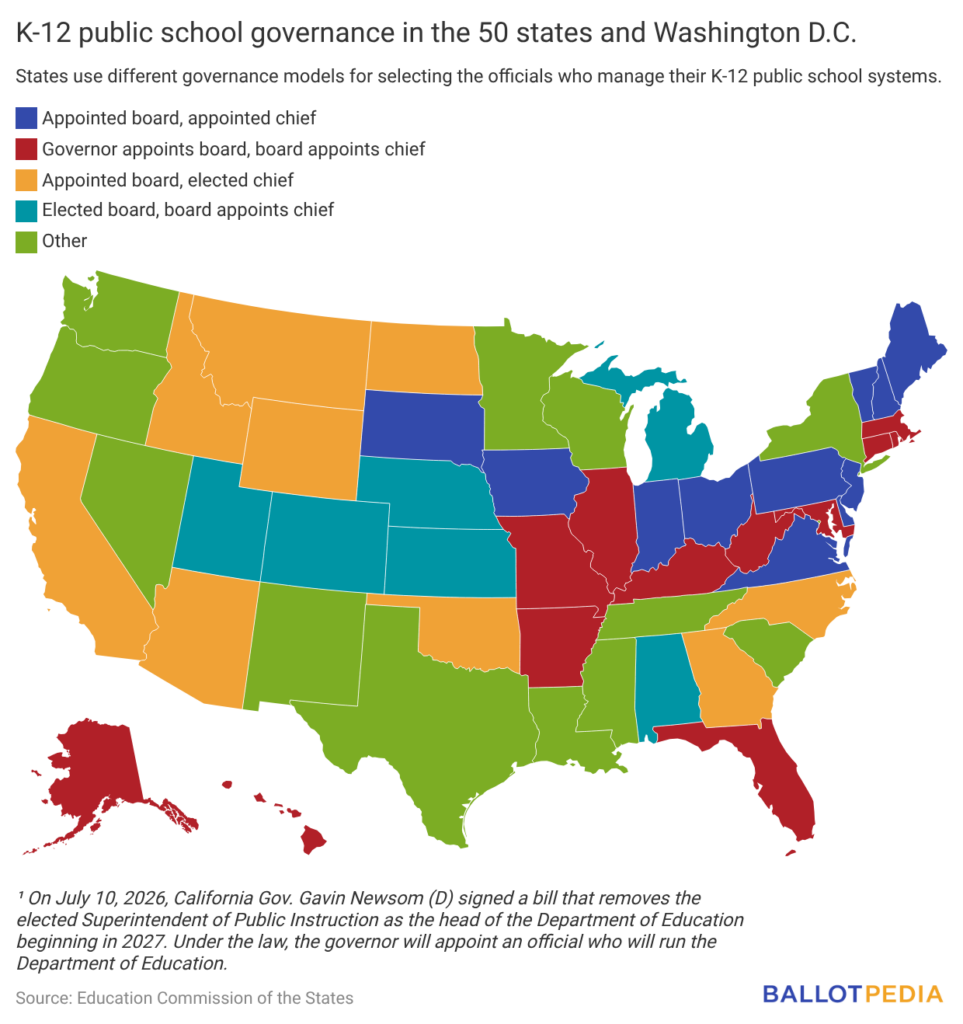
According to the Education Commission of the States (ECS), an education policy and research nonprofit, California is one of nine states where voters elect the chief state school officer while the governor appoints the state board of education.
Of the nine states with that model, California is the only one with a Democratic trifecta. Six have Republican trifectas and two are divided governments.
- In 11 states, the governor appoints both the state board of education and the state superintendent.
- In 12 other states, the governor appoints the state board of education, which in turn appoints the state superintendent.
- In six states, voters elect the state board of education members, who then appoint the state superintendent.
- Twelve states use a combination of the different governance models. In six of those states, voters elect at least some members of the state board of education or the state superintendent.
This year, voters in eight states — Alabama, Colorado, Kansas, Michigan, Nebraska, Ohio, Texas, and Utah — and Washington D.C. will elect new state board of education members. Voters in eight states — Arizona, California, Georgia, Idaho, North Dakota, South Carolina, Oklahoma, and Wyoming — will decide elections for chief state school officer.
Extracurricular: education news from around the web
This section contains links to recent education-related articles from around the internet.
- Teachers save time with AI. Their students may pay the price | The Hechinger Report
- A disputed Boise High incident became central to Idaho’s transgender bathroom fight | Idaho Ed News
- 5 takeaways from Chalkbeat’s panel on Indiana’s changes to school board elections and referendums | Chalkbeat Indiana
- Rethinking K-12 Schools as a Continuous Learning Experience | Spaces 4 Learning
- California law ensures humans, not AI, are teaching K-12 students | EdSource
- Lead with purpose: 3 ways courageous K-12 leadership builds real impact | eSchool News
- Test scores have plunged, but voters aren’t making schools a top political issue | Chalkbeat
- The end of school property taxes? Proposed Pennsylvania bill would rewrite education funding. | Politics PA
- Janet Napolitano Helped Kill the SAT. She’s Reconsidering. | The Chronicle of Higher Education
Take our Candidate Connection survey to reach voters in your district
Today, we’re looking at survey responses from two of the three candidates running in the Aug. 6 general election for Hamilton County Schools Board of Education District 3, in Tennessee. Ashley Dillon (R) was unopposed in the May 5 Republican primary. Sandy Pricer is running as an independent.
Ruth Walker was unopposed in the Democratic primary, but had not completed the survey as of this writing.
Hamilton County Schools is the fifth-largest district in Tennessee, with roughly 46,000 students. It is located in the southeast corner of the state and encompasses Chattanooga.
Dillon’s career experience includes working as a counselor. Here’s how Dillon answered the question, “What are the main points you want voters to remember about your goals for your time in office?”
- “Getting back to the basics of academic excellence. More teaching, less testing Focusing on reading, writing, math, and critical thinking skills.
- Significantly decreasing the student usage of one to one devices and returning to more paper and pencil learning.
- Safety in classrooms and at the school Establishing standard and effective behavior management Consistent and predictable expectations and consequences Parental involvement and notification when discipline issues occur
- Parental liberty through transparency Sharing clear information about the priorities of the budget at each individual school. Clear communications with parents and the public on curriculum choices, discipline practices, and support services at each school Consistent and steady communication about county wide school events, services, and options.”
Click here to read the rest of Dillon’s responses.
Pricer’s work experience includes working in social services. Here’s how Pricer answered the question, “What are the main points you want voters to remember about your goals for your time in office?”
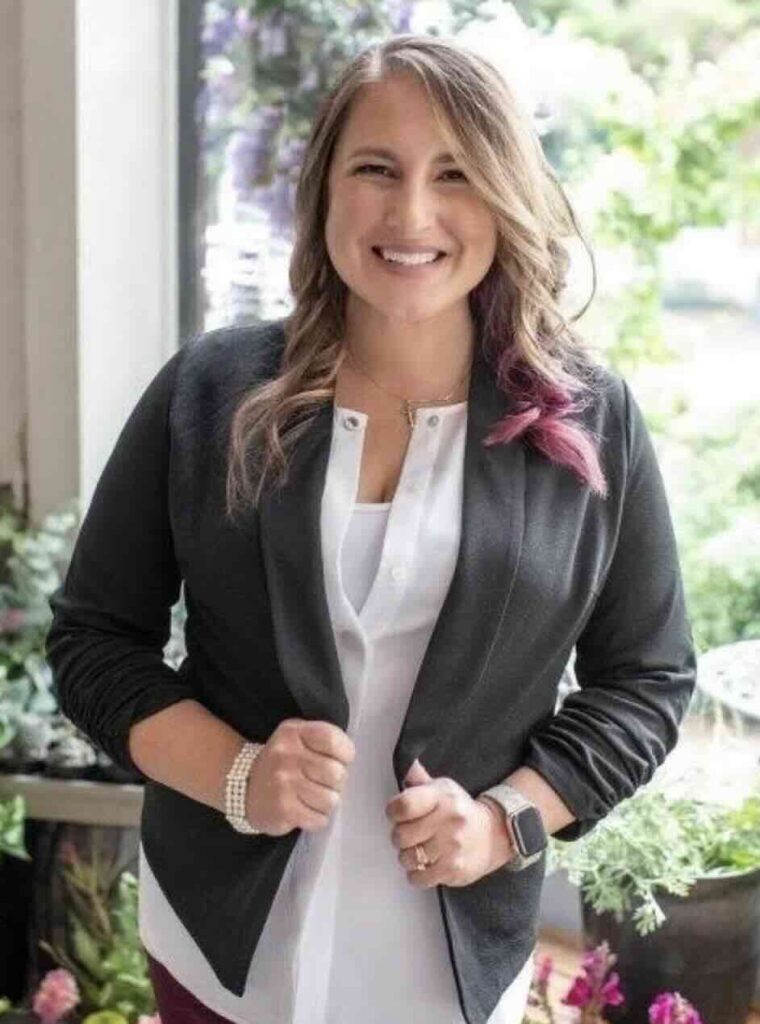
- “Workforce Development & Career Readiness This one is personal. As founder of RiseUP Cooperative, I've spent years watching talented young people graduate without a clear path forward — not because they weren't capable, but because no one had ever shown them what was possible.
- Student safety and well being - A child who doesn't feel safe cannot learn. It's that simple — and that serious. Safety isn't just about preventing worst-case scenarios. It's about the daily experience of every student walking through our doors: whether they feel seen, whether they feel protected, whether they feel like they belong.
- Teacher pay and retention - Research is unambiguous: teacher quality is the single greatest school-based factor in student achievement. When we lose great teachers — to burnout, to better pay elsewhere, to a profession that doesn't value them the way it should — our children are the ones who pay the price. Nationally, teachers earn just 73 cents for every dollar made by similarly educated professionals. That gap has been widening for 30 years and hit a record high in 2024. Right now, more than 400,000 teaching positions across the country are either unfilled or filled by someone not fully certified. Hamilton County is not immune to this crisis.”
Click here to read the rest of Pricer’s responses.
As a reminder, if you're a school board candidate or incumbent planning to run this year, click here to take the survey. If you complete the survey, your answers will appear in your Ballotpedia profile. Your responses will also appear in our sample ballot. If there is an election in your community, share the link with your candidates and urge them to take the survey!