


Welcome to the Thursday, Aug. 13, 2026, Brew.
By: Briana Ryan
Here’s what’s in store for you as you start your day:
- Rep. John Larson becomes the ninth U.S. House incumbent to lose a primary this year to a non-incumbent
- Delaware becomes the 12th state to enact a state-level voting rights act
- Colorado Secretary of State certifies an initiative that would establish a constitutional right to purchase and sell natural gas
Rep. John Larson becomes the ninth U.S. House incumbent to lose a primary this year to a non-incumbent
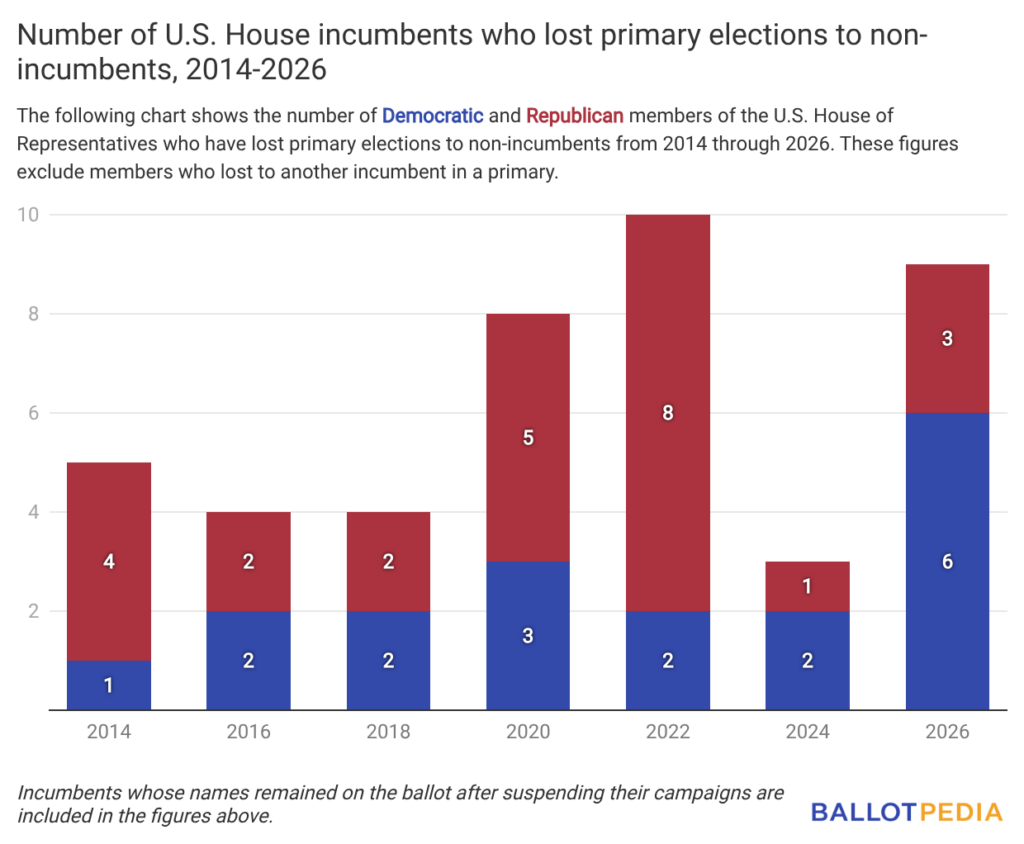
Incumbent Rep. John Larson (D) became the ninth member of the U.S. House of Representatives to lose a primary election this year to a non-incumbent. A 10th incumbent also lost re-election this year, but since he lost to another incumbent he is excluded from this count.
As a result, this year has the second-highest number of U.S. House members who have lost primary elections to non-incumbents since at least 2014.
Luke Bronin defeated Larson and two other candidates in the Democratic primary for Connecticut's 1st Congressional District. Bronin won 53.5% of the vote to second-place finisher Larson's 34.7%. This primary was also the first time that an incumbent member of Connecticut’s U.S. House delegation ran in a contested primary since 2014.
11 DSA-endorsed state legislative candidates won their respective primaries, and three gubernatorial or congressional candidates lost their primaries
David Crowley defeated three other candidates in the open Democratic primary for governor of Wisconsin. Crowley has won 39.8% of the vote, and Francesca Hong has won 39.4%.
An additional three candidates also appeared on the ballot after suspending their campaigns: Sara Rodriguez won 4.1% of the vote, Mandela Barnes won 4.1%, and Missy Hughes won 0.4%. Rodriguez and Hughes ended their campaigns before early voting started on July 28. Barnes ended his campaign on July 30 — after early voting started.
Incumbent Gov. Tony Evers (D) endorsed Crowley, and multiple local chapters of the Democratic Socialists of America (DSA) endorsed Hong.
Local DSA chapters also endorsed in the Democratic primaries for governor of Minnesota and Wisconsin's 3rd Congressional District. Both candidates lost their primaries.
In other elections, state legislative candidates endorsed by the national DSA chapter or its local chapters won 11 of the 13 primaries they ran in. The two other candidates lost their primaries.
Nine of the 11 winners were either incumbent members of their state legislatures, or ran in open primaries. The final two candidates won in primaries in which incumbents were also running.
- Maryam Khan defeated incumbent state Sen. Douglas McCrory in the three-candidate Democratic primary for Connecticut Senate District 2. Khan won 40.7% of the vote, Ayana Taylor won 33.2%, and McCrory won 26.1%
- Matt Gile advanced from the Democratic primary for Vermont House of Representatives Chittenden 21 District to the general election. However, the election has not been called for a second candidate who will also advance from the primary to the general election with Gile. As of Aug. 12 at 2:45 p.m. EDT, Gile won 38.1% of the vote, incumbent state Rep. Daisy Berbeco won 32.0%, and Al Turkos won 29.2%.
The special Republican primary for the U.S. Senate in South Carolina heads to a runoff
Incumbent Sen. Darline Graham and Ralph Norman advanced from the special Republican primary for the U.S. Senate in South Carolina to an Aug. 25 runoff. Graham won 32.8% of the vote, and Norman won 23.5%.
South Carolina Gov. Henry McMaster (R) appointed Graham following the death of her brother, Sen. Lindsey Graham (R-S.C.), on July 11. Since Lindsey Graham was also the Republican nominee in this year’s election for the seat, a special primary became necessary to determine a new Republican nominee.
The runoff will mark the 29th time since 1918 that a major or minor party replaced its U.S. Senate nominee.
Voters defeat data center-related local advisory question
Voters in Wrightstown, Wisconsin, defeated a local advisory question that would have advised the village board to support public resources, commitments, or infrastructure to assist a large-scale data center development. Voters defeated it 87% to 13%.
This ballot measure was the fourth local measure related to data centers this year. In each case, a majority of voters favored greater limits on data center development, either by approving new restrictions or requirements or by rejecting a measure that would have facilitated or supported development.
Voters will decide more local measures related to data centers this year.
Here's what happened in five other primaries that we were watching:
- Peggy Flanagan defeated five other candidates in the open Democratic primary for the U.S. Senate in Minnesota. Flanagan won 58.9% of the vote to second-place finisher Angie Craig's 39.5%. Craig is one of seven Democratic members of the U.S. House who retired to run for the U.S. Senate. Five of those have lost their primaries, and two are running in primaries that have not yet taken place.
- Lisa Demuth defeated six other candidates in the open Republican primary for governor of Minnesota. Demuth won 43.6% of the vote to second-place finisher Mike Lindell's 32.3%. Lindell is one of 21 gubernatorial candidates that President Donald Trump (R) has endorsed in a primary this year. Four of those have lost their respective primaries, and 15 have won. Two are running in primaries that have not yet happened.
- Matt Little defeated five other candidates in the open Democratic primary for Minnesota's 2nd Congressional District. Little won 47.2% of the vote to second-place finisher Matt Klein's 30.4%. According to The Minnesota Star Tribune, Little ran as a progressive and Klein ran as a moderate.
- Incumbent Rep. Ilhan Omar defeated four other candidates in the Democratic primary for Minnesota's 5th Congressional District. Omar won 80.7% of the vote to second-place finisher Julie Le's 6.7%. According to The New York Times, Omar ran as a progressive, and Le ran as a moderate.
- Michael Alfonso defeated four other candidates in the open Republican primary for Wisconsin's 7th Congressional District. Alfonso won 48.9% of the vote to second-place finisher Kevin Hermening's 26.6%. Trump endorsed Alfonso, and multiple state legislators endorsed Hermening.
Click here to check out all the Aug. 11 election results.
Delaware becomes the 12th state to enact a state-level voting rights act
On Aug. 6, Gov. Matt Meyer (D) signed House Bill 444, making Delaware the 12th state to enact a state-level voting rights act.
California was the first to enact a state-level voting rights act in 2002, followed by Illinois in 2011. Every other state enacted its law between 2018 and 2026, and all had Democratic trifectas when they approved their laws.
Delaware is the fifth state this year to enact a new state-level voting rights act or to expand an existing law. Virginia and Washington both expanded existing state-level voting rights acts, while Maryland and New Jersey enacted a new law.
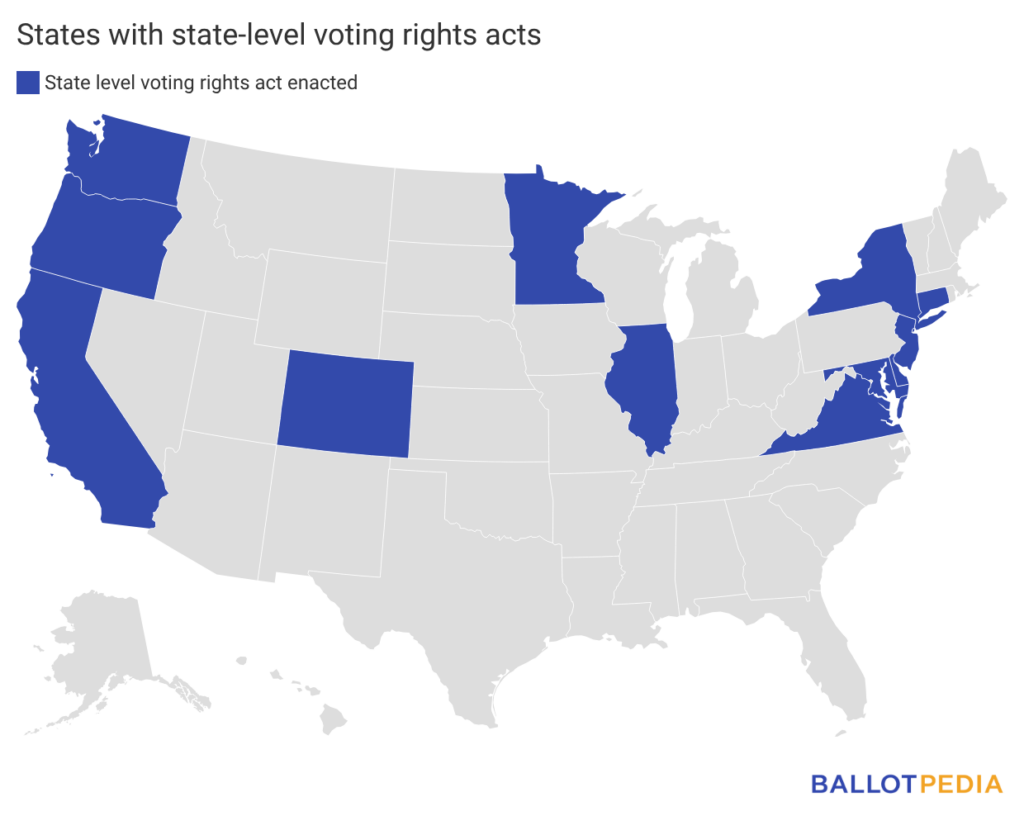
In 1965, Congress passed the Voting Rights Act, which prohibits racial discrimination in voting nationwide. Since 2002, some states have adopted state-level voting rights acts, which generally mirror or expand on the federal Voting Rights Act.
Four of the 12 states with state-level voting rights acts require some local governments to obtain state approval for changes to voting policies. Eleven have a prohibition on adopting electoral systems or district maps that dilute or reduce the voting power of certain groups. Eleven allow private individuals or groups to sue over local or state policies they believe are discriminatory. Five include requirements that voting materials be available in languages other than English.
Delaware's law prohibits local or state agencies from engaging in voter suppression, defined as any election policy or practice that creates a material disparity affecting the voter participation of protected class members or impairs the equal opportunity of protected class members to participate in the political process.
It also prohibits local governments from employing "a method of election that has the effect, is likely to have the effect, or is motivated in whole or in part by an intent to dilute the vote of protected class members."
The Delaware Attorney General, as well as private individuals and groups, may file a lawsuit if they believe either of these prohibitions has been violated. A plaintiff must first give the local government a chance to remedy the issue before filing a lawsuit.
The law also requires political subdivisions that meet certain demographic criteria to assist in languages other than English.
The law's provisions take effect on July 1, 2027.
On June 18, the Delaware House of Representatives passed the bill 29-11, with 26 Democrats and three Republicans voting in favor and 11 Republicans voting against. On June 30, the Delaware Senate passed it 21-0, with 15 Democrats and six Republicans voting in favor.
Click here for more information about the Delaware Voting Rights Act, and here to check out all 12 state-level voting rights acts.
Colorado Secretary of State certifies an initiative that would establish a constitutional right to purchase and sell natural gas
On Aug. 6, the Colorado Secretary of State certified Initiative 177 for the Nov. 3 ballot. The initiative would establish a state constitutional right for consumers to purchase natural gas for cooking or heating in homes or businesses, as well as for distributors and utilities to sell natural gas.
According to the Colorado Secretary of State, Advance Colorado — the organization supporting the initiative — submitted 146,165 valid signatures. That's more than the 124,238 valid signatures needed to put initiated constitutional amendments on the Colorado ballot. Advance Colorado describes its mission as "[pushing] back on the progressive policies that have put our state on the wrong track."
Initiative 177 would affect both current and future laws across the state. According to the measure’s legislative fiscal summary, "Local governments that currently have or are considering building codes that prohibit or restrict natural gas in commercial and residential development will have increased costs to conform the codes with state law, and to modify permitting, inspection, and compliance activities."
For example, the initiative would likely affect Boulder, Colorado's current Energy Conservation Code, which requires all new buildings — residential, multifamily, and commercial — to be all-electric, with some exceptions.
This measure is the second related to natural gas and renewable energy policy that Colorado voters have decided on since 2000. In 2004, Colorado voters approved Amendment 37 53.6% to 46.4%. It requires a portion of Colorado utilities to be from renewable energy sources.
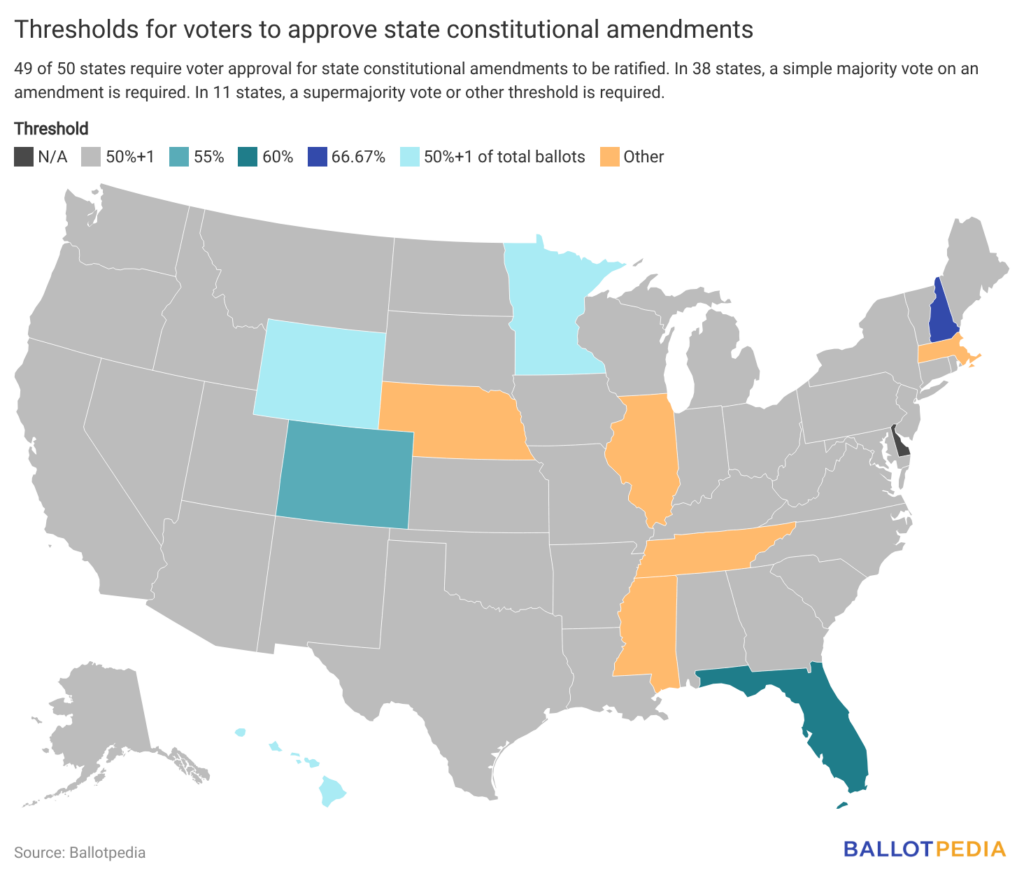
Since Initiative 177 is a constitutional amendment, it would require a 55% supermajority vote for approval. Colorado is one of 11 states where a state constitutional amendment must receive more than a simple majority of the vote to be approved.
Click here to read more about Initiative 177, and here to check out the seven other measures on the Nov. 3 ballot in Colorado.