


Welcome to Hall Pass, a newsletter written to keep you plugged into the conversations driving school board governance, the politics surrounding it, and education policy.
In today’s edition, you’ll find:
- On the issues: The debate over closing low-enrollment schools
- School board filing deadlines, election results, and recall certifications
- Three Arizona candidates are running for two at-large seats on the Higley Unified School District’s Governing Board
- Extracurricular: education news from around the web
- Candidate Connection survey
On the issues: The debate over closing low-enrollment schools
In this section, we curate reporting, analysis, and commentary on the issues school board members deliberate when they set out to offer the best education possible in their district. Missed an issue? Click here to see the previous education debates we’ve covered.
A confluence of factors, chief among them falling birth rates, is contributing to a decline in K-12 public school enrollment. An analysis by the libertarian Reason Foundation found that only eight states gained students in the 2024-25 school year, while most of the rest saw their student populations shrink.
According to the National Center for Education Statistics (NCES), districts have been closing schools at an accelerating rate since the COVID-19 pandemic. During the 2025-26 school year, districts closed 1,192 schools — an increase from 2021-22, when 755 closed.
In most states, the state portion of school funding is tied to enrollment, meaning that a decline in students puts pressure on district budgets. One way districts attempt to address a shrinking student population is by closing or consolidating low-enrollment schools. But school closure plans often generate opposition as families and teachers rally in support of their neighborhood schools.
Today, we look at contrasting perspectives on whether districts should close or consolidate low-enrollment schools.
Tina Wu Fredericks, the president of the Pasadena Unified School District school board in California, says school consolidation is necessary if the district wants to avoid laying off more personnel and undermining the quality of the education it offers to students. Fredericks says that strategically closing low-enrollment schools allows the district to reallocate resources to the remaining schools, making them better and inspiring confidence in parents. Fredericks recommends the district develop a plan for strategically closing schools and creating more opportunities for students that don't have to rely on asking taxpayers to approve bond measures every few years.
Bates College education professor Mara Casey Tieken says school closures are a misguided and sometimes harmful reaction to district budgetary woes, and that there are better ways for districts to save money. Tieken says that closing schools doesn’t usually save districts money, in part because they end up paying more to transport students or renovate classrooms and buildings. Tieken says closures tend to fall most heavily on disadvantaged students and poor communities, and worsen racial, social, and economic inequities. Tieken recommends districts explore other ways to save money, like cooperating with nearby districts on transportation. If districts must close schools, Tieken says they can convert the old buildings into facilities useful to communities, like preschools.
Reimagining Pasadena Unified School District: Fewer Schools, Stronger Schools. A District that Works for All Students | Tina Wu Fredericks, Pasadena Now
“Your tax dollars have made a significant difference for students and teachers every day. But I believe there is room for improvement, room for the district to be more fiscally responsible with your precious tax dollars. Let’s avoid asking for another bond measure in four years. We can maximize our tax dollars by not spending money on half-empty schools that may eventually have to close. By making decisions now, we can begin making plans for transitioning programs and reinvesting bond funds to level up fewer schools with truly state of the art facilities. This is something I want to stress – Fewer schools will allow for higher investments at each remaining school site, which will translate to more opportunities to make our programs accessible to more students.”
Shuttering public schools is a strategy that rarely saves much money and often leads to test score declines | Mara Casey Tieken, The Hechinger Report
“Because closures usually don’t reduce staff and often incur new transportation or renovation costs, they rarely save much money. They can also lead to declines in test scores in the short term and diminished college completion and employment outcomes in the long term.
“Closures can lead to other problems as well. Absenteeism and behavioral issues may increase. In rural areas, students can spend upward of four hours a day on the bus, often on treacherous routes. Closures can mean job loss and shuttered businesses for local communities. The burden of closure is also unequal, disproportionately impacting Black students and low-income students.”
School board update: filing deadlines, election results, and recall certifications
In 2026, Ballotpedia will cover elections for more than 30,000 school board seats. We’re expanding our coverage each year with our eye on covering the country’s more than 80,000 school board seats.
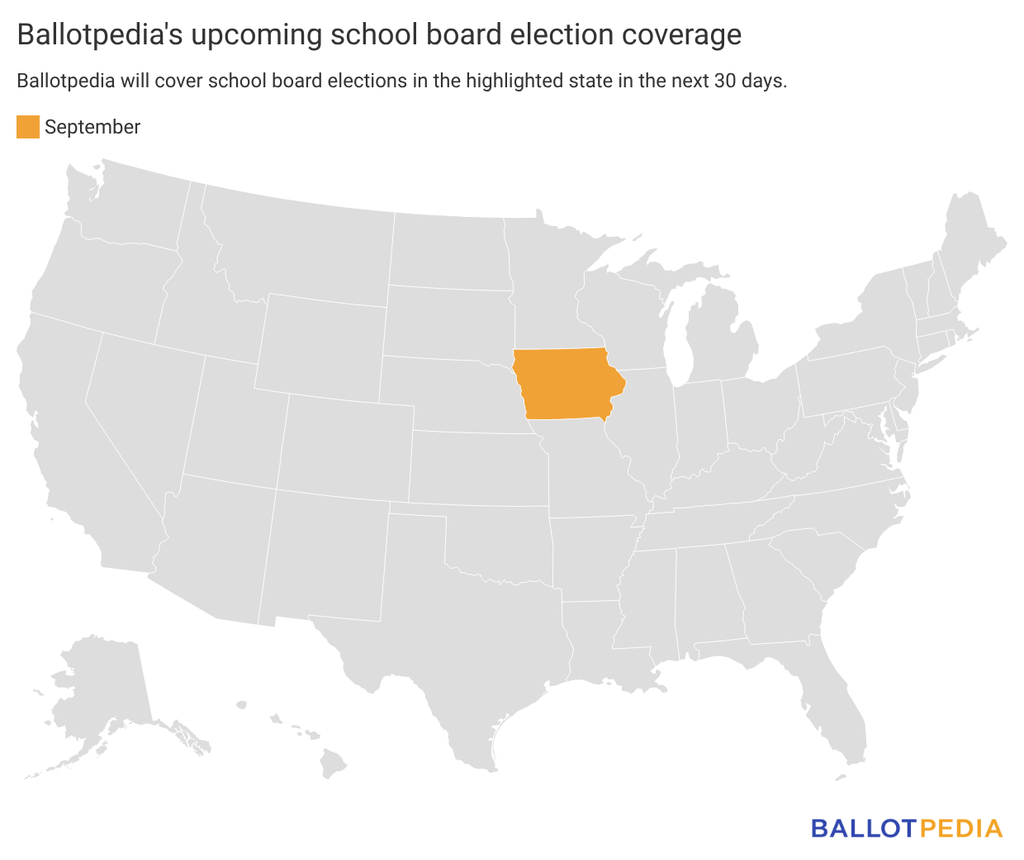
- Ballotpedia will cover a special general election in Iowa for an at-large seat on the Pleasantville Community School District on Sept. 22.
Three Arizona candidates are running for two at-large seats on the Higley Unified School District’s Governing Board
A version of this story appeared in the Sept. 16 edition of The Daily Brew. Click here to get our top local, state, and federal political stories delivered each weekday to your inbox.
Southeast of Phoenix, Arizona, the Higley Unified School District covers parts of Gilbert, Mesa, and Queen Creek, in one of the fastest-growing regions in the country. This year, three of the five seats on the district’s Governing Board are on the ballot, including a special election to fill a vacancy.
Today, we’re going to look at the race for two at-large seats on the board, and the three candidates — including two incumbents — running in it. Unions endorsed two of the candidates, including an incumbent. The other incumbent has aligned herself with Moms for Liberty, an organization that says its mission is “unifying, educating, and empowering parents to defend their parental rights at all levels of government.”
All three candidates completed Ballotpedia’s Candidate Connection survey. Ballotpedia’s Candidate Connection helps voters better understand how their candidates think about the world and intend to govern. The survey becomes even more valuable when every candidate in a race completes it, allowing voters to compare and contrast the choices before them.
Higley Unified School District is the 20th-largest district in Arizona. Roughly 13,000 students attended the district's 16 schools in the 2023-24 school year. The election is taking place amidst declining student enrollment and budgetary challenges.
Two incumbents and a challenger
Incumbents Anna Van Hoek and Amanda Wade and challenger Michelle Morris are running in the election for two at-large seats. Both Van Hoek and Wade were elected in 2022. Van Hoek has worked in banking, television, law enforcement, and insurance, while Wade has worked as a teacher. Morris has worked as a certified public accountant.
In her survey, Van Hoek said, “The public policy areas I care most about are education, parental rights, government transparency, and fiscal accountability. As a school board member, I believe parents are a child's first and most important teacher, taxpayers deserve openness and responsible stewardship, and every decision should be measured by whether it helps students succeed academically. My focus has always been on putting students first while ensuring the community's trust is earned through transparency and sound governance.”
Van Hoek signed Moms for Liberty’s Parents Pledge, which states that candidates will “honor the fundamental rights of parents including, but not limited to the right to direct the education, medical care, and moral upbringing of their children.” She wrote, “We have seen the damage that teachers unions and political agendas have done to public education across this country. Supporting teachers does not require supporting a union's political agenda. Those are two very different things.”
The Student First Coalition, which says that it supports conservative school board candidates, endorsed Van Hoek.
Wade is the president of the Governing Board. In her survey, Wade said, “Schools should be represented by individuals that know and understand how schools work. Public education has been constantly attacked by individuals who have no experience in education and have no interest in taking the time to see what is actually happening in our classrooms. Higley schools constantly perform amongst the top schools in the state and yet we still have folks claiming that Higley isn't doing its job. Higley needs champions to help keep our staff and students supported as they continue to provide the best possible education to our community.”
The Higley Education Association, the local teachers union, endorsed Wade, as did Save Our Schools Arizona, which says it is “fighting for strong public schools for a strong Arizona” and opposes Arizona’s private school choice programs.
Morris, in her survey, said, “I am passionate about ensuring all students have the opportunity, support and resources needed to reach their full potential knowing every child has unique strengths, needs and abilities. I am equally committed to being fiscally responsible and transparent with our community. The community deserves open communication and confidence that every decision is made with integrity and accountability. Finally I believe teachers and staff are the foundation of student success. They deserve to feel valued, respected and supported.”
The Higley Education Association and Save our Schools Arizona also endorsed Morris.
District challenges
The Higley Unified School District faces declining student enrollment and the expiration of a 15% maintenance-and-operations (M&O) budget override that voters approved in 2019. The override allowed the district to increase its maintenance and operations budget through 2026. Voters rejected the district’s request to extend the M&O in 2024 and 2025. According to the Gilbert Sun News, the “board earlier this year cut 37 teacher and teacher-support positions and 8.5 non-teaching positions, and eliminated an estimated $3.5 million in expenses.” The district cut 80 staff positions in 2024.
Van Hoek was the only member of the board to vote against placing a measure extending the M&O in 2024. She said the district would need to “look at budget reductions because we have to go back to functioning without ESSER [Elementary and Secondary School Emergency Relief] funds.” In a June 2026 op-ed in the AZ Free News, Van Hoek said the district should develop a 10-year facilities plan to deal with underutilized school facilities: “I believe the next step is for the district to begin a formal long-range facilities planning process. Whether through a board committee, community task force, or strategic planning effort, we need to start having honest discussions about enrollment trends, facility utilization, future land use, and the long-term costs associated with maintaining excess capacity.”
Wade supported the M&O in 2024 and 2025. In 2024, Wade said, “For those individuals who may feel as if they don't see the benefits of this, I challenge you to take a step back and look at some of the things that not only that schools provide for the community but how that reflects on your neighborhood, your home value and the desire for individuals to be here.”
Ballotpedia has not been able to identify whether Morris has taken a position on the M&O, but she did write: “With my background in accounting, I understand the financial challenges facing the district, especially following the recent override outcome, and I am prepared to help make thoughtful, responsible decisions about the district spending moving forward.”
The Higley Education Association has supported extending the M&O.
Click here to learn more about the Higley Unified School District elections this year. If you’re running for school board, complete the survey to tell voters what you stand for.
Extracurricular: education news from around the web
This section contains links to recent education-related articles from around the internet.
- A dire education report, but we can’t give up | Deseret News
- Federal K-12 Funding Falls From Pandemic-Era Highs | Legis1
- Aristotle and AI | Anecdotal Value
- School board advocacy group tees up potential legislative priorities | Idaho Ed News
- Americans’ satisfaction with schools is at a low point, new Gallup poll shows | Los Angeles Times
Take our Candidate Connection survey to reach voters in your district
Today, we’re looking at survey responses from incumbent Kaushik Joglekar and Sophie Freestone, the two candidates running in the Nov. 3 general election to represent Trustee Area 3 on the Oak Grove School District school board, in California.
Oak Grove is the 162nd largest district in California with roughly 8,700 students. It is located southeast of San Jose.
As a reminder, if you're a school board candidate or incumbent running this year, click here to take the survey. If you complete the survey, your answers will appear in your Ballotpedia profile. Your responses will also appear in our sample ballot. If there is an election in your community, share the link with your candidates and urge them to take the survey!
Joglekar was appointed to the board in 2025. His career experience includes working in information technology. Here’s how Joglekar answered the question, “What are the main points you want voters to remember about your goals for your time in office?”
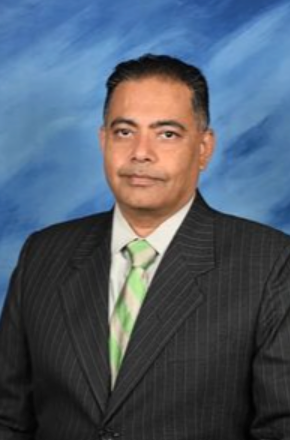
- “Educational Equity: Ensuring every child, regardless of background, receives the resources and support they deserve.
- Fiscal Transparency: Being a responsible steward of taxpayer dollars while prioritizing children's academic success.
- Future-Ready Classrooms: Bringing modern tools, strong foundational learning, and innovative programs to our students.”
Click here to read the rest of Joglekar’s responses.
Freestone’s career experience includes working as a homemaker. Here’s how Freestone answered the question, “What are the main points you want voters to remember about your goals for your time in office?”

- “Fairness in Resources and Infrastructure Not all schools in Oak Grove School District are getting a fair deal. Some schools have seen renovations and updated resources while others are making do with old equipment and outdated materials. I will fight to ensure every school gets a fair share of resources, because every student deserves the same quality learning environment regardless of which school they attend.
- Transparency About Funding The school district budget is complicated, but that's not an excuse to keep the community in the dark. Oak Grove has struggled to share the details of how money is spent, leaving many families feeling like funds are wasted or mishandled. I will work to make funding clear and accessible to the public, and ensure the community has a real voice in budget decisions, especially when cuts to student-facing services like support staff are on the table.
- Community Building: Growing up, my family moved around a lot, so I know firsthand how hard it can be to build a sense of belonging. That's why creating a strong, supportive community matters so much to me. When I stepped back from work to raise my kids, I made it my job to focus on giving them the strong community I didn't always have. I started volunteering at their schools and joined the parent association at Parkview Elementary. I am passionate about education and believe every child deserves fair access to learning opportunities. I want a strong community for all students, not just my own, which is what I’ll bring to the School Board.”
Click here to read the rest of Freestone’s responses.