


On Nov. 3, voters in Culver City, California, will weigh in on a ballot measure that would allow 16- and 17-year-olds to vote in city and school district elections.
If approved, Culver City would become the fourth municipality in California and the 16th nationally to allow individuals under 18 to vote in at least some local elections.
Currently, 16-year-olds in Albany, Berkeley, and Oakland are permitted to vote in school board elections. Sixteen-year-olds in Newark, New Jersey, are also eligible to vote in school board races, while 16-year-olds in 10 Maryland municipalities, as well as Brattleboro, Vermont, are permitted to vote in local municipal elections.
Implementation of the Culver City ballot measure would be contingent on funding and logistical systems being in place. A similar measure in 2022 was defeated, with 50.05% of voters opposing the measure.
During a city council meeting, council member Bryan Fish said, “I think this is something the city should support. We're not the first — Oakland, Berkeley, other cities across the country, Albany. It is a growing movement.”
Council member Dan O’Brien said, “I don't think 16-year-olds and 17-year-olds should be voting on issues where they are electing people who are going to choose how our money is spent, or they're voting on measures that involve taxes.”
The 26th Amendment to the United States Constitution, ratified in 1971, lowered the minimum voting age in the U.S. from 21 to 18. This does not prevent jurisdictions from allowing individuals to vote in local elections before the age of 18.
Seventeen-year-olds in 22 states and the District of Columbia are also permitted to vote in state, congressional, and presidential primaries if they will be 18 by the subsequent general election. In two other states, these voters can vote in Democratic presidential primaries or caucuses.
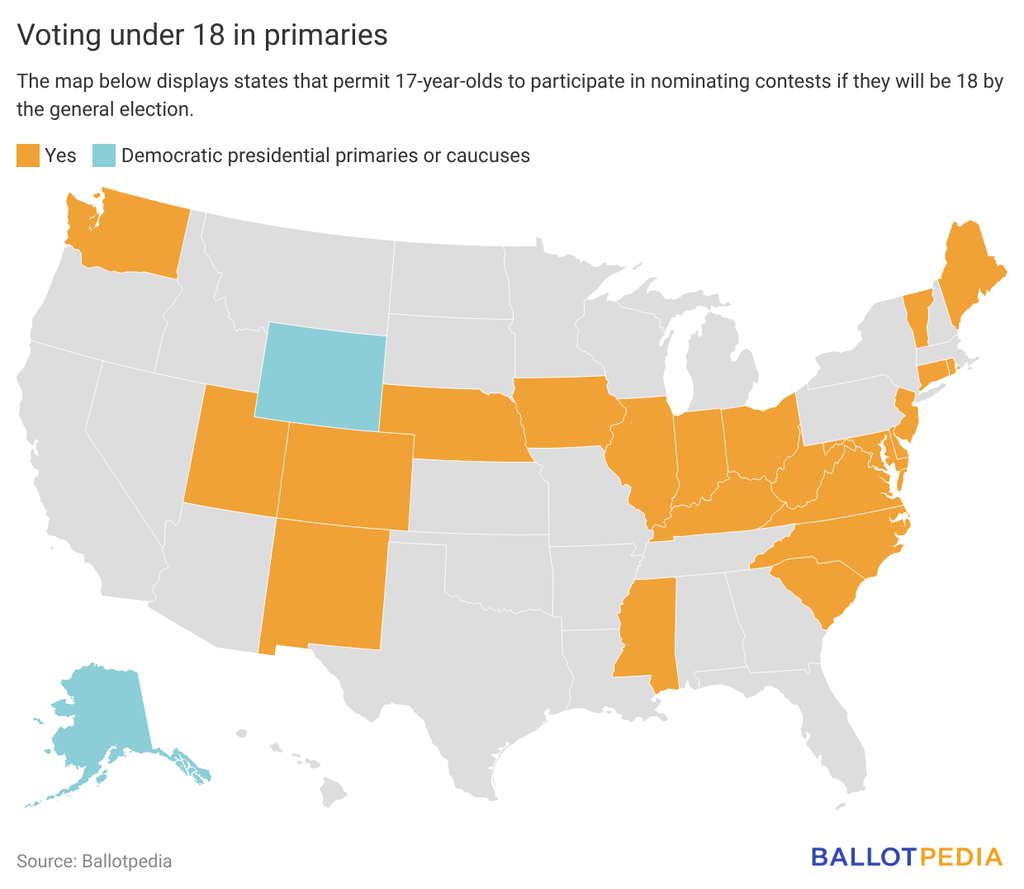
Laws in several of these states either require these voters to use a special ballot or prohibit them from voting on certain parts of a primary ballot, such as a public question or ballot measure.
In all 49 states with voter registration, individuals under 18 may pre-register to vote. Those voters fill out a voter registration form that is on file with election officials. Once a person turns 18, they are registered to vote and able to cast a ballot.
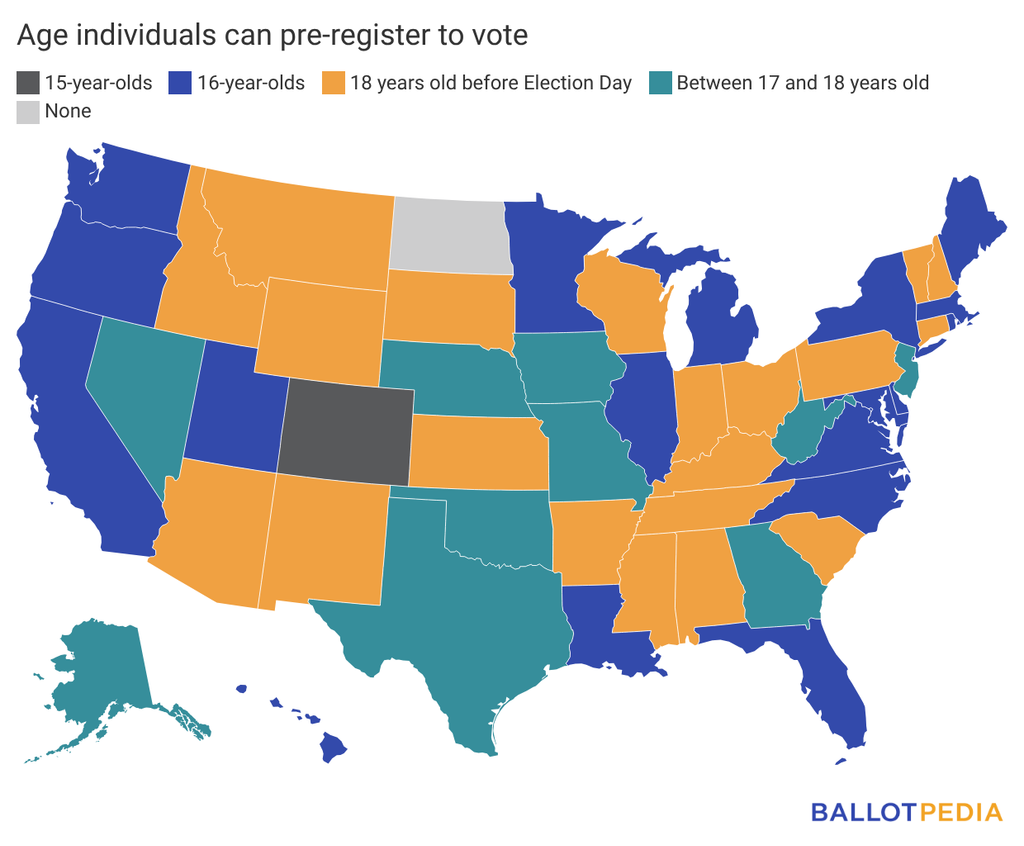
Twenty states allow anyone who will be 18 by the next election to pre-register, while 10 states allow at least some 17-year-olds to do so. Eighteen states and the District of Columbia allow 16-year-olds to pre-register, while Colorado allows pre-registration for 15-year-olds.