


Welcome to Hall Pass, a newsletter written to keep you plugged into the conversations driving school board governance, the politics surrounding it, and education policy.
Dear readers: We'll be taking a break from Hall Pass next week as Ballotpedia is covering tens of thousands of elections on Nov. 3. Hall Pass will return to your inboxes on Nov. 11. Don’t forget to use our Sample Ballot Lookup Tool before you head to the voting booth, and be sure to subscribe to the Daily Brew for the sharpest pre- and post-election analysis of races up and down the ballot. Happy voting!
In today’s edition, you’ll find:
- On the issues: The debate over continuing to fund San Antonio’s full-day pre-kindergarten program
- School board filing deadlines, election results, and recall certifications
- School board elections to watch on Nov. 3
- Extracurricular: education news from around the web
- Candidate Connection survey
On the issues: The debate over continuing to fund San Antonio’s full-day pre-kindergarten program
In this section, we curate reporting, analysis, and commentary on the issues school board members deliberate when they set out to offer the best education possible in their district. Missed an issue? Click here to see the previous education debates we’ve covered.
Next week, voters in San Antonio, Texas will decide whether to continue dedicating tax revenue to the city’s early childhood education program.
In 2012, the city approved Proposition 1 in a 54-46% vote, establishing a full-day pre-kindergarten program known as Pre-K 4 SA. The measure created the Early Childhood Education Municipal Development Corporation to oversee the program and directed one-eighth-cent of the local sales tax (or 0.125%) to fund it for eight years. In 2020, voters renewed the program for another eight years in a 73-27% vote.
Through partnerships with local districts, the program provides prekindergarten education to more than 2,000 three- and four-year-olds annually at one of four educational centers across the city. In 2025, one of the centers began offering classes for infants and toddlers. Some students are eligible to attend for free, depending on factors like family income, while others may receive tuition assistance.
Although funding for the program continues through June 2029, the San Antonio City Council in 2026 voted 7-2 to put the question of renewing the program before voters early. Proposition A would extend the program, and the portion of the sales tax dedicated to it, 20 years into the future. The five city council members who voted to place Proposition A on the ballot said in a jointly-authored memo: “While the current authorization remains in place through 2029, acting now provides the certainty needed for thoughtful long-term planning.” The two who voted no said they were concerned that 20 years was too long to go without voter input and that it wasn’t clear how the future funding would be spent.
Today, we hear arguments for and against extending Pre-K 4 SA from local voices.
Bob Comeaux, Jo Anne Comeaux, Tom Cummins, Shelley Potter, who describe themselves as teachers and education advocates, say that defeating Proposition A would give the city more time to evaluate Pre-K 4 SA and assess the city’s future needs. They say that while they support early education programs, Pre-K 4 SA competes with cash-strapped local districts’ pre-K programs, redirecting students and revenue from neighborhood schools. If Texas decides to fund a statewide pre-K program in the next 20 years, the authors write that Pre-K 4 SA could become even more redundant. The authors also say Pre-K 4 SA’s portion of the sales tax should be restored to the VIA Metropolitan Transit, the region’s bus and paratransit system, to accommodate a growing population.
Corinna Hold Richter and Peter J. Holt, president and CEO, respectively, of industrial equipment business HOLT Group, urge voters to approve Proposition A. Richter and Holt say Pre-K 4 SA is an investment in families and the workforce, providing both education for children and childcare for parents who may be unable to afford other options. Richter and Holt say Pre-K 4 SA benefits women, especially, who often feel they must choose between staying at home with their children and furthering their careers. Richter and Holt say Pre-K 4 SA is essential for developing a competitive workforce and stemming the tide of businesses and employees moving to cities with potentially more opportunities.
Voters should reject 'ill-conceived' Pre-K 4 SA 20-year extension | Bob Comeaux, Jo Anne Comeaux, Tom Cummins, Shelley Potter, San Antonio Express-News
“Pre-K 4 SA duplicates excellent independent school district programs.
“It takes students away from their neighborhood public schools, or at least programs in their school district.
“It competes with, and potentially harms, local entrepreneurs who operate early childcare facilities in the private sector.
“It eliminates the last funding source for VIA Metropolitan Transit, one of the most underfunded transit authorities in the country. In doing so, it undermines the city’s future transportation needs at a time when the population is expected to grow by hundreds of thousands of people.”
Reliable child care keeps San Antonio working. Support Pre-K 4 SA. | Corinna Holt Richter, Peter J. Holt, San Antonio Express-News
“Many parents struggle to access high-quality, affordable childcare that, in turn, empowers their own employment. According to the Center for American Progress, nationwide in 2023, 2.2 million parents with children younger than 6 reported quitting, declining or changing jobs due to challenges accessing childcare.
“This issue disproportionately affects women in the workforce, who often find themselves balancing work and parenting in a constant game of sacrifice. According to a 2023 survey conducted by the Harris Poll, 67% of working women with children were concerned that their childcare responsibilities would negatively impact their careers.”
School board update: filing deadlines, election results, and recall certifications
In 2026, Ballotpedia will cover elections for more than 30,000 school board seats. We’re expanding our coverage each year with our eye on covering the country’s more than 80,000 school board seats.
Upcoming school board elections
On Nov. 3, Ballotpedia will cover elections for over 8,000 school board seats in 34 states. Nearly 12,000 candidates are running.
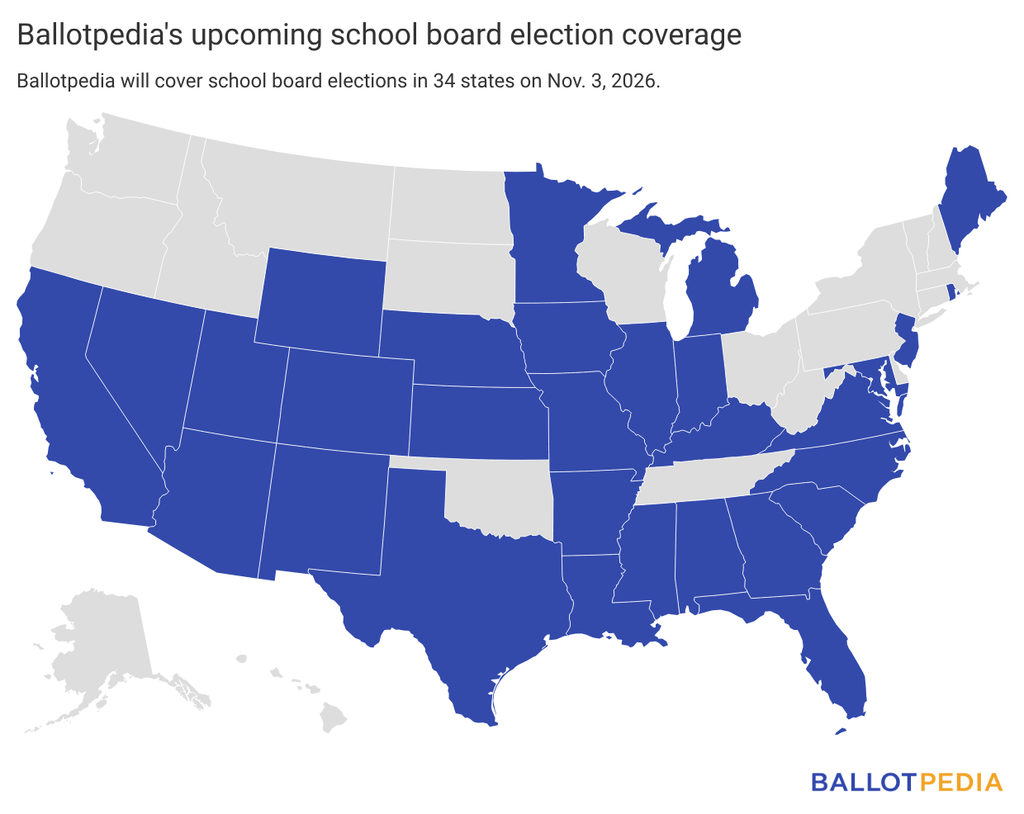
Click here to learn more about Ballotpedia’s 2026 school board election coverage.
School board elections to watch on Nov. 3
School board elections are unlikely to be among the country’s most closely watched races on Election Day, but they still matter. At a time when public schools face many urgent challenges, from declining student enrollment to the question of whether and how to use artificial intelligence (AI) in the classroom, voters on Tuesday in more than 34 states and thousands of districts have the opportunity to select the school board members who will help their districts navigate the future.
Below, we’ve selected three school board elections to watch on Nov. 3 that feature disagreements over important education policy topics or where partisan or ideological control of the board could change.
Baltimore City Public School System, Maryland
Incumbent Commissioner Ashley Esposito, incumbent Commissioner Kwame Kenyatta-Bey, Jamar Day, and Domonique Flowers are running in the general election for two at-large seats on the Baltimore City Board of School Commissioners.
Why it matters: Although the board is officially nonpartisan, all four candidates are Democrats. According to The Baltimore Banner's Maya Lora, each candidate represents a different faction within the party. Esposito identifies as a Democratic Socialist. Kenyatta-Bey said his "political philosophy centers [on] what his community wants and needs." Day identifies as a progressive Democrat. Flowers identifies with moderate liberalism. Click here to learn about the candidates' stances.
Zoom in: This general election is the second ever for seats on the board, following the 2022 general election. The elections happened after the Maryland General Assembly passed a bill in 2016 allowing voters to elect two of the 12 commissioners on the board.
- The mayor of Baltimore appoints nine other commissioners, and high school students elect one of their peers to serve as a student commissioner.
- Esposito and Kenyatta-Bey won the 2022 general election for the two seats.
Learn more about the district: The Baltimore City Public School System is located in Baltimore County, Maryland. There are 151 schools in the district. The district had 75,811 students during the 2023-2024 school year. It is the third-largest in the state.
Read more about this election and the candidates here.
Cobb County School District, Georgia
Incumbent David Chastain (R) and Michael Garza (D) are running to represent District 4 on the Cobb County School District school board.
- Garza has completed Ballotpedia’s Candidate Connection survey.
Why it matters: According to the Marietta Daily Journal, the race for District 4 “has been closely watched by Democrats and Republicans as it will decide if Republicans maintain their 4-3 majority on the Cobb Board of Education.” Three of the seven seats on the board are up for election this year, but only the race for District 4 is contested. Incumbents Becky Sayler (D) and Nichelle A. Davis (D) are running unopposed for Districts 2 and 6, respectively.
Meet the candidates:
- Chastain: Chastain has campaigned on his commitment to school safety as well as on the board's investments in school infrastructure through Ed-SPLOST VI, a five-year, one-cent sales tax voters approved in 2021.
- Garza: In his Ballotpedia survey, Garza said, “Many families have experienced challenges having their students' needs met and we have seen our district eliminate special education classrooms and reduce staffing positions to assist students who are falling behind. This is a combination of state funding and our district leadership not prioritizing funding, training, and resources for these students.”
Background: The Atlanta Journal-Constitution’s Cassidy Alexander wrote in 2024 that “Cobb and Forsyth counties have been ground zero for classroom culture wars in Georgia, with issues like book bans and censorship dominating board meetings in the last few years.”
- That year, Republicans maintained their 4-3 majority. The candidates had differing views on the district's budgeting process, school safety, and approach to book selection.
Chicago Public Schools, Illinois
Chicago Public Schools (CPS) is the fourth-largest district in the country by student enrollment and has one of the largest school boards by membership. How many, you ask? On Nov. 3, Chicago voters will elect all 21 members of the board.
Forty-six candidates are running.
Why it matters: Following a 2023 change to state law that expanded the board’s size and shifted it away from being wholly mayor-appointed, Chicagoans will for the first time elect candidates to all 21 seats. According to the Chicago Tribune, “Two main blocs are competing for influence on the board: Those aligned with the progressive CTU [Chicago Teachers Union] and [Mayor Brandon] Johnson, and those who are not. Most opposing candidates have support from several pro-school-choice groups that have opposed CTU, including the Illinois Network of Charter Schools, Common Ground Collective, and the Urban Center.”
- The board oversees a budget of more than $10 billion, hires the superintendent, approves union contracts, and decides whether to close schools.
Background: Between 1995 and 2023, the mayor of Chicago was responsible for appointing a seven-member board, but that changed when Gov. J.B. Pritzker (D) signed legislation that expanded the board from seven to 21 members beginning in January 2025 and introduced elections in stages. The city elected 10 members for the first time in November 2024, while Mayor Brandon Johnson appointed the remaining 11.
- Charter, magnet, and elective enrollment schools were a central issue in the 2024 elections, along with funding, student absenteeism, school closures, and safety.
- The CTU, which sought to strengthen traditional neighborhood schools, and the Illinois Network of Charter Schools (INCS), which advocated for charter schools, backed competing candidates who took different stances on the role of choice in the system.
- The Chicago Sun-Times described the aftermath of the election in the following way: “After a set of campaigns largely defined by opposing progressive and more conservative education movements, mixed election results Tuesday night gave neither the Chicago Teachers Union [CTU] nor charter school advocates a major cause for celebration in the city’s first-ever school board elections.”
- Click here to read Ballotpedia’s in-depth coverage of the 2024 Chicago school board elections.
The intrigue: The Service Employees International Union (SEIU), which represents support and operational staff in public schools, and the CTU are largely backing different candidates. That's a departure from 2024 when they endorsed the same candidates. This comes after disputes between the two unions in 2025.
Extracurricular: education news from around the web
This section contains links to recent education-related articles from around the internet.
- California is about to overhaul the way it runs K-12 schools. Will it fix a fragmented system? | Cal Matters
- McMahon Appoints New Board Members to Steer K-12 Testing Policy | Bloomberg Government
- Does the D.S.A. Have a Vision for Public Schools in New York? | The New Yorker
- Virginia lawmakers approve plan to advance new K-12 school funding formula | Virginia Mercury
- Vacant and vandalized, this $34-million LAUSD campus could be a sign of what’s to come | Los Angeles Times
- Teachers are struggling to support children whose lives are upended by immigration police | The Hechinger Report
- Mamdani under fire over NYC schools as critics say mayor is devoid of education agenda despite $38B budget | Fox News
Take our Candidate Connection survey to reach voters in your district
Today, we’re looking at survey responses from Vital Anne and Beau Taylor, two of the five candidates running in the Nov. 3 general election for two at-large seats on the Troy School District Board of Education, in Michigan.
Walt Cook, Mary Gunn, and Michele Maleszyk are also running but hadn’t completed the survey as of this writing.
Troy, the 12th largest district in Michigan with roughly 12,000 students, is located about 15 miles north of Detroit.
As a reminder, if you're a school board candidate or incumbent running this year, click here to take the survey. There’s still time to get your responses on your Ballotpedia profile before Election Day! Your responses will also appear in our sample ballot. If there is an election in your community, share the link with your candidates and urge them to take the survey!
Incumbent Vital Anne was appointed to the board in 2020. Her career experience includes working in engineering and IT. Here’s an excerpt of Anne’s answer to the question, “What are the main points you want voters to remember about your goals for your time in office?”
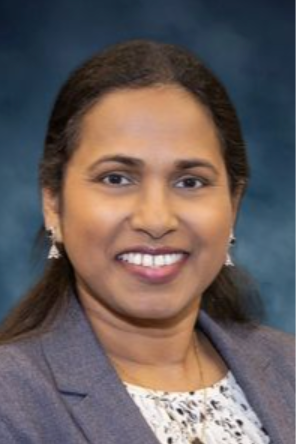
- “Every child should have access to a quality education in a safe, equitable, and welcoming environment. Providing that opportunity requires a clear vision, high expectations, and a strong partnership with our community. Vital believes in our children and their potential to achieve great things. Together, our schools and community can create safe, nurturing environments where students thrive academically, socially, and emotionally—and grow into confident, empathetic, successful adults.
- “Troy is a diverse community, and families choose to live here because of our exceptional schools. Vital will work hard to maintain that excellence and ensure a quality education for every student.
- “Academic Excellence for Every Student: Maintain high standards while supporting students with different needs, strengths, and goals.
- “Responsible Financial Stewardship: Make thoughtful, data-informed decisions that protect classroom priorities and ensure responsible use of taxpayer resources.
- “Technology & Student Well-Being: Promote thoughtful, effective use of technology while considering its impact on student learning, development, and well-being.
- “Belonging & Student Success: Strive to ensure every student feels welcomed, supported, valued, and included in their school community.”
Click here to read the rest of Anne’s responses.
Beau Taylor’s career experience includes working as a public-sector CEO. Here’s how he answered the question, “What are the main points you want voters to remember about your goals for your time in office?”

- “Every kid has a face and a name and no child should be looked at as a statistic. Standardized tests should be used to assess individual kid's aptitude and needs and not just a measure of District performance. From special needs to advanced placement, each child has a characteristic that can flourish if we ensure our schools bring out the best in each kid.
- Every Child. Every School. Every Opportunity in every Community is my message.
- Hold those we hire to lead our District accountable on an annual basis for the things they commit to. I want to see us expand vocal music and fine arts to each high school and take a deep dive into other extra curriculars athletics to see if there are ways that we can reach some of our more diverse
- Lead with a positive message. Our kids are watching us and we need to lead by example.”
Click here to read the rest of Taylor’s responses.