


Welcome to Hall Pass, a newsletter written to keep you plugged into the conversations driving school board governance, the politics surrounding it, and education policy.
In today’s edition, you’ll find:
- On the issues: The debate over Texas’ private school choice program
- School board filing deadlines, election results, and recall certifications
- How elections for chief state school officers and state board of education members played out on Nov. 3
- Extracurricular: education news from around the web
- Candidate Connection survey
On the issues: The debate over Texas’ private school choice program
In this section, we curate reporting, analysis, and commentary on the issues school board members deliberate when they set out to offer the best education possible in their district. Missed an issue? Click here to see the previous education debates we’ve covered.
On Nov. 3, Texas gubernatorial candidate Gina Hinojosa (D) defeated Gov. Greg Abbott (R), giving the Democratic Party control of the governor’s mansion for the first time since 1995. Democrats also won a majority of seats in the Texas House of Representatives. Republicans will maintain control of the state Senate. Additionally, if current results hold, Democrats will gain a majority of the State Board of Education’s 15 seats.
As the candidates-elect prepare to assume office, a big question is what they intend to do about the state’s Education Freedom Accounts, a universal education savings account (ESA) program Abbott signed into law in 2025. The program provides eligible students with up to $10,474 in government funding — and more for students with disabilities — for private school tuition or other qualified expenses. As of Aug. 10, more than 118,000 students had been awarded funding through the program for the 2026-27 school year. The Texas Legislature appropriated $1 billion for the program during the 2026-27 school year. During the 2024-25 school year, Texas public schools spent roughly $72 billion, a figure that includes state, local, and federal funding.
Texas is one of 18 states with private school choice programs available to all or most students.
No Democratic members of the Texas House or Senate voted for the program in 2025. Hinojosa, a former member and president of the Austin Independent School District school board said on her campaign website: “Greg Abbott’s voucher scam was never about helping kids — it’s a payout for the privileged.” State Rep. Diego Bernal (D), vice chair of the House education committee, said, “I guarantee that program is not going to be untouched, and it will be probably unrecognizable, if not extinct, by the time we’re done with it.”
Texas’ next legislative session begins in January. Today, we’re bringing you two opposing perspectives on the ESA program.
Jeb Bush (R), the former governor of Florida who in 1999 signed into law the country’s first statewide private school choice program, says Texas’ Education Freedom Accounts make it more likely families will find the right school for their children, and that the program won’t affect those who prefer public schools. Bush says Texas’ program, like ones in states like Arizona and Indiana, prioritizes students with disabilities, giving them additional funding. Bush also says the program, since it is new, may have kinks lawmakers and administrators will need to address, and that school choice programs improve over time as more families sign up and schools rise up to meet their needs. He says lawmakers should listen to parents and students about what is and isn’t working — not those who want to restrict choice in education.
Chloe Latham Sikes, the deputy director of policy for the Intercultural Development Research Association, a Texas nonprofit that advocates for public schools, says the Education Freedom Accounts divert funding from public schools and primarily benefit students who’ve never enrolled in the public education system. Sikes says the program doesn’t require private schools to test students using state assessments, making it difficult for families to know how their children are doing compared to their peers in public schools. Private schools, she says, are even allowed to pick and choose which students to admit, unlike public schools. Sikes says the program will harm students left behind in public schools, leaving districts cash-strapped and struggling to provide not only enriching classrooms but also wraparound services like afterschool programs and support for parents.
Building a parent-choice program took Florida years. Texas gets it right from the start. | Jeb Bush, Houston Chronicle
“As this program begins, there will be room for improvement. Programs get better as families use them, providers enter the marketplace, policymakers review progress and administrators identify what needs to be clarified or fixed. What matters is whether leaders listen to parents and keep moving toward a system that is flexible, transparent and responsive to students.
“For too long, too many families have been told to wait for a school to improve, for a service to become available, for the system to meet a child’s needs.
“Parents of special needs students often know those challenges too well and are accustomed to making choices to help their kids. For parents who prefer the traditional public system, they remain free to remain enrolled there. School choice is a choice, after all.”
My Child is Starting Kindergarten. Texas’ Voucher Program Worries Me. | Chloe Latham Sikes, Intercultural Development Research Association
“Despite relying on these taxpayer dollars, the program offers parents no clear way to know whether their children are being set up for success. Private schools that receive voucher dollars are not required to share academic results or offer transparency about what’s taught and how students are treated. And private schools can still choose which students to admit. This lack of accountability is common in voucher systems nationwide, often with serious consequences for families.
“Even before the voucher law took effect, school districts were already grappling with staff layoffs, cutting programs that families rely on like dual language education and, in some cases, like my son’s district, deciding which schools can stay open at all. Vouchers threaten to deepen this instability, raising real fears for families who can no longer be certain their neighborhood school will still exist next year.”
School board update: filing deadlines, election results, and recall certifications
In 2026, Ballotpedia will cover elections for more than 30,000 school board seats. We’re expanding our coverage each year with our eye on covering the country’s more than 80,000 school board seats.
Upcoming school board elections
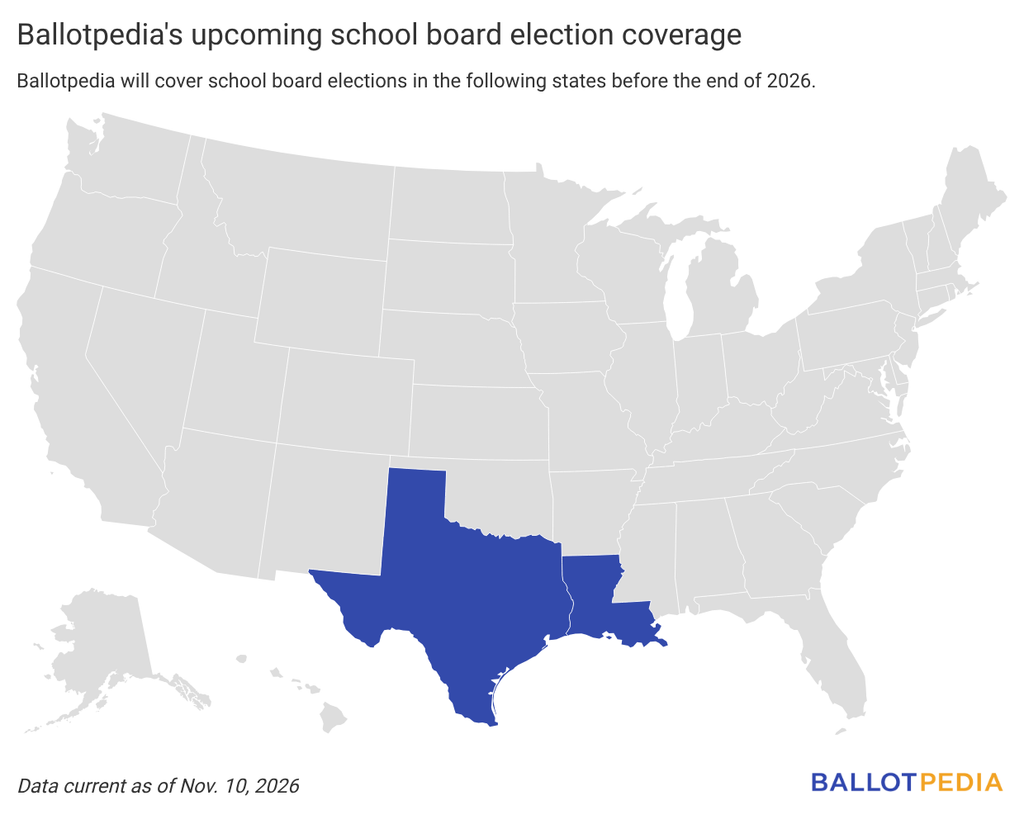
Ballotpedia’s school board election coverage isn’t over yet. We’ll cover elections in districts in Louisiana and Texas on Dec. 12.
Democrats appear to win control of the Texas State Board of Education, plus other Nov. 3 election results
Election Day’s biggest storylines are widely known at this point: Democrats gained control of Congress and won gubernatorial elections in several longtime Republican-led states. But voters decided tens of thousands of down-ballot races that night, many of which have garnered comparatively little attention. That includes the elections that will directly affect K-12 public school systems across the country.
While education wasn't among voters’ most important issues on Nov. 3, at least according to exit polling, they nevertheless weighed in on the topic, electing state superintendents, state board of education members, and school board members. Voters also decided education-related ballot measures at the state and local levels. We previewed elections for state education officers, school boards, and ballot measures in October. Over the next two editions, we’ll explore what the results mean for K-12 education going forward, beginning with state education offices and school board elections.
Any trifecta status referenced below is based on a state's status prior to the Nov. 3 election.
State education offices
Here’s how elections for state boards of education and chief state school officers played out:
- If current results hold, Democrats will gain a majority of seats on the Texas State Board of Education and Republicans will gain a majority on the officially nonpartisan Nebraska State Board of Education. Some races are uncalled as of Nov. 11.
- In four states where governors appoint some or all members of the state board of education, control of the governor’s office changed from Republican to Democratic. The race for Alaska’s governor, who appoints all members of the board, is too close to call as of Nov. 11.
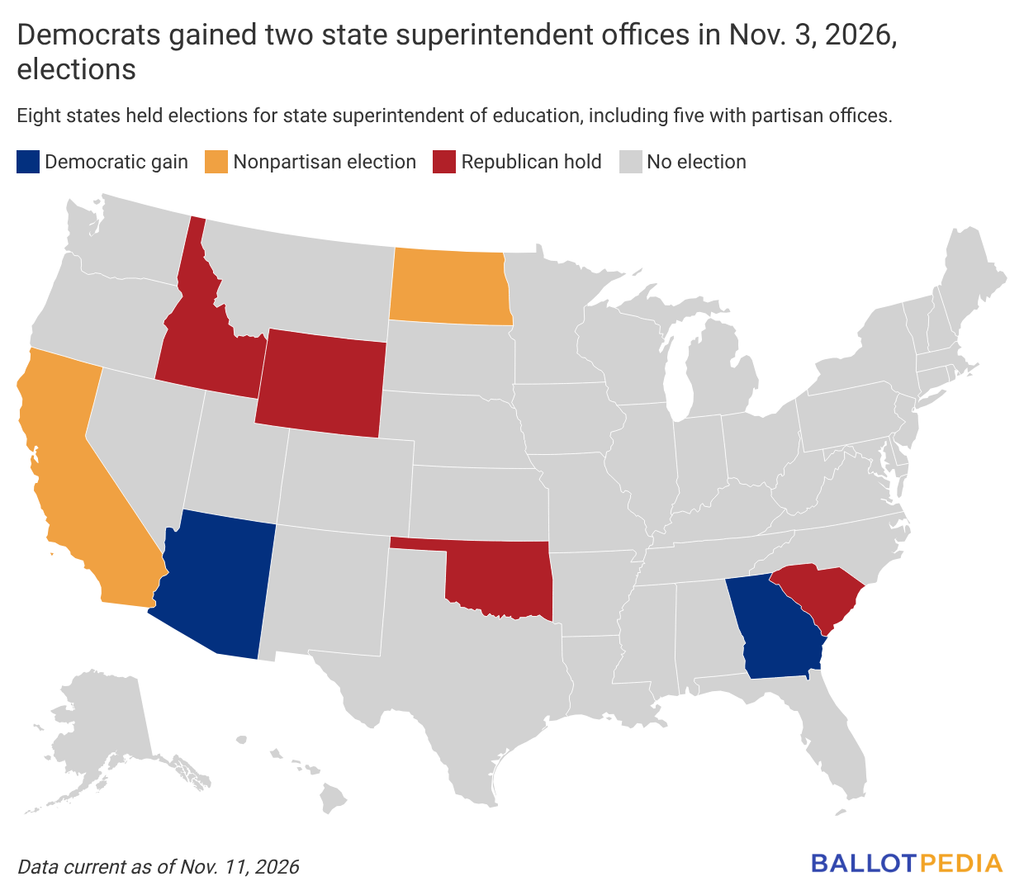
- Democrats in Arizona and Georgia won in their state superintendent elections, gaining control of offices currently held by Republicans.
- Democrats will replace Republican governors in Iowa, Nevada, and Texas, where governors appoint the state superintendent.
State boards of education
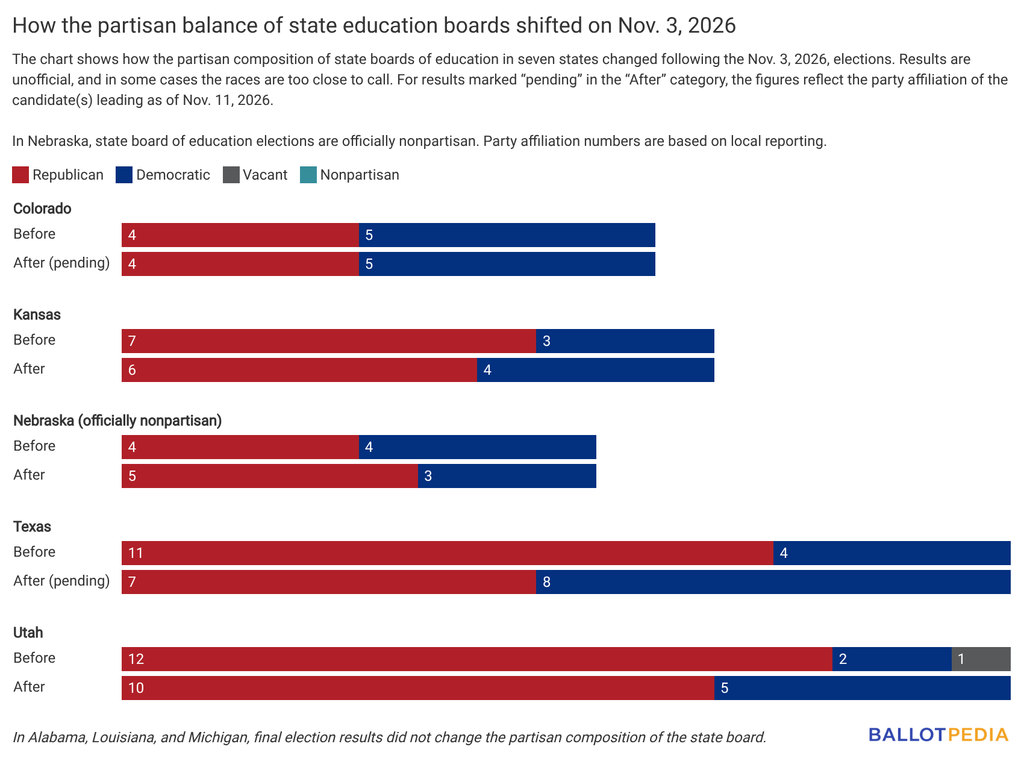
Voters in Alabama, Colorado, Kansas, Louisiana, Michigan, Nebraska, Texas, Utah, and D.C. decided elections for 39 state board of education seats, including special elections in Texas and Louisiana. Races for some seats in the Colorado, Nebraska, and Texas elections are uncalled as of Nov. 11.
According to the National Association of State Boards of Education (NASBE), state boards across the country share the following responsibilities: “(1) authority for adopting and revising policies that promote educational excellence and equity, (2) convening experts and stakeholders to serve as a bridge between policymakers and citizens, and (3) the power to raise questions as the citizens’ voice in education.”
Here’s a more detailed look at elections in a few of those states:
- Colorado (Democratic trifecta): Three of nine seats were up for election on the State Board of Education. Democrats held a 5-4 majority going into the election. The race for District 3, between incumbent Sherri Wright (R) and Barb Clementi (D), was too close to call. The latest results, as of Nov. 11, show Wright ahead of Clementi 51-49%. A Wright victory would maintain the current 5-4 majority on the board, while a Clementi victory would expand Democrats’ majority to 6-3.
- Kansas (divided government): Democrats picked up one seat on the board, narrowing the GOP’s majority from 7-3 to 6-4.
- Nebraska (Republican trifecta): Four of eight seats on the Nebraska State Board of Education were up for election on Nov. 3. The board is officially nonpartisan, but according to the Nebraska Examiner, Republicans and Democrats held an equal number of seats going into the election. The race for District 8, between Lou Ann Goding, a Republican, and Sherrye Hutcherson, a registered nonpartisan, was too close to call. As of Nov. 11, Goding led Hutcherson 51-49%. If Goding were to win, Republicans would hold a 5-3 majority.
- Texas (Republican trifecta): Nine of the board’s 15 seats were up for election this year. Republicans have held a majority on the board since 1994. With the District 8 election the only one still uncalled, Democrats and Republicans hold seven seats apiece. The race for District 8 features incumbent Audrey Young (R) and Dana Van De Walker (D). As of Nov. 11, Van De Walker leads Young 50.05-49.95%, or 564 votes. If Van De Walker wins, Democrats would hold an 8-7 majority. Republicans would hold an 8-7 majority if Young wins.
- Utah (Republican trifecta): Eight of the board’s 15 seats were up for election, though only four were contested. Going into the election, Republicans held a 12-2 majority (with one vacancy for a seat previously held by a Republican). Democrats picked up three seats, narrowing the Republican majority to 10-5.
The seven states that held state board of education elections this year are the only ones where voters elect all board members. In 38 states, governors appoint all or some board members — including in 26 that held gubernatorial elections on Nov. 3. In states where governors appoint some or all members of the state board of education, party control of the governor’s mansion changed in Georgia, Iowa, Nevada, and Ohio, in each case going from Republican to Democratic.
The gubernatorial election in Alaska, where the governor appoints all members of the board, remains too close to call as of Nov. 11.
Chief state school officer
Elections for chief state school officer were held in Arizona, California, Georgia, Idaho, North Dakota, South Carolina, Oklahoma, and Wyoming on Nov. 3. In California and North Dakota, those offices are officially nonpartisan. In the other six states, Republicans held the office heading into the election. Democrats gained control of the office in Arizona and Georgia.
Voters elect the chief state school officer in 12 states. The chief state school officer is known as the superintendent of public instruction or the superintendent of education (or schools), depending on the state. But in each case, the chief state school officer generally oversees the public school system and directs the state department of education.
In 19 other states, the governor appoints the chief state school officer, including in 15 that held gubernatorial elections on Nov. 3. Of those 15, the governorships in Iowa, Nevada, and Texas changed party control. Texas Gov. Hinojosa has said she intends to remove Education Commissioner Mike Morath and appoint a replacement with the Senate’s consent.
School board results
Here’s a look at the results of two of the biggest school board contests we covered:
- Chicago Public Schools, Illinois: Chicago voters elected all 21 members of the Board of Education for the first time. Before 2024, the mayor appointed the board’s members. The current mayor, Brandon Johnson, is a former teacher and organizer with the Chicago Teachers Union. As of Nov. 11, CTU-backed candidates had won at least nine seats and one was ahead in an uncalled race. Candidates the group didn’t endorse won 11 seats. According to the Chicago Tribune, most candidates who the Chicago Teachers Union had not supported had “support from several pro-school-choice groups that have opposed CTU, including the Illinois Network of Charter Schools, Common Ground Collective, and the Urban Center.”
- Cobb County School District, Georgia: The Cobb County School District school board changed from a 4-3 Republican majority to a 4-3 Democratic majority when Micheal Garza (D) defeated incumbent David Chastain (R) in the election for District 4. Click here to read about the campaign issues in this race.
Extracurricular: education news from around the web
This section contains links to recent education-related articles from around the internet.
- ‘Everyone’s saying Texas is blue.’ Education reporters debate the midterms | The Grade
- Google faces mounting backlash for controversial AI school policy | CBS News
- The US ranks last in teacher pay worldwide | K-12 Dive
- Klobuchar inherits Minnesota school district money woes, stagnant test scores | The Minnesota Star Tribune
- Eight ways to make meaningful K-12 school finance reforms | Reason Foundation
- Conn. Lawmakers to Address Cellphones, Tech in Classrooms | Government Technology
- Jeffco Public Schools puts lawsuit against Trump administration on hold after feds agree not to pull funding | The Denver Post
Take our Candidate Connection survey to reach voters in your district
Today, we’re looking at survey responses from Thomasina Joseph (D) and Hannah Amoroso (unaffiliated), candidates running in the Dec. 12 general election to represent Districts 3 and 7, respectively, on the East Baton Rouge Parish School System school board. Both candidates advanced from the Nov. 3 primary. Under Louisiana’s majority-vote system, candidates can win outright in the primary with a majority of the vote. If no candidate wins a majority, the two contenders with the most votes advance to a general election.
East Baton Rouge Parish School System is the second-largest district in Louisiana, with roughly 39,000 students. The board has nine members elected every four years.
Joseph and incumbent Carla Powell (D) are running for District 3. Powell received 46% of the vote to Joseph’s 28% in the Nov. 3 primary. As of Nov. 10, Powell had not submitted a survey. Joseph’s career experience includes working as the executive director of the Clean Green Neighborhood Alliance.
Here’s an excerpt from Joseph’s answer to the question, “What are the main points you want voters to remember about your goals for your time in office?”
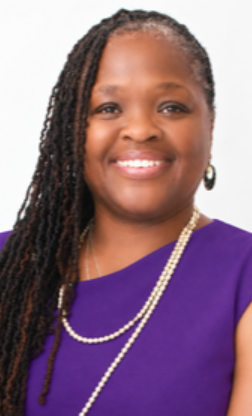
- “Every student deserves stability and a strong start. I’ll work with families to understand why students are changing schools, connect them with practical support, and make enrollment and record transfers faster and easier. By strengthening school transitions, welcoming new students, and partnering locally to address housing instability, we can reduce avoidable moves and help every student stay connected to learning.
- Every student and teacher deserves a safe learning environment. Strengthen school safety by working with fellow board members to ensure every campus has standardized safety protocols in place to reduce or eliminate unauthorized persons on campus. Conduct school safety meetings with the community to educate on potential issues as well as solutions.”
Click here to read the rest of Joseph’s responses.
Hannah Amoroso (unaffiliated) and Michael Vincent (R) are running for District 7. Vincent led Amoroso in the primary 36% to 34%, while Chris Spalatin (D) came in third with 30%. Vincent had not completed a survey as of Nov. 10.
Amoroso’s career experience includes working as a physical therapist. Here’s how Amoroso answered the question, “What areas of public policy are you personally passionate about?”

“I am particularly interested in school policy decisions affecting the safety, health, well-being, and achievement of our students and schools. As a Physical Therapist I am concerned about the amount of time our youngest learners spend sitting still and looking at screens when we know that they learn best through play and physical interaction. I am concerned that our middle and high schools start at 7:10 in the morning. Louisiana has the EARLIEST school start times in the nation (average 7:30) when research and best practice indicate school should not begin before 8:30 for adolescents. I am interested in educating the WHOLE CHILD, making sure that they have what they need to launch into their futures after high school prepared for what is next.”
Click here to read the rest of Amoroso’s responses.
As a reminder, if you're a school board candidate or incumbent planning to run in 2027, click here to take the survey. If you complete the survey, your answers will appear in your Ballotpedia profile. Your responses will also appear in our sample ballot. If there is an election in your community, share the link with your candidates and urge them to take the survey!