


Welcome to the Friday, Nov. 20, 2026, Brew.
By: Lara Bonatesta
Here’s what’s in store for you as you start your day:
- Maine is the only state where legislators select the attorney general
- Virginia governor says state won't participate in federal scholarship tax credit, Treasury says it must
- All 50 states to hold state legislative sessions in 2027
Maine is the only state where legislators select the attorney general
On Dec. 2, Maine will be the first state in the nation to begin its 2027 legislative session, and shortly after legislators are sworn in, they will select the state’s constitutional officers, including its attorney general. Maine is the only state in the country where legislators choose the state's attorney general. Attorneys general are directly elected in 43 states (including 30 that held elections on Nov. 3), appointed by the governor in five states, and, in Tennessee, appointed by the state’s supreme court.
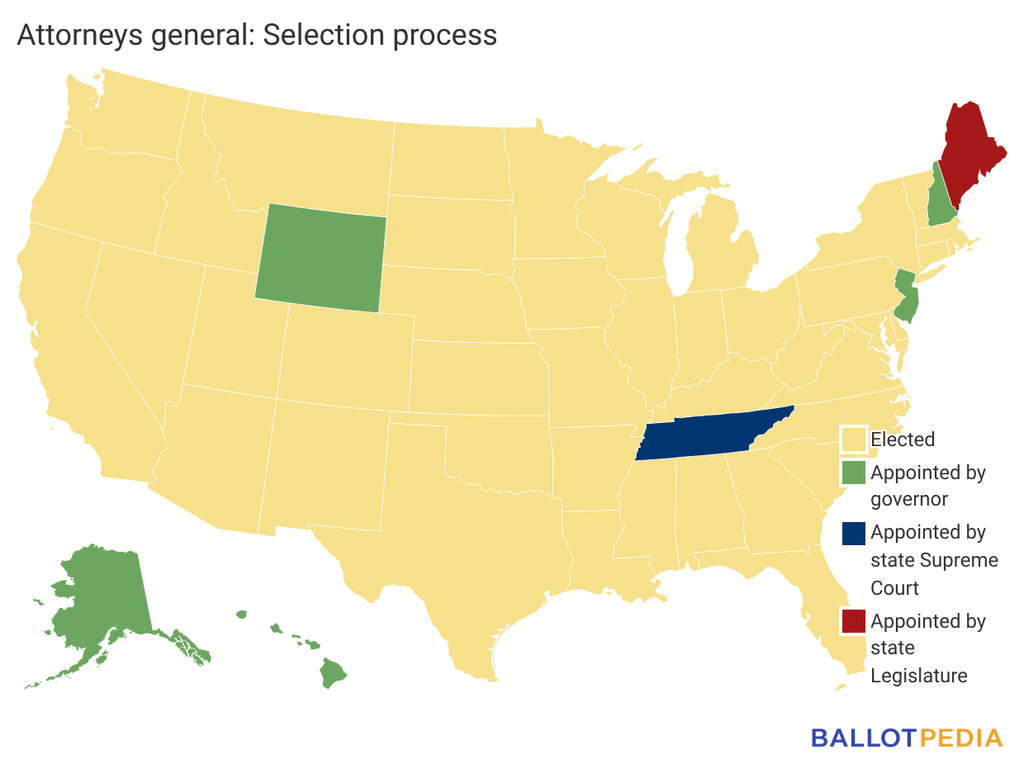
This year, Anne Carney (D) and Timothy Shannon (D) are competing for the Democratic nomination to succeed term-limited Attorney General Aaron Frey (D).
Carney has served as state senator for District 29 since 2020, winning re-election on Nov. 3, 78.5% to 21.5%. Carney says, “This is a moment when Maine needs an attorney general ready to defend our constitutional rights and our state from day one.” Shannon is an attorney, former town councilor for Yarmouth, and runner-up for the position in 2018. Shannon says, “The Trump administration is a threat to our country, our state and our democracy, and it’s had a negative effect right here in Maine.”
According to the Maine Morning Star, while Carney and Shannon both said that their priorities would include opposing the Trump administration and consumer protection, the candidates described how they would approach litigation on these issues differently.
Shannon said that while he thinks multistate lawsuits are important, he also thinks Maine should focus on its own lawsuits to protect interests unique to the state. Shannon said, “That’s a more robust undertaking for the office. It’s a bigger lift, but it’s potentially a much bigger reward.”
Carney said she would consider “what is most efficient and effective” in terms of using state resources when deciding whether to join multistate lawsuits or file a lawsuit on behalf of Maine specifically.
As of Nov. 18, 95 multistate lawsuits had been filed against the second Trump administration. Click here to see how that compares to past administrations.
Before the formal vote, legislative Democrats and Republicans choose their nominees for state constitutional offices via secret ballot during caucus meetings. Both chambers of the Legislature then meet in a joint session to officially select the winners. To win the election, the top candidates must receive a majority of votes across both chambers. That amounts to at least 94 legislative votes across all 186 seats in the Legislature.
As a result of the 2026 elections, Democrats will have a 114-72 majority in the Legislature. According to specific chamber projections by State Navigate, Democrats will have a 90-61 majority in the House and a 24-11 majority in the Senate. Democrats have a supermajority in the Senate for the first time in more than 40 years.
In addition to the attorney general, the Maine Legislature also picks the secretary of state, the state treasurer, and the state auditor. Secretary of State Shenna Bellows (D) and Treasurer Joe Perry (D) are running without challengers. State Auditor Matthew Dunlap (D) will not be up until 2028.
Click here to read more about Maine’s Attorney General office and here to read more about Maine’s elections in 2026.
Virginia governor says state won't participate in federal scholarship tax credit, Treasury says it must
After a representative for Virginia Gov. Abigail Spanberger (D) said on Nov. 13 that the state will not complete the steps required for it to participate in the Federal Scholarship Tax Credit program in 2027, U.S. Treasury Secretary Scott Bessent said the state is required to under federal law, setting up a conflict over whether states have the ability to choose not to finalize their participation in the program.
To participate in 2027, the first year of the program, states must complete the Internal Revenue Service (IRS) advance election Form 15714 by Jan. 1, 2027, then submit a list of the state's scholarship-granting organizations (SGOs) to the IRS by Feb. 15, 2027.
Former Virginia Gov. Glenn Youngkin (R) opted the state in, and Virginia became the first state to complete the form, on Jan. 9, 2026. Spanberger took office on Jan. 17. On Nov. 13, a representative for Spanberger said her administration will not submit a list of SGOs and that the state will not participate in 2027 because her administration does not believe the program will benefit public school students.
On Nov. 15, Bessent responded to Virginia's announcement on X: "Virginia has already elected to participate in 2027, and @GovernorVA is required under federal law to complete the administrative process. Governor Spanberger: certify the scholarship organizations. Stop playing politics with children’s futures."
Treasury is collecting comments before issuing a final regulation — expected in 2028 — to implement the program. The proposed regulations will govern the program in 2027. States must opt into the program annually, and the staggered deadlines for state participation are unique to 2027. Starting in 2028, the deadline for both an advance election and the SGO list will be Jan. 1, meaning it's unlikely that different governors would complete an advance election and an SGO list submission.
As of Nov. 17, 32 states have indicated they'd participate in 2027. Before the 2026 elections, 23 of these states had Republican trifectas, four had Democratic trifectas (including Virginia), and five had divided governments.
Post-election participation landscape
The conflict over whether states may let an election to participate through Form 15714 lapse could apply in other states where gubernatorial party control changed in the 2026 elections.
Before the election, 30 states, including 23 with Republican trifectas, had formally opted into the FSTC program. New York Gov. Kathy Hochul (D) also said New York would participate, but, as of Nov. 13, had not officially opted in by submitting the advance election form. Gubernatorial elections took place in 19 of those 30 states, and participation in the program was a campaign issue in several of them, including Michigan and Arizona. Control of the governorship in five states that had opted into the FSTC — Georgia, Iowa, Nevada, Ohio, and Texas — changed from Republican to Democratic.
Outgoing governors may choose to submit the required forms and submit the SGO list before they're sworn out, or leave this choice to their successor. Incoming governors who take office after Jan. 1 — all but five — cannot opt in if their predecessor doesn't submit the advance election form by Jan. 1. It is unclear whether governors have the option not to finalize participation by submitting an SGO list before the February deadline if the outgoing governor has not done so. That would leave their state's participation incomplete, as announced in Virginia.
Taxpayers in states that do not participate can still donate and claim the tax credit, but SGOs will not be authorized to disburse or award scholarship funds in that state.
Sixteen of the 19 states that had not indicated whether they would participate in the program before Nov. 3 had gubernatorial elections. Partisan control did not change in any of those states: Democrats maintained control in 15 states, and Gov. Phil Scott (R) won re-election in Vermont.
On Nov. 4, outgoing New Mexico Gov. Michelle Lujan Grisham (D) — who was term-limited — announced that she would opt New Mexico into the program and her administration would certify SGOs for participation. Debra Haaland (D) will assume office on Jan. 1, 2027. No other states or governors had moved to participate in the program after the election.
Laws in Idaho, Indiana, Kansas, Kentucky, and New Hampshire require the state to participate in the program annually. Three other states – Oklahoma, North Carolina, and Tennessee – have laws requiring them to participate, but don't specify that they must do it annually.
Democrats have been slower to opt into the program, though some have. Several Democratic governors indicated they would wait on the regulations before deciding if their states would participate. After the IRS issued regulations on Oct. 2, Hochul confirmed New York’s intention to opt in to the program, and Lujan Grisham submitted Form 15714, while Oregon Gov. Tina Kotek (D), who was re-elected on Nov. 3, said Oregon would not participate.
More on the program
The FSTC is a dollar-for-dollar nonrefundable tax credit, meaning individuals can lower their federal tax liability by $1 for every $1 donated to accredited SGOs up to certain limits. SGOs distribute the donated scholarship funds to eligible families for a variety of private or public educational expenses, including private school tuition, tutoring services, textbooks, and more. To qualify for scholarships, students had to live in households earning no more than 300% of the area's median gross income and be eligible to enroll in K-12 schools. The program will begin on Jan. 1, 2027.
Click here to learn more about state participation in the Federal Scholarship Tax Credit.
All 50 states to hold state legislative sessions in 2027
In 2027, the first year that Democrats will control a majority of state legislative chambers since 2010, all 50 states will hold legislative sessions.
State governments across the country hold legislative sessions in which a state's elected representatives meet for a set period. During these sessions, lawmakers draft and vote on legislation. Forty-six state legislatures hold regular sessions annually. The other four states — Montana, Nevada, North Dakota, and Texas — only meet in odd-numbered years.
According to the latest data from the 2027 MultiState Insider Resource, two state legislatures are scheduled to begin their 2027 sessions in December 2026, 43 in January 2027, three in February, one in March, and one in April.
Maine will begin its session earliest, on Dec. 2. Louisiana will begin latest, in April. Utah and Virginia are currently scheduled to have the shortest sessions, each lasting about 45 days. For the 2026 legislative term, eight states remain in regular or special session.
Elections took place for 88 of the country’s 99 state legislative chambers on Nov. 3. As a result of these elections, Democrats gained control of at least 12 state legislative chambers. Eleven of these chambers previously had Republican majorities, and one of them was previously split. In total, Democrats will hold at least 51 chambers, Republicans will hold 45, and two chambers, the Alaska House and Senate, will be governed by bipartisan coalitions. Control of the North Carolina Senate remains uncalled.
Here’s a closer look at which states had a change in state legislative control heading into the 2027 legislative sessions:
- Arizona: Democrats won both chambers for the first time since 1966. Governor Katie Hobbs (D) also won re-election, meaning Arizona will have a Democratic trifecta. Arizona’s 2027 legislative session will begin on Jan. 11 and end on May 21.
- Georgia: Democrats won control of the House, and Republicans held the Senate, meaning Georgia will have a divided government. Keisha Lance Bottoms (D) was elected governor. Georgia’s legislative session will begin on Jan. 11 and end on March 31.
- Michigan: Democrats won the House and held the Senate. Democrats also maintained control of the governorship, meaning Michigan will have a Democratic trifecta. Jocelyn Benson (D) was elected to succeed incumbent Gretchen Whitmer (D). Michigan has a full-time legislature.
- Minnesota: Democrats won control of the House, which was previously tied. Democrats also maintained control of the Senate and the governorship, meaning Minnesota will have a Democratic trifecta. Minnesota’s legislative session will begin on Jan. 12 and end on May 17.
- New Hampshire: Democrats won control of both chambers. Governor Kelly Ayotte (R) was re-elected, meaning New Hampshire will have a divided government. New Hampshire’s legislative session will begin on Jan. 6 and end on June 30.
- North Carolina: Democrats won control of the House, and control of the Senate remains uncalled. North Carolina’s legislative session will begin on Jan. 13 and end on July 30.
- Pennsylvania: Democrats won the Senate and held control of the House. Heading into the elections, Republicans had controlled the state Senate since gaining a majority in the 1994 general elections. Incumbent Gov. Josh Shapiro (D) was also re-elected, meaning Pennsylvania will have a Democratic trifecta. Pennsylvania has a full-time legislature.
- Texas: Democrats won control of the House, and Republicans held control of the Senate, meaning Texas will have a divided government. Gina Hinojosa (D) was elected governor. Texas’ legislative session will begin on Jan. 12 and end on May 31.
- Wisconsin: Democrats won control of both chambers, ending Republican control that began in 2011. David Crowley (D) was elected governor, meaning Wisconsin will have a Democratic trifecta. Wisconsin has a full-time legislature.
In addition to the changes in majority control, Democrats gained supermajorities in the Colorado House, Nevada Assembly, New York Senate, and Vermont Senate. Republicans lost supermajorities in the Florida House and Senate, Iowa House, Kansas House, Missouri House and Senate, New Hampshire Senate, North Carolina Senate, Ohio House, South Carolina House, and the New Hampshire House.
Click here to learn more about 2027 legislative sessions and here to learn more about the 2026 state legislative election results.