

Year: 2022
-
Turnout in Georgia Senate runoff was 90% of November election turnout
The office of Georgia’s Secretary of State Brad Raffensperger reported that 3.5 million Georgians voted in the runoff election for U.S. Senate this year. That number 25% less than two years ago, when 4.5 million Georgians cast their ballots in the runoffs that took place on January 5, 2021. This year, 44.7% of all registered…
-
November Partisan Counts: 54.49% of state legislators are Republican, 43.97% Democratic
At the end of November 2022, 54.49% of all state legislators in the United States are Republican while 43.97% are Democratic. There are 7,383 state legislative seats in the country. Democrats hold 848 state Senate seats and 2,398 state House seats, gaining 10 seats since last month. Republicans hold 1,105 state Senate seats and 2,918…
-
Voters in Louisiana will decide on three constitutional amendments on Dec. 10
Voters in Louisiana will decide on three constitutional amendments on Dec. 10. Amendment 1 would prohibit local governments from allowing noncitizens to vote. Currently, Article I, Section 10 of the Louisiana Constitution reads, "Every citizen of the state, upon reaching eighteen years of age, shall have the right to register and vote..." This amendment would…
-
Warnock (D) defeats Walker (R) in the runoff election for U.S. Senate in Georgia
Incumbent Raphael Warnock (D) defeated Herschel Walker (R) in the runoff election for U.S. Senate in Georgia on December 6, 2022. Warnock and Walker were the top-two vote-getters in the November 8, 2022, general election, with Warnock winning 49.4% of the vote to Walker's 48.5%. Libertarian Chase Oliver won 2.1% of the vote and did…
-
Israel, Watson running in Dec. 13 runoff for mayor of Austin

Celia Israel and Kirk Watson are running in the Dec. 13 nonpartisan general runoff election for mayor of Austin, Texas. Israel and Watson, who have both served in the state legislature as Democrats, were the top two vote-getters in the Nov. 8 general election. Israel received 40% of the vote and Watson received 35% of…
-
Two citizen initiatives certified to the state legislature in Maine
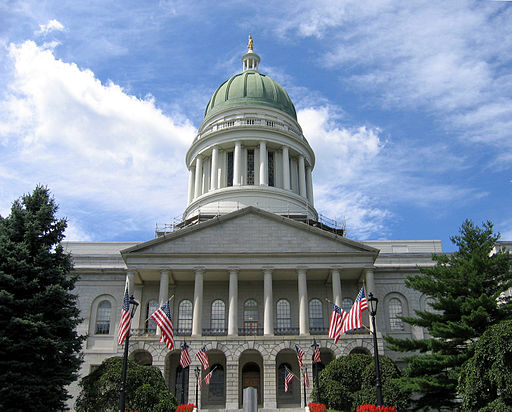
On Nov. 30, Maine Secretary of State Shenna Bellows confirmed that two citizen initiative campaigns—Protect Maine Elections and Our Power—submitted enough signatures for each initiative to be certified to the state legislature. Each initiative will have a chance of being approved by the state legislature or appearing on the Nov. 2023 ballot. In Maine, the…
-
The lowest and the highest readability scores for 2017-2022 ballot measures
Ballotpedia conducts an annual readability report analyzing what level of education voters would need to understand the ballot titles and summaries of statewide ballot measures using Flesch Reading Ease (FRE) and Flesch-Kincaid Grade Level (FKGL). Measurements used in calculating readability scores include the number of syllables, words, and sentences in a text. Other factors, such…