


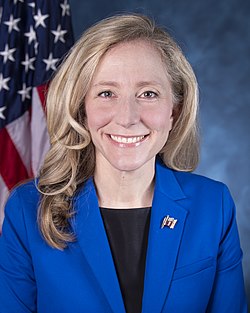
On July 31, Virginia Gov. Abigail Spanberger (D) announced that since taking office on Jan. 17, she has restored the voting rights of 66,085 Virginia residents with felony convictions.
Virginia is one of three states, along with Iowa and Kentucky, where individuals convicted of any felony never regain the right to vote without some form of state action to restore their rights, under state law. However, executive orders in Iowa and Kentucky, and a court ruling in Virginia, have changed the states’ policies.
Since 2018, 13 states, not including Virginia, have expanded voting rights for individuals with felony convictions.
In Virginia, the state constitution states that individuals convicted of a felony lose their right to vote unless their “civil rights have been restored by the Governor or other appropriate authority.” Individuals with felony convictions must apply to the governor's office for restoration of their rights. People convicted of certain felonies may also petition the courts for restoration of their civil rights if they completed their prison sentence, probation, and parole more than five years ago.
Spanberger resumed the practice of restoring voting rights to individuals with felony convictions who had completed their prison sentence without requiring them to apply.
Starting in 2010, Gov. Bob McDonnell (R) began automatically restoring voting rights to individuals convicted of nonviolent offenses who had completed their prison sentences, probation, and parole. Gov. Terry McAuliffe (D) used a similar review system for individuals convicted of all felonies, and Gov. Ralph Northam (D) expanded the system by removing a requirement that individuals complete parole before being eligible for restoration.
In 2023, Gov. Glenn Youngkin (R) announced that individuals seeking to have their rights restored must apply and have their applications considered on a case-by-case basis. At the time, Secretary of the Commonwealth Kay Coles James (R) wrote, "Virginians trust the Governor and his Administration to consider each person individually and take into consideration the unique elements of each situation, practicing grace for those who need it and ensuring public safety for our community and families."
A press release from Spanberger's office stated, "The Secretary of the Commonwealth’s Office is working to proactively identify Virginians who lost their right to vote, confirm that these Virginians are eligible, and restore their rights. The Spanberger Administration is also accepting restoration of rights applications from Virginians through a streamlined, online system that removed unnecessary questions added during the Youngkin Administration."
Opponents of Virginia's current policy have challenged in court the requirement that individuals with felony convictions petition the governor or a court to have their rights restored.
On Jan. 22, 2026, U.S. District Court Judge John Gibney ruled that Virginia's law violated a federal law governing the commonwealth's readmission to the U.S. following the Civil War.
Gibney granted an injunction preventing Virginia from disenfranchising individuals convicted of felonies created after the passage of the Virginia Readmission Act of 1870. Individuals convicted of some crimes, such as arson, burglary, manslaughter, murder, and rape, would still need to petition the governor to have their voting rights restored.
On Nov. 3, Virginia voters will decide on a constitutional amendment that would automatically restore voting rights for people with felony convictions after they complete their prison sentence.
Spanberger supports the amendment. She said in her July 31 statement, "This fall, voters can cast their ballots for Virginia to no longer strip so many of our neighbors of their fundamental rights — a shameful relic of our Jim Crow past. I hope Virginians will join me in voting yes."
John Massoud, chairman of Virginia’s 6th Congressional District Republican Committee, wrote in opposition to the amendment: "We can all agree that the current system for receiving a state pardon is rather complicated and does need to be reformed. However, this is not the way to go about doing so. There are different types of felonies in Virginia. Some are non violent, others are violent. Passing this amendment would allow violent felons to serve on juries — do you really want a rapist serving on a jury?"
If voters approve the amendment, Virginia would become the second state in 2026 to change its policies on restoring voting rights to people with felony convictions.
On July 13, Missouri Gov. Mike Kehoe (R) signed HB 1871, which restored voting rights to people convicted of certain felonies upon completion of their prison sentences. Previously, an individual had to complete their prison sentence and any parole or probation before being able to register to vote. For 11 crimes, voting rights are still restored to people upon completion of prison time, parole, and probation.
Legislators in Delaware also passed HB 180, a constitutional amendment that would automatically restore voting rights to individuals with felony convictions upon their release from prison. The amendment must be passed again in the next legislative session before it takes effect, but it would not need voter approval.
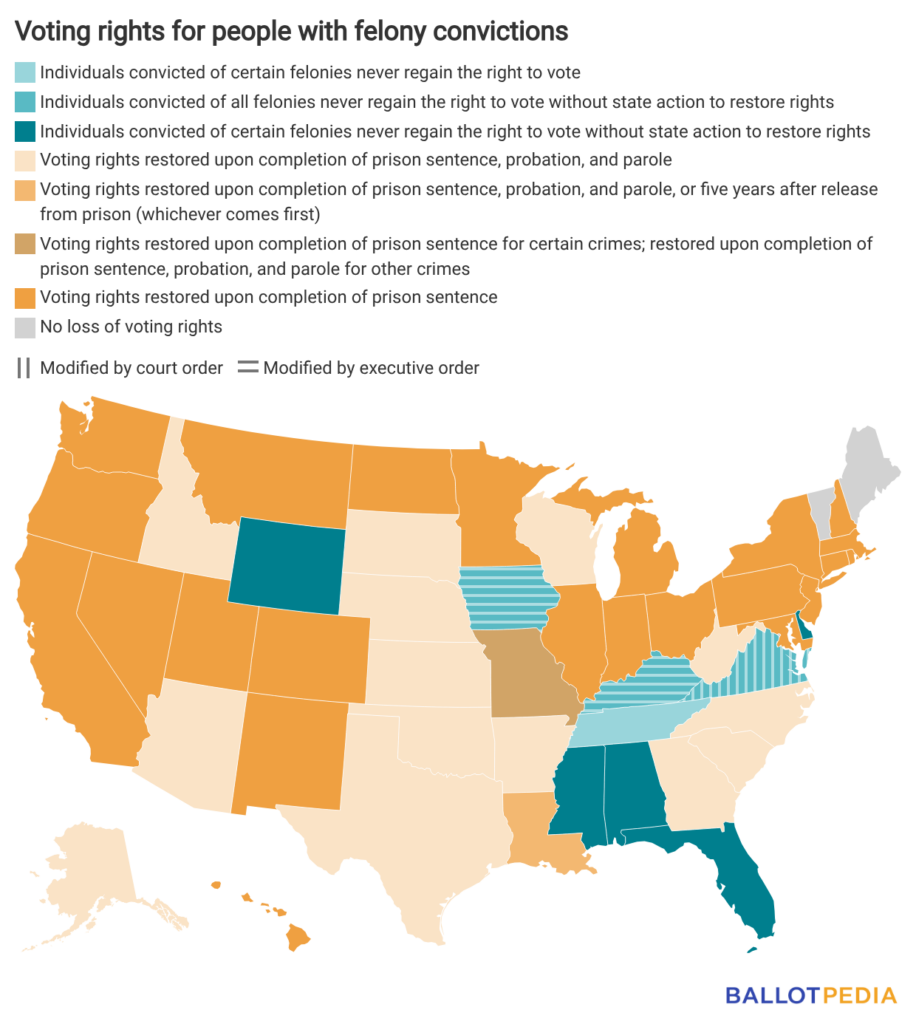
Here’s how current laws compare across the U.S.:
- In two states and Washington, D.C., people with felony convictions never lose the right to vote.
- In 23 states, voting rights are restored upon completion of the prison sentence.
- In Missouri, voting rights are restored for individuals convicted of 11 crimes upon completion of the prison sentence, parole, and probation, and for those convicted of all other crimes, voting rights are restored upon completion of the prison sentence.
- In Louisiana, voting rights are restored upon completion of the prison sentence, parole, and probation, or five years after release from prison (whichever comes first).
- In 14 states, voting rights are restored upon completion of the prison sentence, probation, and parole.
- In five states, voting rights are never restored for individuals convicted of certain felonies, unless the state acts to restore the person’s rights.
- In three states — including Virginia — voting rights are never restored for individuals convicted of any felony without the state acting to restore the person’s rights, under state law.
- In Tennessee, voting rights are never restored for individuals convicted of certain felonies.