


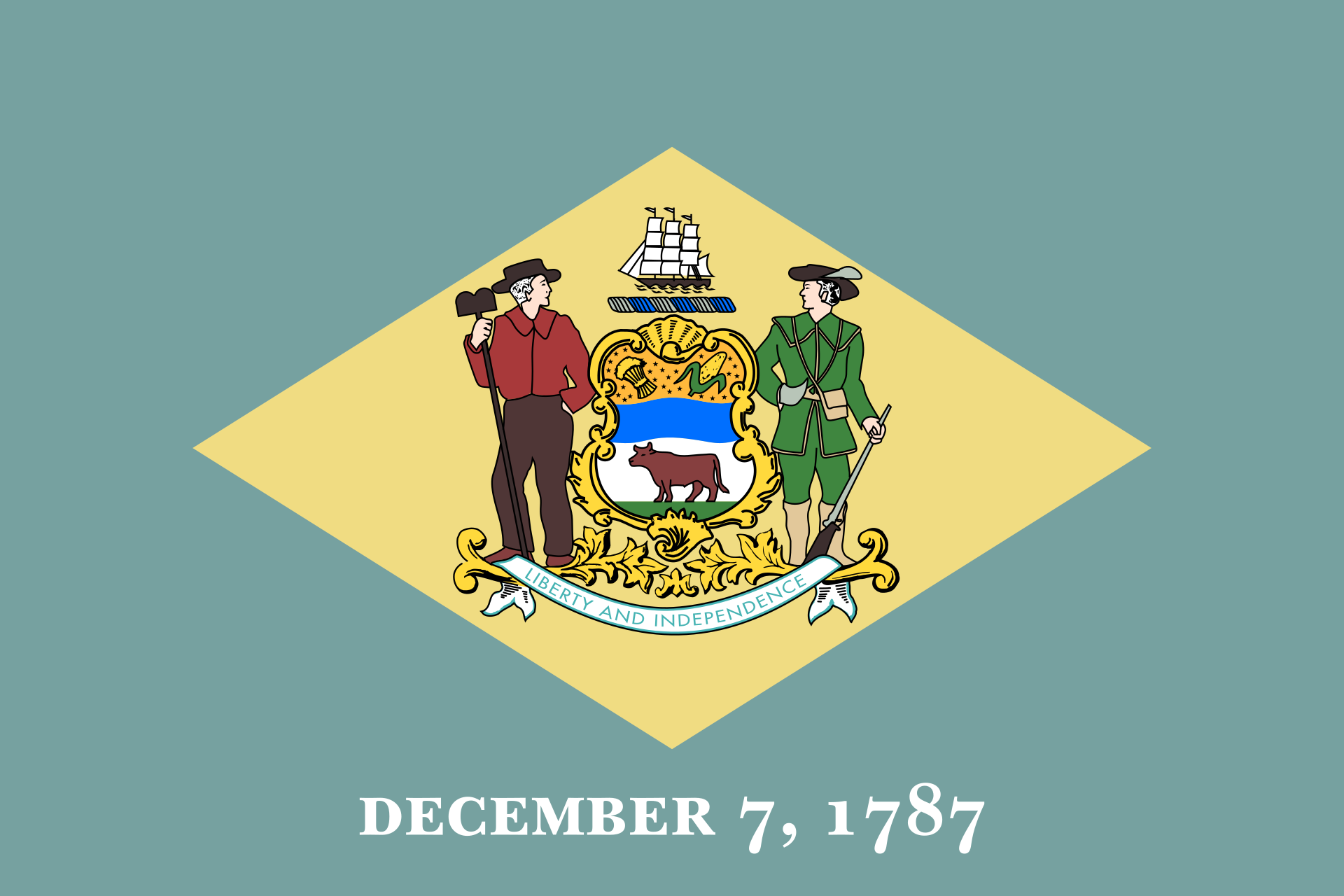
On Aug. 6, Delaware Gov. Matt Meyer (D) signed legislation making Delaware the 12th state to enact a state-level voting rights act.
Since the passage of the Voting Rights Act of 1965, which prohibits racial discrimination in voting nationwide, some states have enacted state-level voting rights acts. The provisions of these laws vary, but they generally include policies that mirror or expand on the federal Voting Rights Act. Those policies apply to local governments in the state.
House Bill 444 prohibits local or state agencies from engaging in voter suppression, which is defined as any election policy or practice that creates a material disparity affecting the voter participation of protected class members or the impairment of the equal opportunity of protected class members to participate in the political process.
It also prohibits local governments from employing "a method of election that has the effect, is likely to have the effect, or is motivated in whole or in part by an intent to dilute the vote of protected class members."
Private individuals and groups who believe that either of these prohibitions was violated, as well as the Delaware attorney general, may file a court action to remedy the alleged violations. A plaintiff must first give the local government a chance to remedy the issue before filing a lawsuit.
The law also requires political subdivisions that meet certain demographic criteria to provide assistance in languages other than English.
The law's provisions take effect on July 1, 2027.
In a statement, Meyer said, "Democracy doesn't disappear overnight; it disappears when good people convince themselves someone else will protect it. By signing the John Lewis Voting Rights Act, we're ensuring that every Delawarean can control their own future and exercise the most fundamental right granted to them by our Constitution: the right to vote."
In a Facebook post, House Republican caucus policy and communications director Joseph Fulgham wrote that some members opposed the bill because of its costs to implement and because "the measure defines voter suppression so broadly that almost any election rule—such as voter ID, signature checks, or standard polling hours—could be challenged if statistical voting differences occur between designated minority groups and the general population."
The Delaware House of Representatives passed the bill 29-11 on June 18, with 26 Democrats and three Republicans voting in favor and 11 Republicans voting against. The Delaware Senate passed the bill 21-0 on June 30, with 15 Democrats and six Republicans voting in favor.
Of the 12 states with a state-level voting rights act, four have a provision that requires some local governments to obtain state approval for changes to voting policies, 11 have a prohibition on vote dilution, 11 allow private individuals or groups to sue over local or state policies they believe to be discriminatory, and five include requirements that voting materials be available in languages other than English.
The first state to enact a state-level voting rights act was California in 2002, followed by Illinois in 2011. Every other state enacted its law between 2018 and 2026. All 12 states had Democratic trifectas when they enacted their laws.
Delaware is the fifth state in 2026 to enact a new state-level voting rights act or to expand an existing law. Virginia and Washington both expanded existing state-level voting rights acts, while Maryland and New Jersey enacted a new law.