


Welcome to Hall Pass, a newsletter written to keep you plugged into the conversations driving school board governance, the politics surrounding it, and education policy.
In today’s edition, you’ll find:
- On the issues: The debate over partisan school board elections
- School board filing deadlines, election results, and recall certifications
- Here's how the Education Freedom Tax Credit could affect public schools, and where there's disagreement
- Extracurricular: education news from around the web
- Candidate Connection survey
On the issues: The debate over partisan school board elections
In this section, we curate reporting, analysis, and commentary on the issues school board members deliberate when they set out to offer the best education possible in their district. Missed an issue? Click here to see the previous education debates we’ve covered.
When Indiana voters go to the polls this November, many will see an (R) or (D) next to their local school board candidates’ names for the first time. That’s because Gov. Mike Braun (R) signed a bill into law on May 6, 2025, making Indiana the fifth state to hold partisan school board elections.
Under the law, candidates can run under the banner of a political party, such as the GOP, the Democratic Party, a minor party, or as an independent. Candidates can also state that they have no affiliation and are not running as an independent.
In the coming weeks, Hall Pass will provide in-depth coverage of the new law and its effect on upcoming elections, including a breakdown of how many candidates have opted to run with a party label next to their name in November.
Today, we’re going to look at arguments for and against partisan school board elections.
Michael Greibrok, a senior research fellow at the Foundation for Government Accountability (FGA), says states should require partisan school board elections. Greibrok says nonpartisan elections hide useful information about what candidates believe, leading voters to either inadvertently support candidates with whom they disagree or refrain from filling in that part of the ballot. Greibrok says the absence of information about where candidates stand politically allows teachers unions to play an outsized role in school board elections.
Michael R. Ford, a professor of public administration at the University of Wisconsin-Oshkosh, says that partisan school board elections would reduce thoughtful governing and compromise and lead to more unproductive conflict. Ford says that making school board elections partisan would risk turning school boards into venues for arguing about state and national controversies instead of the local issues affecting districts. Ford says that although school boards will never be free of partisan conflict, they should strive to demonstrate that governing can still happen.
Knowledge Is Power: Party Affiliation Gives Voters the Signal They Need in School Board Elections | Michael Greibrok, Foundation for Government Accountability
“Regrettably, thanks to leftist reformers who wanted education in the hands of ‘experts’ instead of citizens, roughly 90 percent of school districts hold non-partisan school board elections today. Rather than removing politics from schools, this simply keeps parents and taxpayers in the dark about who they are voting for and what school policies they support.
“Political party signals are missing in non-partisan races, leaving voters without an easy way to discern candidates’ positions on important school matters. Many voters are unsure about which candidate best matches their priorities. Because of this, thousands of would-be voters do not participate in school board elections while voting for preferred candidates in other races.
“This leads to both entrenched interests wielding greater power and board members that do not match the priorities of their voters.”
Why School Board Elections Should Stay Non-Partisan | Michael R. Ford, PA Times
“To be more blunt, I do not want school boards to become just another venue for nakedly partisan conflict. Here in Wisconsin there is a clear effort from state political parties to become influential in local government elections. Some of this is a response to a gerrymandered system that limits productivity at the state level, and some of this reflects a sincere desire to achieve local policy goals. But to repeat myself, such efforts introduce a partisan conflict point that can detract from the true local purpose of a local governing board.
“I am not naïve to the point of thinking the lack of an R or D next to a school board candidate’s name prevents all partisan activities. Many school boards get mired in destructive partisan conflict despite their non-partisan status. But as I asked earlier, why invite such conflict through a permanent change in structure? Now more than ever it is up to local government boards, like school boards, to show that governing is still possible despite societal divisions. We can disagree about specific issues without creating permanent entrenched conflict.”
School board update: filing deadlines, election results, and recall certifications
In 2026, Ballotpedia will cover elections for more than 30,000 school board seats. We’re expanding our coverage each year with our eye on covering the country’s more than 80,000 school board seats.
Election results from the past week
Florida: Districts held school board primaries on Aug. 18. Click here to see results in your district. General elections are Nov. 3.
Upcoming school board elections
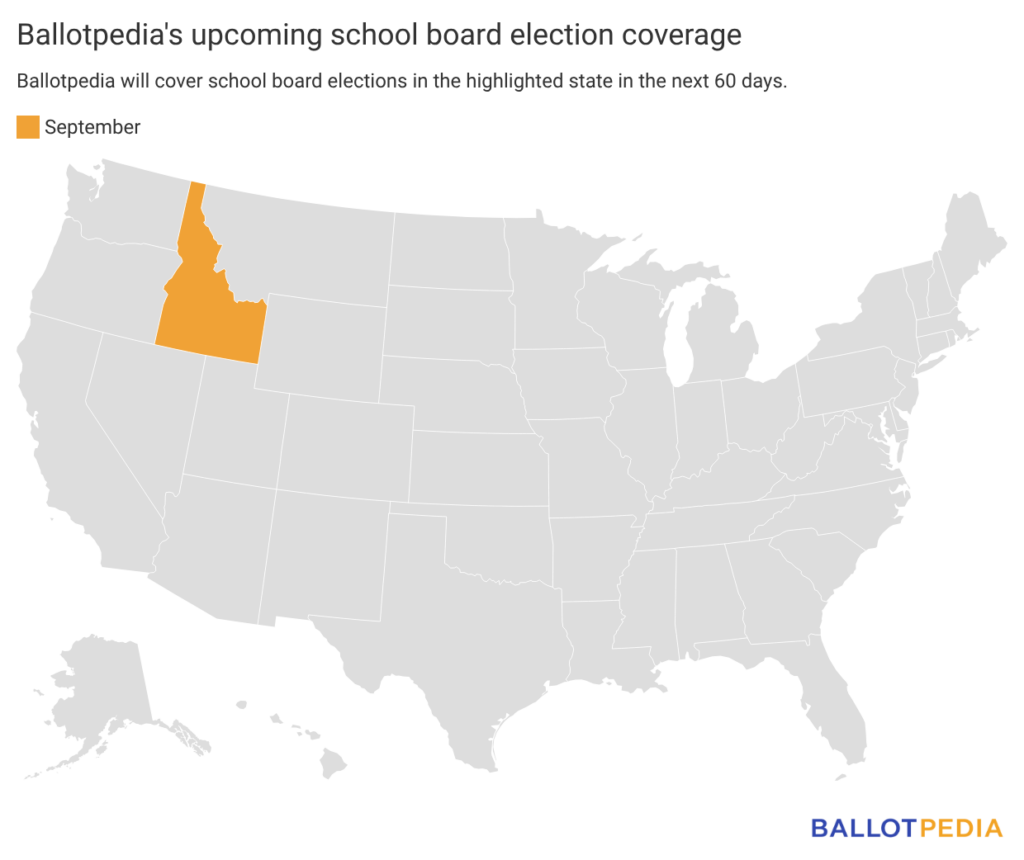
- The Boise School District, in Idaho, will hold a special general election for an at-large seat on the Board of Trustees on Sept. 1.
Here's how the Education Freedom Tax Credit could affect public schools, and where there's disagreement
On Jan. 1, 2027, the Education Freedom Tax Credit (EFTC) will go into effect. Combining a new federal tax credit with a K-12 scholarship program, the EFTC lets taxpayers lower their tax liability in exchange for making donations to scholarship-granting organizations (SGOs).
The EFTC is the country’s first nationwide federal K-12 school choice law, allowing students who receive the scholarships to make a variety of educational purchases, including private school tuition and tutoring. Although any taxpayer can claim the credit, only students living in states that have formally opted into the program through the U.S. Treasury Department are eligible for the scholarships.
With four months to go until the EFTC is up and running, a key question state education officials, policymakers, district leadership, and others are debating is to what extent the program will benefit students in public schools. While private schools regularly charge tuition, allowing them to easily receive the scholarship funds, public schools generally provide their educational services to families free of charge.
Today, we look at the conversation around how public schools might receive scholarship funds from the EFTC and why some believe participating in the program risks reshaping how we understand the aims of public education.
Here’s what the EFTC does
The EFTC was enacted as part of the One Big Beautiful Bill Act (OBBBA) in 2025. It is a dollar-for-dollar tax credit, allowing individuals to receive federal tax credits for donations up to $1,700 to authorized SGOs. If a taxpayer donates more than $1,700, they will not receive additional credits for the amount over $1,700. The total amount of credits the program can offer is not capped. SGOs distribute the donated scholarship funds to eligible families. In order to qualify for scholarships, students have to live in households earning no more than 300% of the area's median gross income and be eligible to enroll in K-12 schools.
The American Federation for Children (AFC), a private school choice advocacy organization, estimates that 90% of K-12 students would be eligible to participate in the EFTC if all states opted in.
According to a U.S. Education Department fact sheet about the EFTC, the scholarships can be used on, among other things, “tuition for students to attend private schools of choice, tutoring at public schools, and support services for students with disabilities.”
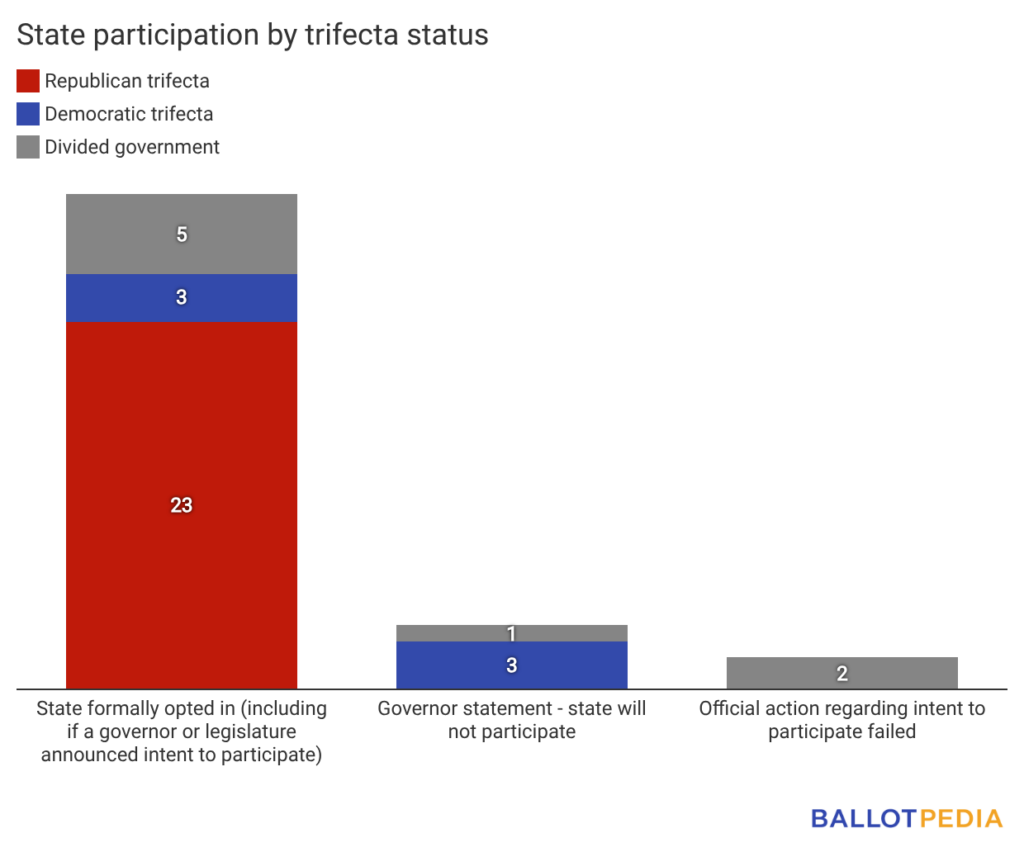
Members of President Donald Trump’s (R) administration have framed the EFTC as an expansion of school choice, and states’ reactions to it have fallen along mostly partisan lines. As of this writing, every state with a Republican trifecta has opted into the EFTC, while three states with Democratic trifectas have done so. Over the last 30 years, Republican-led states have been far more likely than their Democratic counterparts to create private school choice programs that provide government funding to students for private K-12 educational expenses.
The U.S. Treasury Department, which Congress tasked with overseeing the program, said it will release the proposed regulations governing the program in September. Kevin Salinger, the deputy assistant secretary for tax policy at the Treasury Department, provided a preview of those regulations in June. Salinger said the scholarships would support public school students, including through “additive academic tutoring and special needs services.” Salinger said the Treasury Department would release future guidance on allowable expenses.
The case for how public schools can benefit from the EFTC
For school board members and superintendents, funding is top of mind as K-12 public school enrollment declines in most states, reducing the amount of money state governments provide districts. Georgetown University economics Prof. Marguerite Roza, director of the Edunomics Lab, says the EFTC can serve as a new source of funding for districts.
“Years from now, districts will think of their revenues as having four sources: federal, state, local, and our tax-credit money,” Roza said.
In a June 2026 webinar, Roza walked through three approaches for how districts could work with SGOs to access EFTC scholarship funds. The first would be for districts to charge private and homeschooled students for extracurriculars or courses. The second would be for districts to provide district students eligible for the scholarships with specific services. Roza’s examples include students choosing “from priced electives/clubs, e.g. financial literacy, robotics, possibly APs and VocEd, etc.,” homeless or foster students accessing “bundled supports, e.g. social worker, summer programming, tutoring, life skills,” and struggling students opting into “extended year services, small group supports, homework help, etc.”
The third approach, and to Roza’s mind most financially beneficial, would be for districts to offer all students a bundled set of additional services for a fee: “Imagine the district offers an $800 ‘K12-plus plan’ that provides access to stuff like field trips, tutoring, homework help, assemblies, clubs or other services not required in the state’s definition of required public education.” SGOs would then work with districts to cover the fee for students awarded the scholarships. Students from families making over 300% of the area’s median gross income could pay for the fee themselves or look for alternative scholarships.
Edunomics Lab estimated districts could receive more than $1,000 per student through the EFTC.
Roza imagines a future where large employers, in partnership with districts, encourage their employees to donate to local SGOs through payroll deductions. According to this idea, employees’ take-home pay could remain unchanged because they would reduce their federal income-tax withholding by roughly the amount of their dollar-for-dollar tax credit.
Roza says, “For better or worse, this new federal money isn’t anything like traditional funding formula dollars. How much flows to public schools will depend almost entirely on how actively leaders pursue it.”
Deborah Gist, the former Rhode Island Commissioner of Education and superintendent of Oklahoma’s Tulsa Public Schools, created an SGO to support public and charter students. According to Gist, Future School Fund will operate at a national level, partnering with districts in states that opt into the EFTC.
Gist said the EFTC encourages districts to meet the individual needs of families: “This program can help school systems figure out the way that they can offer opportunities to students on a per-pupil basis and then receive funding as a result. And that prepares them for other ways they can evolve.”
The case for why public schools won’t benefit from the EFTC
Opposition to and hesitancy about the EFTC has been in large part rooted in concerns that it is not designed with public schools in mind, and that it could undermine the broader goals of the public education system. Peter Greene, a retired high school English teacher who writes for Forbes and maintains the education blog Curmudgucation, takes issue with Roza’s recommendations for how districts approach the EFTC.
“Analysts who predict that the federal voucher system takeover of education is inevitable may be correct, and they may be correct that public schools in states red, blue and purple will all be tapping into this new revenue stream,” Greene writes. “It’s not clear if any of this can happen without changing the fundamental nature of public education in the United States.”
One of Greene’s concerns is that districts will move away from offering educational services at no cost, regardless of family income, to a tiered model combining a set of basic services for all students alongside pay-to-play offerings for those with scholarships. That model, he says, is incompatible with America’s historic understanding of public education.
Greene also believes the EFTC could worsen funding disparities between school districts. “East Egg and West Egg schools both depend on real estate taxes, and if West Egg is a less prosperous community, its schools receive less funding,” Greene writes, referencing the fictional towns in The Great Gatsby. “Under a federal voucher system, wealthy East Egg will also see more taxpayer donations to its SGO.”
Other critics of the EFTC have said private schools have a built-in fundraising advantage that public schools lack. The end result, these critics argue, could be that students attending private schools may be much more likely to attract scholarships, leaving public school students farther behind. And by potentially facilitating the transfer of students from public schools to private schools, the EFTC could reduce the amount of state funding districts receive.
Anthony Clough, an education policy analyst at the Massachusetts Budget & Policy Center, a think tank, says SGOs focused on private schools will be able to take advantage of private school alumni and religious networks to attract donations. In contrast, Clough says, “Public school families generally expect educational services to be provided through public schools and funded through taxes rather than tax-advantaged contributions.” Clough also says private schools are more likely to have wealthier donor bases. Public schools, in contrast, enroll students from an economically mixed demographic.
Clough says that, for these reasons and more, Massachusetts should not opt into the EFTC.
Jess Thorne, author of the Substack newsletter The Homework and vice president of government partnerships at DonorsChoose, a website that crowdfunds public school classroom supplies, agrees that public schools are at a fundraising disadvantage compared to private schools. But Thorne says the problems with the EFTC go deeper than that: “[T]he students furthest from opportunity shouldn’t have to shop for what public schools are already obligated to provide. If those services are missing, the answer isn’t a donor-funded workaround. It’s a tax system that funds every public school adequately in the first place.”
Learn more
In future editions, we’ll look at how specific districts are preparing for the EFTC.
In the meantime, you can learn more about the EFTC by visiting the following pages on Ballotpedia:
- Education Freedom Tax Credit
- State participation in the Education Freedom Tax Credit
- State laws about the Education Freedom Tax Credit
- Arguments about the U.S. school choice tax credit scholarship program
Extracurricular: education news from around the web
This section contains links to recent education-related articles from around the internet.
- A national divide over holding back students: Some states do it young, others wait until high school | The Hechinger Report
- The Education Wars: The Blue State Voucher Express | National Education Policy Center
- The K-12 Techlash Moment | Law & Liberty
- To curb cheating with AI, educators resort to the fundamentals | District Administration
Take our Candidate Connection survey to reach voters in your district
Today, we’re looking at survey responses from the two candidates running in the Nov. 3 general election to represent District 9 on the Virginia Beach City Public Schools school board, in Virginia.
Virginia Beach City Public Schools is the fourth largest district in Virginia, with roughly 65,000 students. Six of the 11 seats are up for election this year.
Incumbent Carolyn Weems was first elected to the board in 2022. Her career experience includes working as a teacher. Here’s how Weems answered the question, “What areas of public policy are you personally passionate about?”
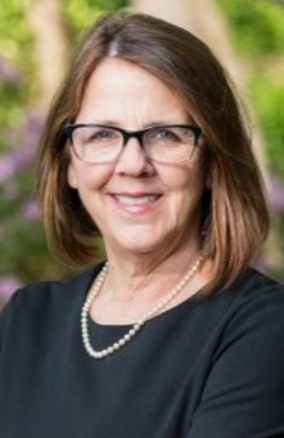
“Carolyn believes high standards, accountability and strong foundations in writing, reading, math and science produce better outcomes for ALL students. She will advocate for these vital fundamentals and will always put students first - before social trends or politics. There has been an effort underway by some members of the school board to eliminate Va Beach's highly successful Old Donation School (ODS) for the Gifted and Talented. Carolyn will protect ODS and continue to advocate for better programs at all schools for every student to meet their full potential.”
Click here to read the rest of Weems’ responses.
Suzanne Berman’s career experience includes working in government relations. Here’s how Berman answered the question, “What areas of public policy are you personally passionate about?”
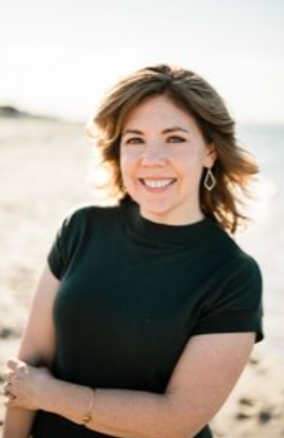
“I am passionate about connecting people with those who make the policies that affect them. To improve our schools, we must listen first. Families, staff, and students should feel that the school board is a safe place to express their views and share their experiences. When we all come to the table and discuss challenges in a respectful manner, we can find common ground and practical solutions for our schools. We all want the best for our children, and we need to work together for realistic solutions and policies that work.”
Click here to read the rest of Berman’s responses.
As a reminder, if you're a school board candidate or incumbent planning to run this year, click here to take the survey. If you complete the survey, your answers will appear in your Ballotpedia profile. Your responses will also appear in our sample ballot. If there is an election in your community, share the link with your candidates and urge them to take the survey!