


Across Rhode Island on Sept. 9, Democratic incumbents lost the gubernatorial primary and primaries in several of the state's largest cities.
Democratic voter registration outpaces Republican registration in Rhode Island by 24 percentage points — meaning that in some heavily Democratic areas, these primaries might in effect decide who wins the general election.
Endorsements are a particularly useful tool for voters participating in primaries, when they may find it difficult to discern differences between candidates of the same party. The Sept. 9 primaries in Providence illustrate this point. There were three Democratic primaries where organizations endorsed multiple candidates.
We follow endorsements from organizations we call Recognized Endorsement Contributors (RECs): groups including political action committees, local associations, unions, media editorial boards, and more that publicly support candidates and communicate those choices to voters. In the Sept. 9 Rhode Island elections, we identified 253 endorsements from 41 organizations.
Mayor of Providence
David Morales (D) defeated incumbent Brett Smiley (D) in a primary that has mirrored many across the country this cycle. Morales identifies as a Democratic socialist, while Smiley identifies as a moderate Democrat.
U.S. Sen. Bernie Sanders (I-Vt.), the state Service Employees International Union, and the Working Families Party endorsed Morales. Former U.S. Secretary of Commerce Gina Raimondo and former U.S. Secretary of Transportation Pete Buttigieg endorsed Smiley.
Since we began following mayoral competitiveness data in 2020, incumbents have run for re-election across the nation's 100 largest cities and state capitals 64% of the time. Of those incumbents who ran for re-election, 16% lost.
On the Nov. 3 ballot, there are two general elections that feature similar Democrat-vs-Democrat contests. In Los Angeles, Mayor Karen Bass (D) faces City Councilmember Nithya Raman (D). In St. Petersburg, Mayor Kenneth Welch (D) faces former U.S. Rep. Charlie Crist (D).
Providence Council Ward 1
In the Ward 1 primary for city council, Miguel Youngs defeated incumbent John Goncalves 51.4% to 48.6%. Eight of the city's 15 city council members, the Working Families Party, and the Mamdanification Sway voting group endorsed Youngs. The ward's Democratic committee, the Young Democrats of Rhode Island, and Minneapolis Mayor Jacob Frey endorsed Goncalves.
Providence Council Ward 5
In the Ward 5 primary for city council, Jacqueline Goldman defeated Michael Solomon and Simon Sarkisian with 53.1% of the vote. The Working Families Party, the Providence Teachers Union, and the Mamdanification Sway voting group endorsed Goldman. The ward's Democratic committee and the Rhode Island Building & Construction Trades Council endorsed Solomon. We did not identify any endorsements for Sarkisian.
Rhode Island endorsements
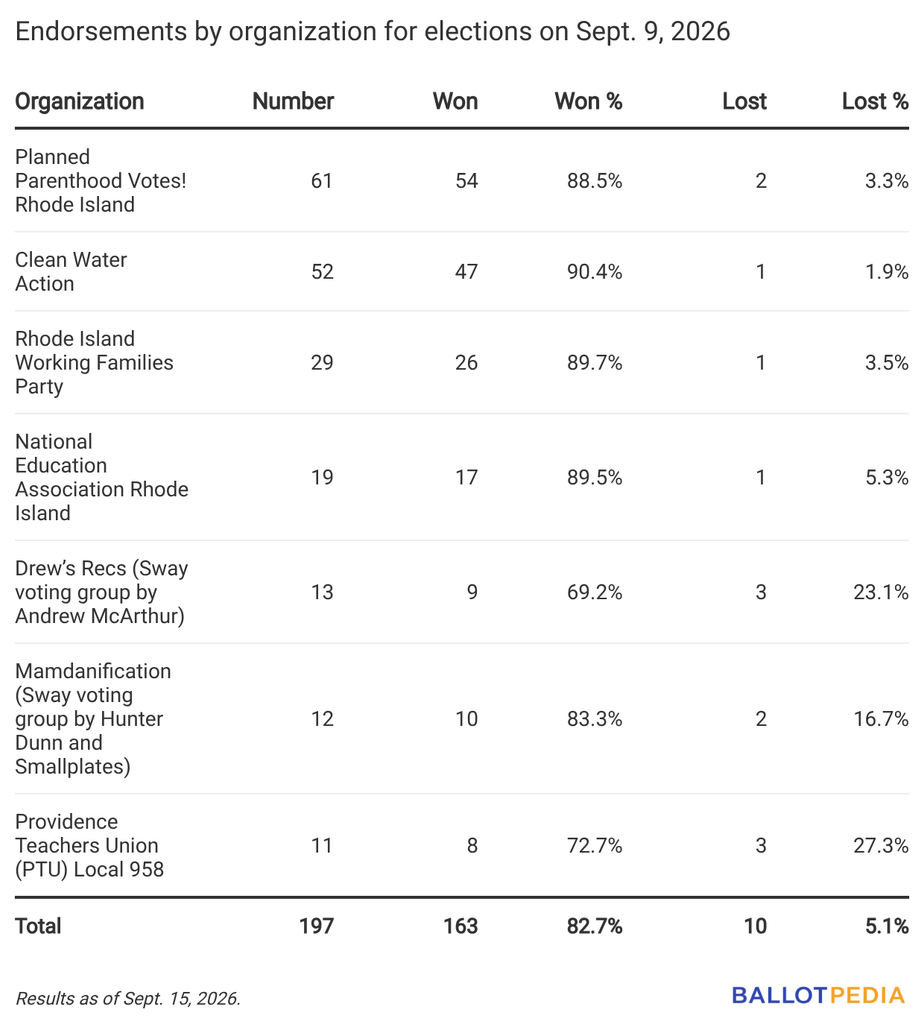
We identified seven RECs that issued more than 10 endorsements each in these primary elections. The table below displays the organizations and their endorsee success rates. Candidates that these organizations endorsed won 83% of their races and lost 5%. The remaining races were uncalled.
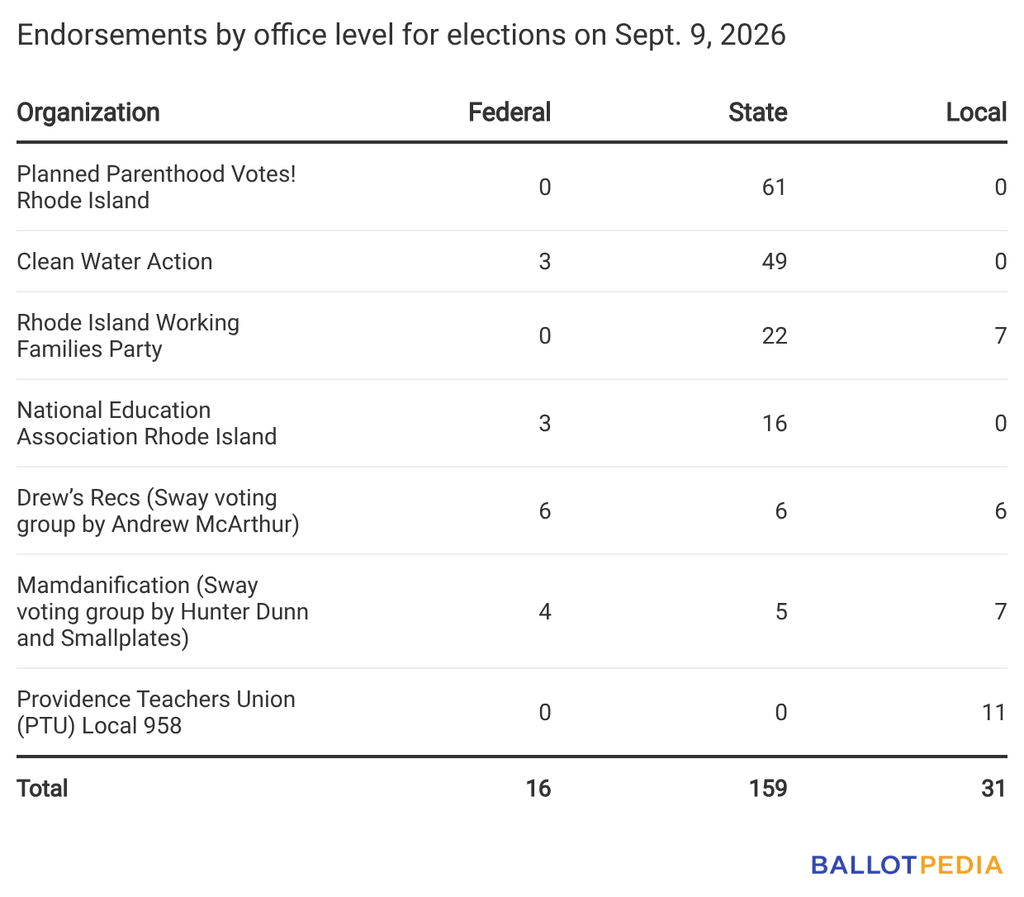
These RECs' endorsements were mostly in state primaries (159), followed by local (31) and then federal (16). The table below displays these RECs' endorsements by level of government.
Endorsements are statements or actions that an individual or group provides in support of a candidate, but they are also much more than that. Endorsements reveal alliances, ideological leanings, and potential policy priorities in ways that campaign platforms and a candidate's quotes sometimes can't. Endorsements also play a practical role in campaigns. Many endorsers — especially for statewide and national candidates — can provide candidates with volunteer support, access to potential campaign donors, and a degree of credibility and notoriety.
Ballotpedia is tracking endorsements made by organizations in races at all levels of government, with a particular focus on groups that endorse candidates at the local level. Endorsements are one component of Ballotpedia's goal to provide robust information — data that helps voters understand who a candidate is and what their political philosophy is — for every office on the ballot.