


Welcome to Ballot Bulletin: Ballotpedia's Weekly Election Policy Digest. Every Tuesday, we deliver the latest updates on election policy around the country, including nationwide trends and recent legislative activity.
In this week’s edition, we cover eight bills state legislatures acted on last week and look at state-level requirements for poll workers.
The state of election legislation in the U.S.
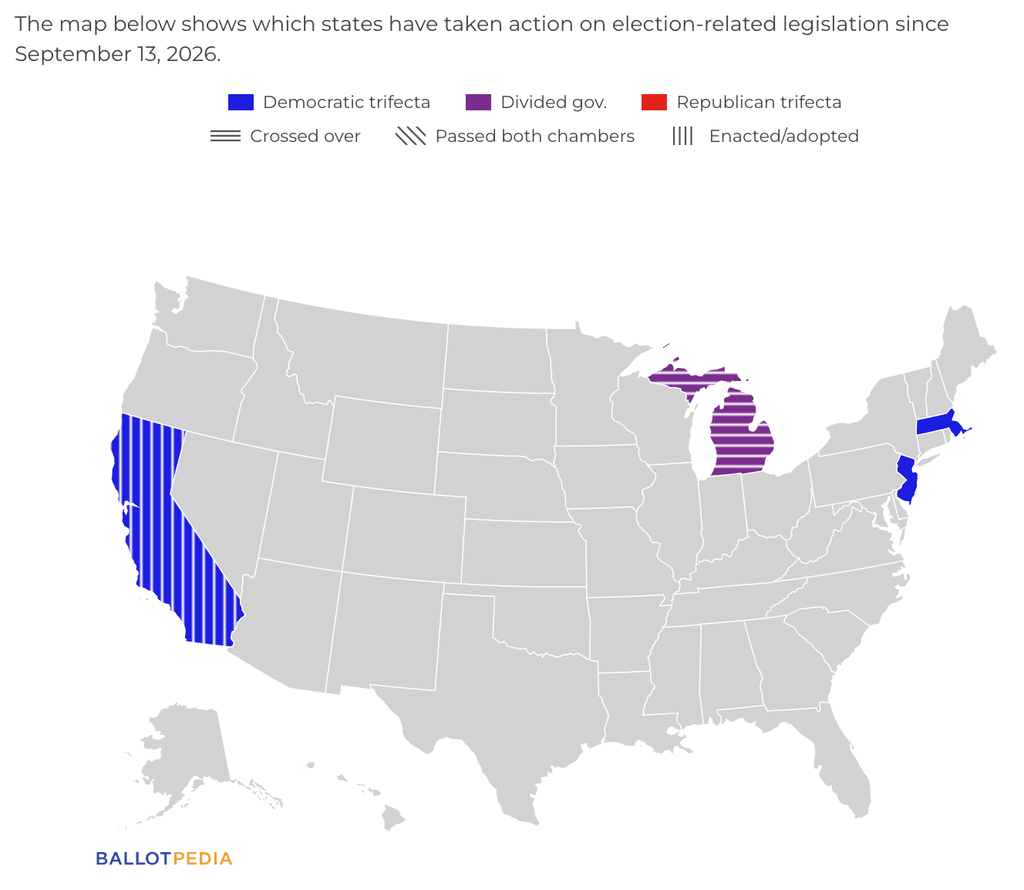
Lawmakers in four states acted on eight election-related bills last week. Five state legislatures are in regular or special sessions. Last week, four bills were enacted, no bills passed both chambers of a state legislature, and no bills were vetoed.
Of the bills acted on last week, seven (87.5%) are in states with Democratic trifectas, none are in states with Republican trifectas, and one (12.5%) is in a state with divided government. The most active bill categories last week were ballot measures (5), voter registration and list maintenance (4), and election types and stages (3).
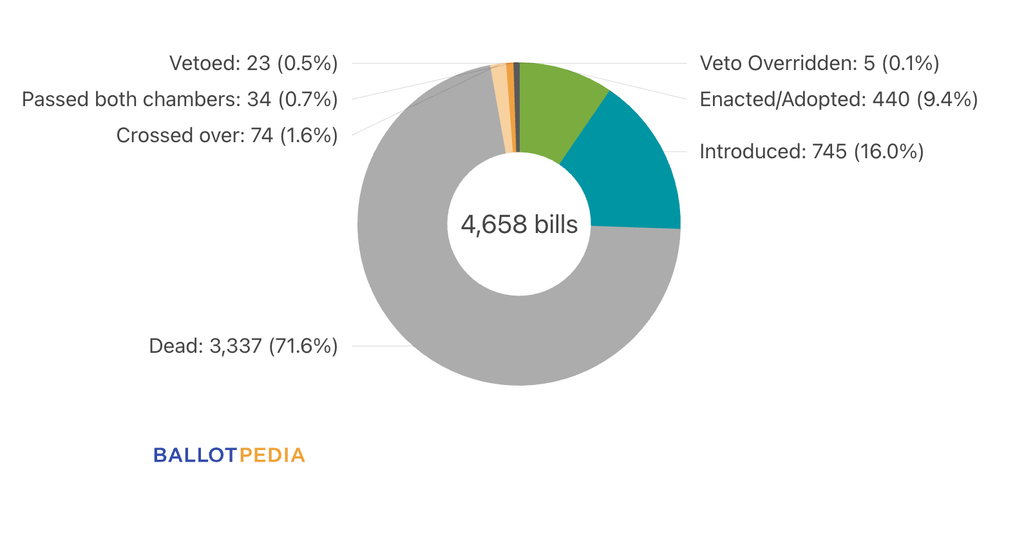
We are currently tracking 4,658 election-related bills across the country. The chart below breaks down the status of those bills based on where they stand in the legislative process:
Enacted bills
On Sept. 19, California Gov. Gavin Newsom (D) signed AB 282 into law. The bill makes it a felony to seize or assist in the seizure of ballots, election records, or certified voting technology before election results are certified. AB 282 also makes it a felony for any person with authority to direct such a seizure.
Three other bills were enacted or adopted last week:
Bills passing both chambers
No bills passed both chambers of a state legislature last week.
To see a full list of bills awaiting gubernatorial action, click here.
Vetoed bills
No bills were vetoed last week.
To see a list of all bills vetoed this session, click here.
All bills
The chart below shows all bills Ballotpedia is currently tracking, broken down by partisan sponsor
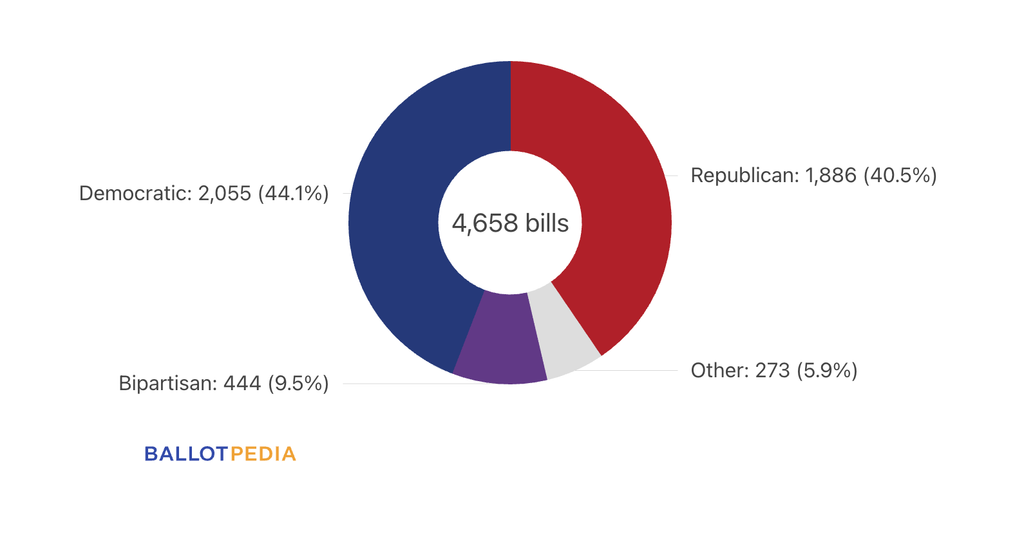
We are currently following 4,658 election-related bills, including bills carried over from the previous year.
- Trifecta status
- Democratic: 2,004 (43%)
- Republican: 1,651 (35.4%)
- Divided: 1,003 (21.5%)
- Partisan sponsorship
- Democratic: 2,055 (44.1%)
- Republican: 1,886 (40.5%)
- Bipartisan: 444 (9.5%)
- Other: 273 (5.9%)
In the news
On Sept. 21, the U.S. Court of Appeals for the Eighth Circuit upheld Missouri’s 2025 congressional map following a Sept. 17 hearing. As covered in the Sept. 15 edition of The Ballot Bulletin, the U.S. Supreme Court on Sept. 10 stayed a U.S. district court order in conflict with a Missouri Supreme Court ruling, which ordered that the 2025 map would not be in effect unless voters approve it. People Not Politicians, which submitted the signatures for the Nov. 3 veto referendum on the 2025 map, announced it would file an emergency appeal of the Eighth Circuit panel’s decision with the U.S. Supreme Court. Judges for the Eighth Circuit stayed implementation of the U.S. District Court for the Eastern District of Missouri’s order until Sept. 28 to allow for appellate review, meaning the 2022 map is still in use until that date.
On Sept. 17, residents of Missouri’s 5th Congressional District filed a lawsuit in the Cole County Circuit Court to remove state Sen. Rick Brattin (R) from the Nov. 3 ballot. In the complaint, the plaintiffs said the results of the Aug. 4 Republican primary Brattin won should be thrown out, since “a majority of the electorate that was eligible to participate in the August 4, 2026 Republican primary for the ‘Fifth District’ will not be eligible to vote in the November 3, 2026 general election for the Fifth District.”
Missouri election officials started sending mail-in ballots using the 2022 congressional districts to eligible voters on Sept. 18.
Here are other news stories from across the country:
- On Sept. 17, the U.S. District Court for the District of Vermont dismissed a lawsuit from the U.S. Department of Justice seeking access to Vermont’s unredacted statewide voter registration list. Judge Mary Kay Lanthier wrote that the government was not entitled to the state’s voter list under Title III of the Civil Rights Act of 1960. The DOJ said it would likely appeal the district court’s decision. For a comprehensive list of federal lawsuits seeking access to statewide voter lists, click here.
- On Sept. 15, the Virginia Department of Elections published guidance stating that individuals convicted of most felonies could register to vote and cast a ballot without any additional action. People convicted of three crimes — murder, voluntary manslaughter, and involuntary manslaughter — must still petition the governor to have their voting rights restored. The guidance came in response to a Jan. 22 federal court decision that held Virginia could not disenfranchise individuals convicted of felonies created after the passage of the Virginia Readmission Act of 1870.
- On Sept. 16, the North Carolina Court of Appeals upheld a 2024 law that transferred the power to appoint a majority of members to the state’s election boards from Gov. Josh Stein (D) to State Auditor Dave Boliek (R). Writing in the court’s 2-1 decision, Judge April Wood said that the law did not violate the separation of powers and that Stein did not prove his challenges to the law’s constitutionality beyond a reasonable doubt. Judge John Arrowood dissented, writing that “the enforcement of election laws is a core function and power of the Governor, who accordingly requires some degree of control over the State Board and County Boards as part of his constitutional duties.” Stein said he plans to appeal the decision to the North Carolina Supreme Court.
Policy spotlight: States are recruiting poll workers for November. Here's what they require.
The story below is adapted from a recent Ballotpedia News story by Andrew Bahl.
With the Nov. 3 general election approaching, states across the country are recruiting poll workers to serve on Election Day and during the early voting period.
Poll workers perform a variety of functions. They may help set up or break down polling places, greet and check in voters, issue and transport ballots, and perform other tasks to support the election.
States have different laws and requirements governing who may serve as a poll worker, how much they are paid, and what training they must complete.
Forty-two states require poll workers to be registered to vote. Forty-five require poll workers to be residents of the state, county, municipality, or precinct where they work.
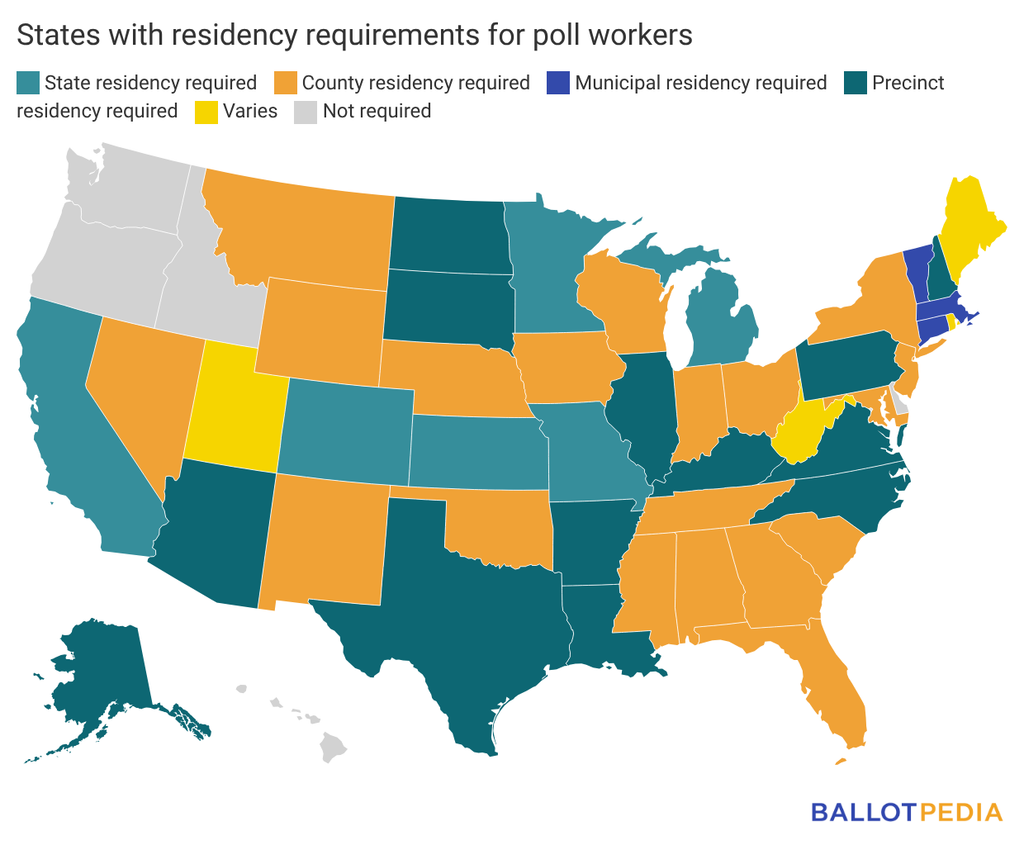
Of those 45 states:
- Six require poll workers to be residents of the state.
- Nineteen require poll workers to be residents of the county where they work.
- Three require poll workers to be residents of the municipality where they work.
- Thirteen require poll workers to be residents of the precinct where they work.
- In four states, the requirement varies by election type.
Among the states that require poll workers to reside in a specific local jurisdiction, some make exceptions due to poll worker shortages.
Forty-four states require poll workers to undergo some form of training, whether in person or online. Six states do not have a statewide training requirement, though some counties and municipalities in those states may have mandatory training of their own.
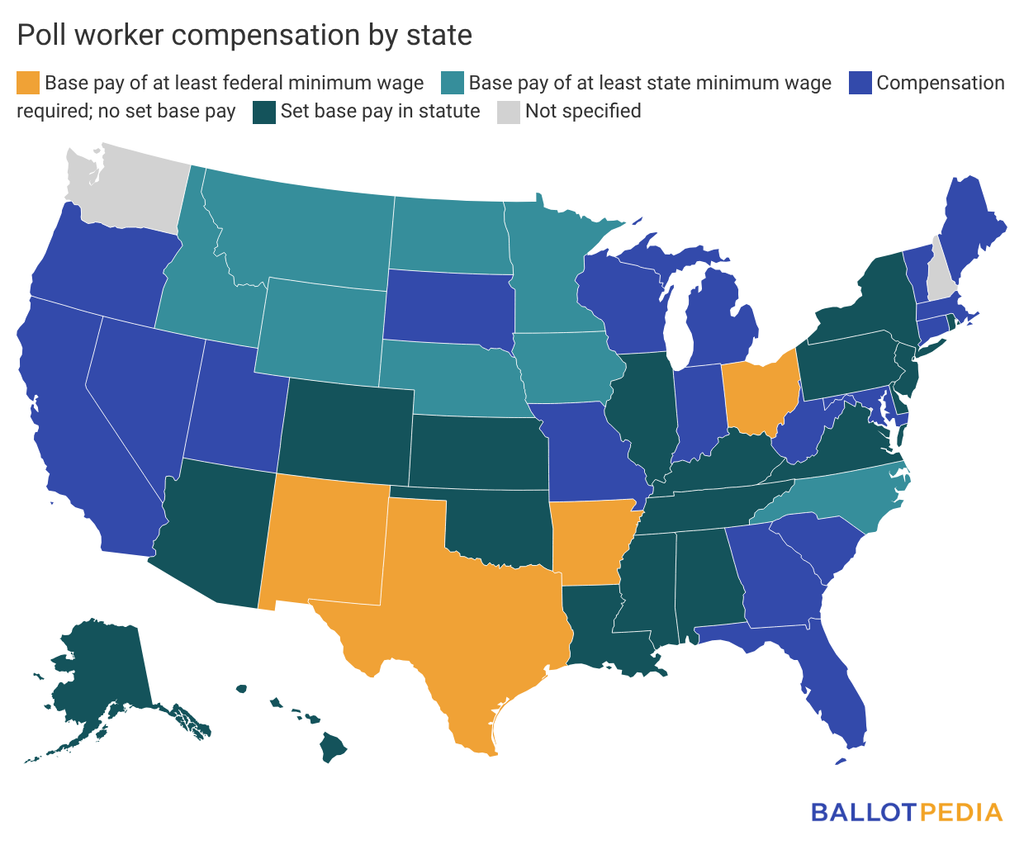
In 48 states, poll workers must be compensated for their work. In some of those states, poll workers may choose to serve as unpaid volunteers. Two states, New Hampshire and Washington, have no statewide pay requirements, though counties and municipalities may still elect to pay poll workers.
Eight states require poll workers to be paid at least their state's minimum wage, four states set the base pay rate at the federal minimum wage, and 18 states set a base pay rate in statute. Eighteen other states require compensation but do not prescribe a minimum rate.
In 2026, 11 states have enacted 14 bills related to election workers or volunteers. Idaho became the first state to allow individuals to serve as poll workers in lieu of jury duty. A county must identify a shortage of poll workers in order for the option to be offered to prospective jurors. Anyone who serves as a poll worker instead of reporting for jury duty is not paid.