


In 2026, the minimum wage will increase in 22 states and Washington, D.C. The increases range from $0.28 in Minnesota to $2.00 in Hawaii.
The 2026 increases come from state laws adopted in the past that provided for incremental increases and inflation adjustments, as well as new state statutes passed in 2025 in Rhode Island and Michigan.
Nineteen states will see increases take effect on Jan. 1, 2026. Increases in two states (Alaska and Oregon) and Washington, D.C. were set to take effect on July 1, and one was set to take effect in Florida on Sept. 30.
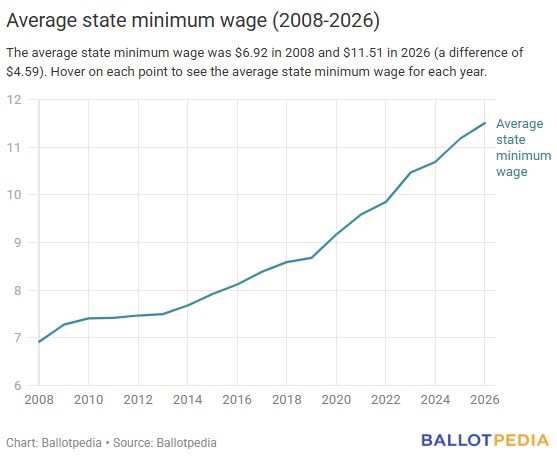
The average state minimum wage, including D.C., in 2026 will be $11.51, up from $11.18 in 2025. In states with increases, the minimum wage increased by an average of $0.70.
Highest and lowest state minimum wages:
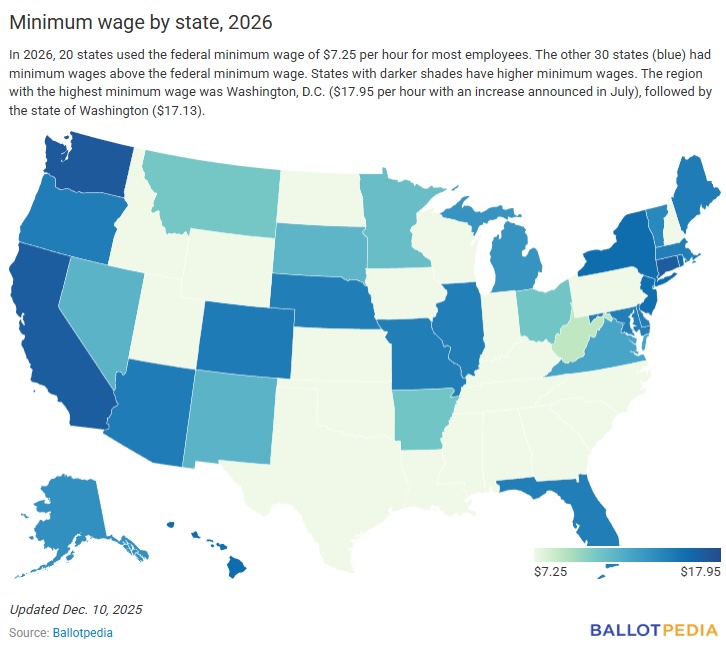
The highest state—or, in this case, federal district—minimum wage in 2026 will be in Washington, D.C., which had a $17.95 rate effective July 2025 and will see its next inflation-adjusted increase take effect in July 2026. The next three highest state minimum wages will be Washington ($17.13 per hour), Connecticut ($16.94), and California ($16.90).
The minimum wage is the lowest in Georgia and Wyoming, where the $5.15 minimum wages are superseded by the federal government’s $7.25 per hour requirement. Going into 2026, 20 states used the federal minimum wage of $7.25, and 30 states set state minimum wages above the federal minimum.
Largest and smallest increases in 2026:
Hawaii will have the largest increase in 2026, from its 2025 rate of $14.00, with a $2.00 increase on Jan. 1, for a 14.3% increase. The increase is mandated by a state law passed in 2022, which will increase the minimum wage to $18.00 per hour by 2028.
Minnesota will have the smallest increase in 2026, with the state’s minimum wage increasing by 28 cents. Due to a 2014 state law, the minimum wage in Minnesota has been adjusted for inflation each year since 2018.
Minimum wage ballot measures:
There were no state ballot measures concerning minimum wage in 2025.
In June 2026, Oklahoma voters will decide State Question 832. The initiative would increase the minimum wage to $12 per hour in 2027, $13.50 in 2028, $15 in 2029. After 2029, the yearly increase would be calculated according to the Consumer Price Index.
From 1996 to 2025, there were 32 ballot measures to increase state minimum wages. Voters approved 28 (87.50%) and rejected four (12.50%).