


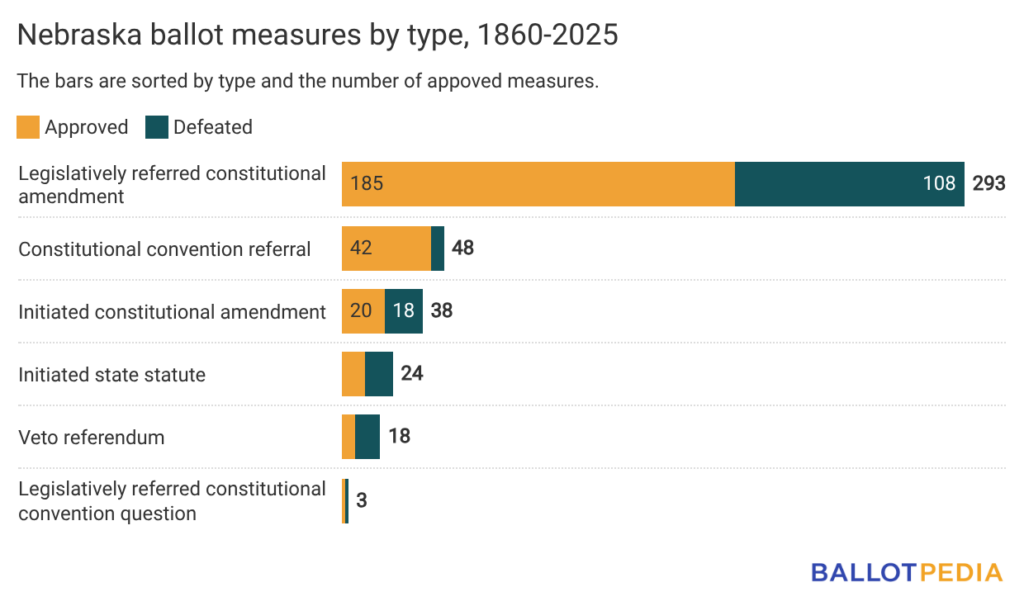
Since 1860, Nebraska voters have decided on 296 legislatively referred measures—nearly four times the number of citizen initiatives (80). Additionally, Nebraskans also decided on 48 constitutional convention referrals. Of the 424 total measures, 266 (63%) were approved, and 158 (37%) were defeated.
Nebraska adopted the initiative process in 1912, with Amendment 1 approved by a margin of 93% to 7%. It authorized citizen-initiated constitutional amendments and state statutes, as well as veto referendums. The number of signatures required to qualify initiated constitutional amendments, state statutes, or veto referendums for the ballot is based on the total number of registered voters at the time of the signature deadline.
Currently, Nebraska’s unicameral legislature, which itself was consolidated by an initiated constitutional amendment in 1934, can place a constitutional amendment or convention question on the ballot via a 60% vote.
Referred measures, including those placed on the ballot by a constitutional convention, saw better success at the ballot box than citizen-initiated measures. Referred measures were approved 67% of the time, while 46% of initiated measures were approved.
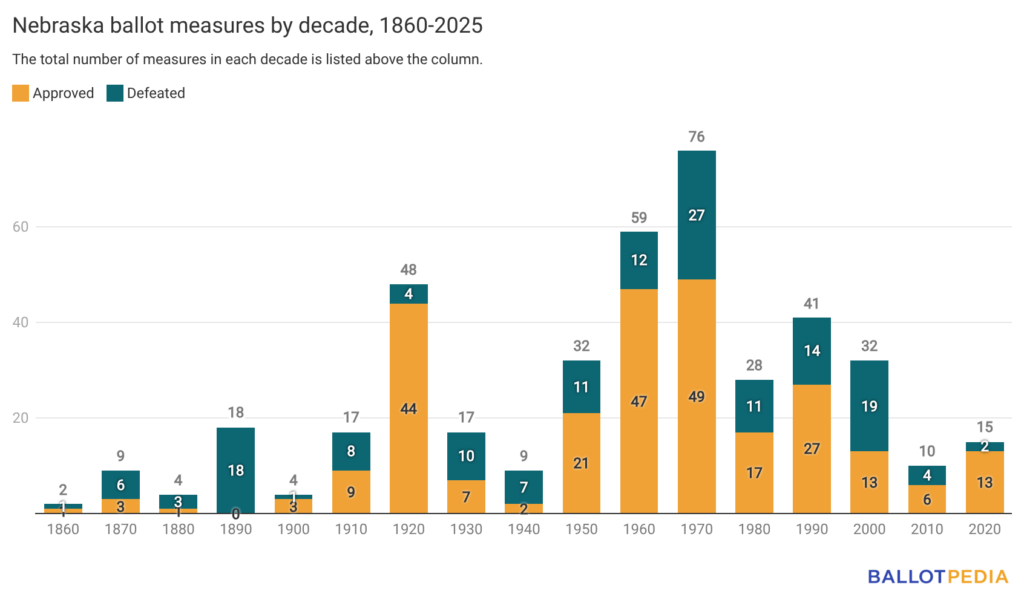
Since 1860, the average number of measures per decade has been between 24 and 25. The decade with the most ballot measures was the 1970s, with 76. Forty-nine measures (64%) were approved, and 27 (36%) were defeated. The decade that had the highest approval rate was the 1920s, which featured 48 measures—44 (92%) were approved, including 41 amendments referred to the ballot by the 1919 constitutional convention. The decade with the lowest approval rating was the 1890s. None of the 18 measures were approved.
Nebraska ballot measures have addressed 122 unique topics, with some measures addressing multiple topics.
Suffrage and direct democracy
Nebraska voters voted on three amendments granting women's suffrage in 1871, 1882, and 1914, but they were all defeated. Voters approved it in 1920, one month after the ratification of the 19th Amendment. In 1918, Nebraska voters approved an amendment, with support from 71% of voters, changing the voting requirement from allowing people of foreign birth who had declared an intent to become citizens to vote to requiring U.S. citizenship at least 30 days before an election.
In 1920, voters approved an amendment that changed the vote requirement for amendments to a simple majority vote and at least 35% of those voting in the election for any office. An initiative in 1996 tried to change the basis for the initiative signature requirement from registered voters to the number of votes cast in the last gubernatorial election, but it was defeated. In 2000, voters defeated an amendment that would have required two separate votes at two separate elections for a constitutional amendment to be ratified.
State government salaries and term limits
The most common topic was salaries of government officials, with 30 measures addressing it—17 were approved, and 18 were defeated.
Nebraska voters adopted state legislative term limits in 2000 with the approval of Initiative Measure 415. It passed with a margin of 56% to 44%. In 2012, Nebraska voters defeated an amendment with 65% opposing it that would have increased the consecutive term limits for Nebraska legislators from two terms (eight years) to three terms (12 years). In 2026, Nebraska voters will be deciding on a legislatively referred amendment that would adopt the same increase to the term limits.
Social issues
In 2016, Nebraska voters decided on a veto referendum to repeal the death penalty ban implemented by Legislative Bill 268 and reinstated the death penalty.
In 2024, Nebraska voters decided on competing abortion measures—Initiative 434 and Initiative 439. Initiative 434 was approved with 55% of the vote. It prohibited abortions after the first trimester unless necessitated by a medical emergency or the pregnancy is a result of sexual assault or incest. Initiative 439 was defeated with 51% voting against it. It would have established a constitutional right to abortion.
Nebraska voters have decided on 20 measures related to gambling, including a measure that would have authorized gambling laws via ballot initiative and a measure that authorized gambling on racehorses.
The inventory of Nebraska statewide ballot measures is part of Ballotpedia's Historic Ballot Measure Factbook, which will document nearly 200 years of direct democracy in the United States. This ongoing research effort will provide an unparalleled resource for researchers, reporters, and the voting public on how ballot measures have evolved, the issues they've covered, and the role they have played in our civic life.
Additional reading: