


While the 2026 election season is a busy one — with races for governor, U.S. Senate, and U.S. House on the ballot — voters in most states will not be casting ballots for mayor, city council, or school board this year.
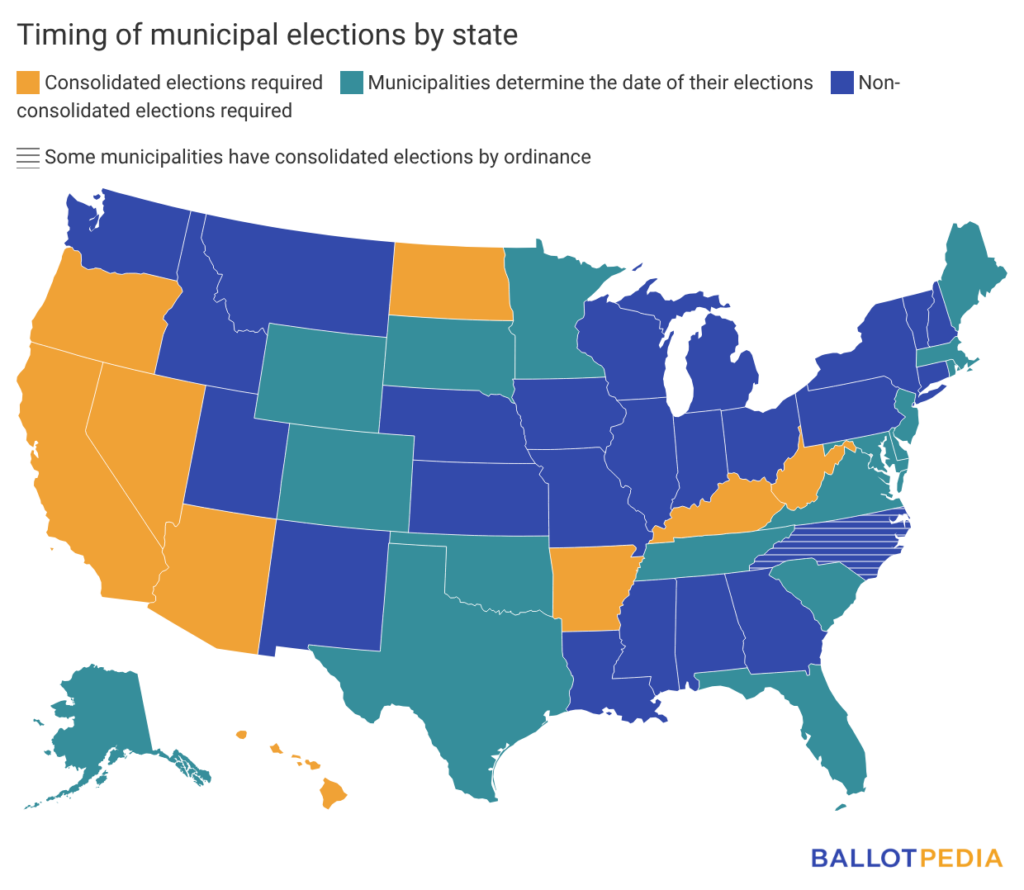
Each state has different rules dictating when general elections for municipal offices and school boards are held. Some states set a particular date for these elections, while others allow municipalities to pick their election day.
Nine states mandate consolidated elections for municipal offices, which means they require municipal elections to take place alongside a statewide primary or general election. Twenty-four states require municipal elections to be held at times other than statewide elections, and 17 states allow municipalities to choose their election date.
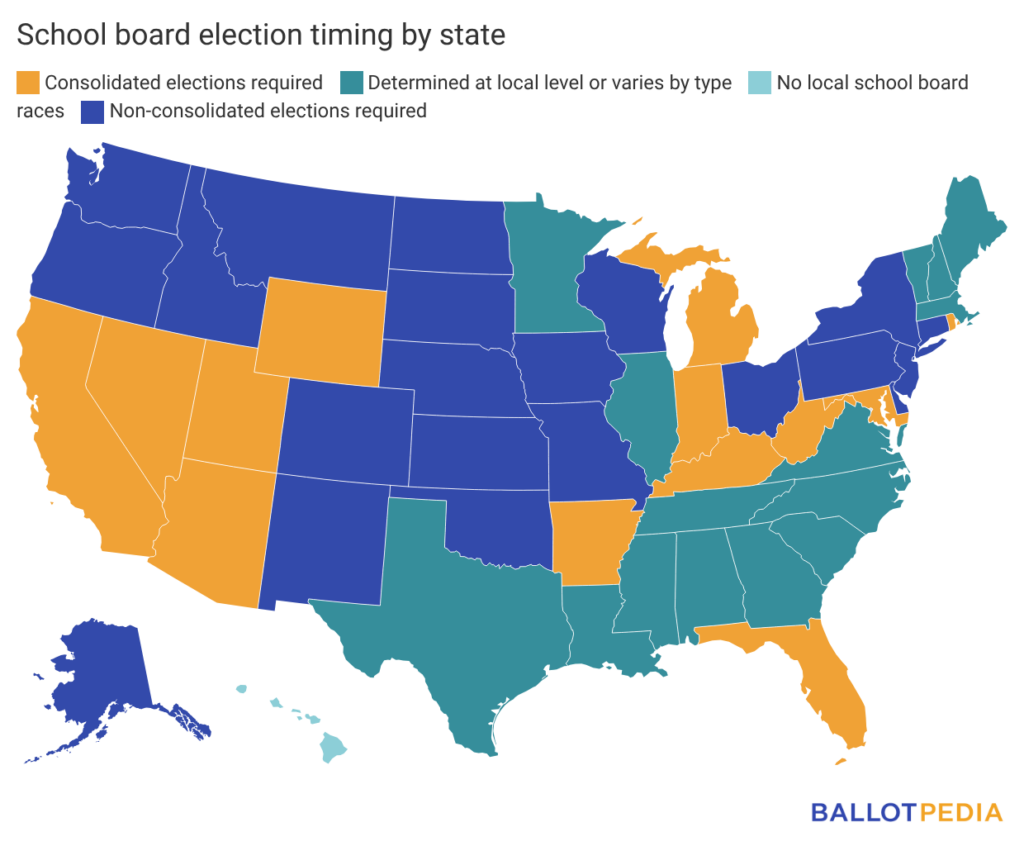
Thirteen states require consolidated elections for school board races, while 21 states require school board elections to be held on a different election date. In 15 states, school board election timing is determined at the local level or varies by type of school district., while Hawaii does not hold local school board elections.
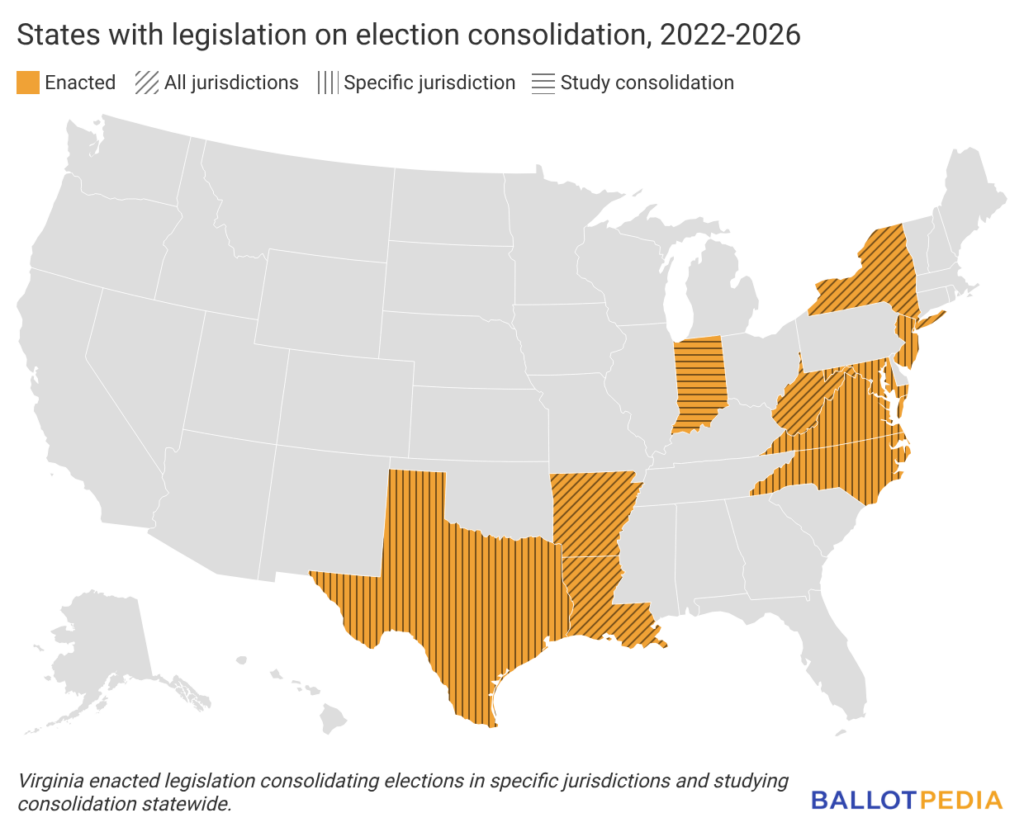
Some states have moved to require these local elections to take place at the same time as statewide elections.
Since 2022, four states — Arkansas, Louisiana, New York, and West Virginia — have enacted laws mandating the consolidation of elections statewide. Arkansas (school board elections) and West Virginia (municipal elections) are the most recent states to do so, enacting their consolidation laws in 2025.
Five states — Maryland, New Jersey, North Carolina, Texas, and Virginia — have passed laws mandating election consolidation in some jurisdictions. And two states, Indiana and Virginia, have passed laws requiring that statewide consolidation be studied.
Proponents argue that consolidating elections saves taxpayer money, improves voter turnout, and ensures that those voting in local elections represent the broader electorate. “We’ve got municipalities where we’re having a fraction, a mere fraction of voters showing up to vote because they just have no idea there’s an election,” said West Virginia Sen. Mike Stuart (R) during a committee hearing on consolidation in 2025.
Opponents argue that consolidating elections makes it harder for local races to get attention, makes ballots longer, and makes it harder for candidates affiliated with minority parties to win. "Do you think that your local school board member is going to effectively be able to run a GOTV campaign with getting donors and volunteers in comparison to the presidential race?” Melissa Stiehler, advocacy director for the Kansas group Loud Light, said at a committee hearing on a Kansas election consolidation bill in 2026.
In 2026, 31 states have introduced 74 bills related to election alignment. Legislators in Arizona have advanced a constitutional amendment that, if enacted, would require election consolidation. Currently, state statute mandates that municipal and school board elections must be held alongside statewide elections, but the Arizona Supreme Court has ruled that municipalities with other dates in their charters are exempt.
Four states have adopted legislation dealing with election alignment in 2026. On Feb. 23, South Dakota Gov. Larry Rhoden signed a bill giving municipalities the option of holding municipal elections only in even years, rather than annually. New Mexico legislators passed a constitutional amendment that, if approved, would repeal a requirement that school district elections be held on different days than partisan elections. It will appear before voters in November 2026.
In 2025, seven states enacted 10 bills dealing with election alignment. In 2024, four states enacted four such bills, and in 2023, 15 states enacted 30 bills.