


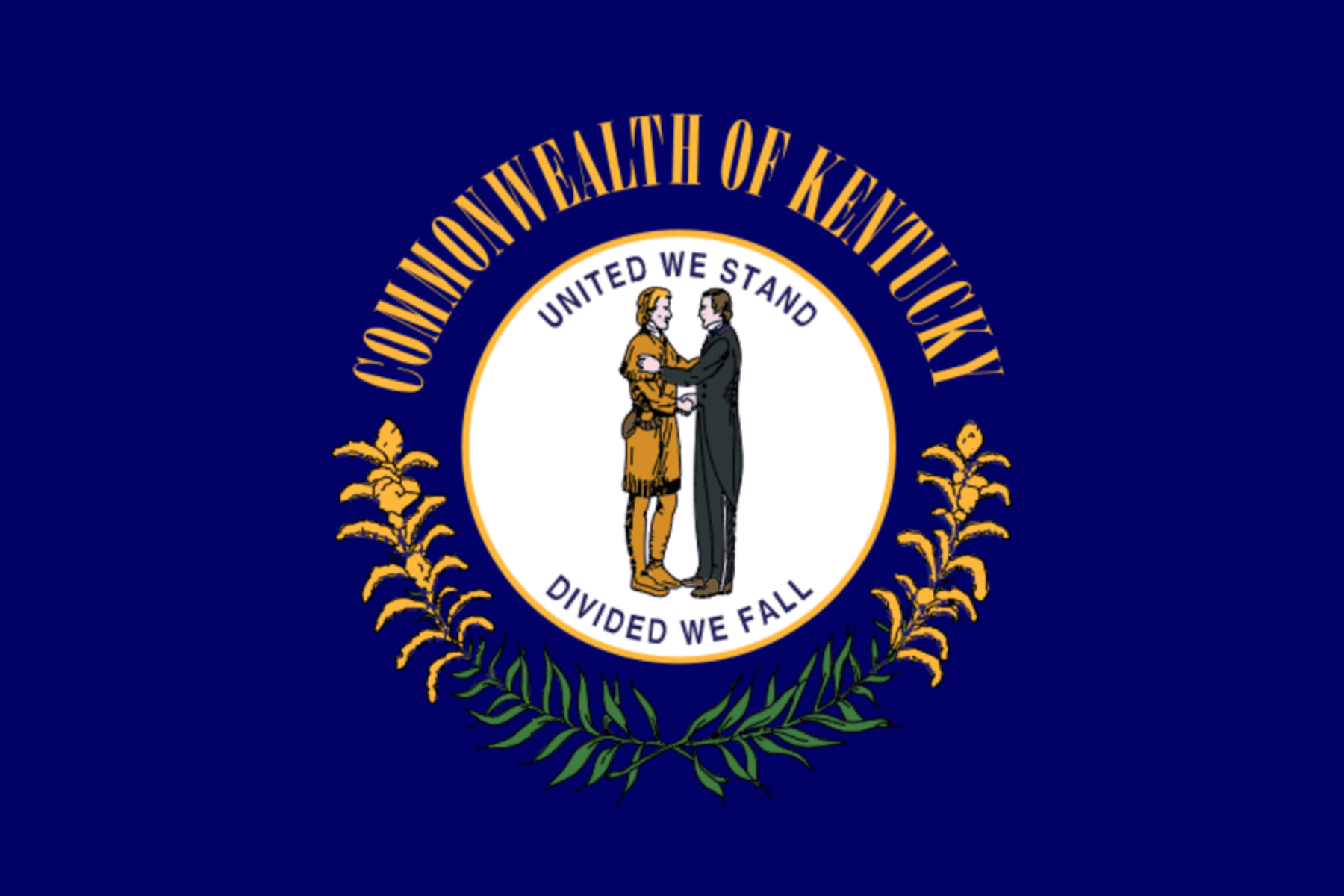
The Kentucky General Assembly adjourned on April 15 after overriding four of Gov. Andy Beshear’s (D) vetoes on election-related bills. Beshear signed four other pieces of election legislation.
Kentucky is one of two states, along with Kansas, where one party has a veto-proof majority in the legislature, and the other party holds the governor's office. It is one of 11 states with a divided government. The Kansas Legislature overrode Gov. Laura Kelly’s (D) veto of one election administration bill this year.
One of the bills enacted via veto override was HB 139, an omnibus bill making numerous changes to Kentucky election laws.
Under current law, Kentucky voters who cannot obtain a photo ID may present certain types of ID and sign an affidavit to vote. The bill removes food stamp cards, Social Security cards, and Supplemental Nutrition Assistance Program cards from the list of IDs that can be used if a person can’t obtain photo identification. It also removes the option for election workers to affirm the identity of individuals they personally know.
The legislation also authorizes the State Board of Elections to enter into data-sharing agreements with the federal government to identify noncitizens on the voter rolls and prohibits the use of voting equipment that uses nonhuman-readable codes, such as barcodes.
The Republican-controlled Senate and House both approved HB 139 along party lines. Beshear vetoed the bill on April 10. The House voted 80-20 to override the veto on April 14, with the Senate following suit later that day in a 32-6 vote.
Other bills enacted via veto override were:
- HB 607, which establishes redistricting criteria for consolidated local governments.
- HB 757, which makes changes to the process for filing a petition to challenge a tax levy.
- SB 59, which prohibits school districts from using local, state, and federal tax dollars and resources to advocate on public questions that appear on the ballot.
Among the bills Beshear signed were:
- HB 136, which allows a candidate or officeholder to use campaign funds to purchase security measures for themselves, their family members, and their employees.
- SB 195, which requires that the two voters witnessing a candidate’s declaration and signing their petition for office cannot be participants in the Safe at Home Program.
Kentucky enacted three election-related bills in 2025, nine in 2024, and three in 2023. There were no veto overrides on election bills in Kentucky in 2025, 2024, and 2023. Legislators introduced 57 bills in 2026 and 23 bills in 2025.
Aside from the veto legislators overrode in Kansas and the four in Kentucky, there have not been any other veto overrides on election administration bills this year. There were two in 2025, both in Kansas.