

Tag: campaign finance
-
Minnesota enacts omnibus elections and campaign finance bills in 2026 session
The Minnesota Legislature adjourned its 2026 legislative session on May 17 after passing two election-related bills, both of which Gov. Tim Walz (D) signed into law. HF 4240 is an omnibus bill making changes to numerous areas of election law, including: The Minnesota Senate passed the final version of the bill 36-28 on May 13,…
-
Hawaii legislators advance bill to restrict corporate political activity
On May 8, Hawaii legislators sent a bill to Gov. Joshua Green (D) that would prohibit corporations from spending money or participating in election or ballot measure activities. SB 2471 would amend state law to modify the powers given to corporations. The bill establishes that corporations have artificial-person powers, defined as the ability to carry…
-
Maine updates campaign finance laws, passes one other election-related bill in 2026
The Maine Legislature adjourned its 2026 regular session on April 29 after enacting two election-related bills, both of which were signed by Gov. Janet Mills (D). One of those bills was LD 2000, which requires party committees to report all expenditures made to influence a campaign. It also changes various thresholds for when candidates must…
-
Oregon enacts campaign finance changes, four other election bills in 2026
The Oregon Legislature adjourned its regular session on March 8 after enacting five election-related bills, all of which Gov. Tina Kotek (D) signed in March and April. Among those bills were two campaign finance measures. HB 4017 allows campaign funds to be used for reasonable security-related expenses, including security and alarm systems or monitoring services…
-
Twenty-five states weigh legislation on foreign funding in elections
Lawmakers in 25 states are considering new state laws or constitutional amendments so far this year related to foreign funding in elections. Federal law prohibits federal, state, and local candidates from soliciting, directing, or receiving contributions from individuals who are not citizens or permanent residents of the United States. The law also bans contributions from…
-
DCCC raised almost twice as much as NRCC in August
As of Aug. 31, 2025, the end of the most recent party committee campaign finance filing period, the three committees associated with the Democratic Party have raised a cumulative $221 million and spent $210 million in the 2026 election cycle, while the three committees associated with the Republican Party have raised $259 million and spent…
-
A look at campaign fundraising in North Carolina's state supreme court elections

In 2026, incumbent North Carolina Supreme Court Justice Anita Earls (D) will be up for re-election. According to the North Carolina Board of Elections, as of September 11, 2025, Earls has raised over $585,000, while state Rep. Sarah Stevens (R), the only other candidate who has filed, has raised almost $141,000. In elections going back…
-
Alaska voters may decide on campaign finance and ranked-choice voting repeal ballot initiatives in 2026
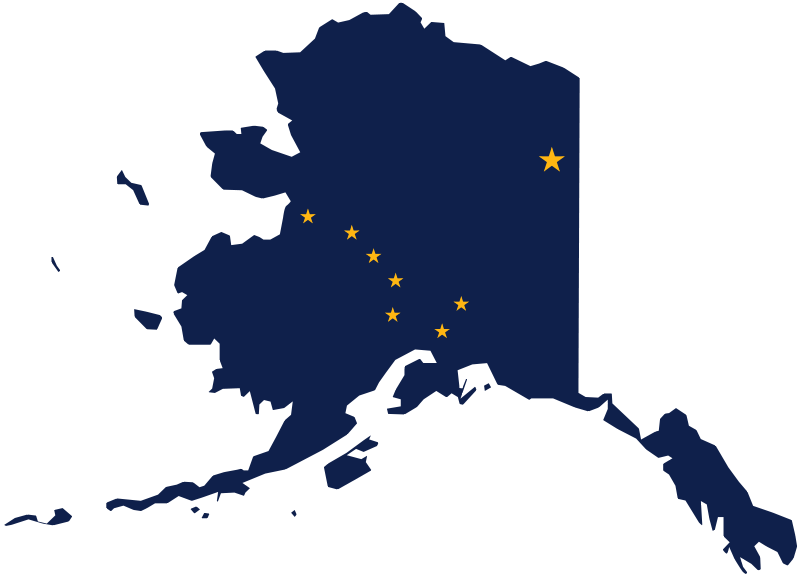
Alaska voters may decide on two citizen-initiated measures in 2026—one measure that would enact new campaign finance limits, and another that would repeal top-four ranked choice voting in the state. Both measures are citizen-initiated ballot measures, meaning they were proposed by citizens rather than the state legislature. In Alaska, citizens have the power to initiate…
-
Supreme Court and FEC distinguish campaign finance regulations for ballot measures from candidate elections, including for foreign spending
Campaign finance rules for ballot measures differ from those for candidate elections. "Referenda are held on issues, not candidates for public office," wrote the U.S. Supreme Court in 1978 (First National Bank of Boston v. Bellotti). The court has held that spending on ballot measure campaigns is similar to issue advocacy in the lawmaking process.…
-
Democratic party committees hold fundraising edge over Republican party committees
As of April 30, 2024, the end of the most recent party committee campaign finance filing period, the three committees associated with the Democratic Party have raised a cumulative $519 million and spent $392 million for the 2024 election cycle, while the three committees associated with the Republican Party have raised $430 million and spent…