

Category: State
-
Incumbent Vicente Gonzalez Jr. (D) and Eric Flores (R) run for Texas' 34th Congressional District in toss-up election

Incumbent Vicente Gonzalez Jr. (D), Eric Flores (R), Eddie Espinoza (G), and Chris Royal (L) are running in the general election for Texas' 34th Congressional District on Nov. 3. During mid-decade redistricting, the district was redrawn to one that President Donald Trump (R) would have won in 2024, 54.7%-44.5%, compared to 51.8%-47.3% under the old…
-
Heading into the midterms, Democrats have flipped 13 Republican state legislative seats in special elections since President Donald Trump (R) took office
Democrats have gained a net 13 state legislative seats in special elections since January 2025 — all flipped from Republican to Democratic control — while Republicans have not flipped any seats in the other direction during President Donald Trump's (R) second term. The pace is comparable to Trump's first term: Democrats gained a net 11…
-
Nearly two-thirds of 2026 legislative referrals were driven by one political party

State legislatures in 32 states referred 109 constitutional amendments and statutes to statewide ballots in 2026. Nearly two-thirds (63%) of those referrals reflect partisan divisions in the legislative votes that sent them to the ballot. Ballotpedia analyzed how Democrats and Republicans voted on each referral. Of the 109 legislatively referred measures on the ballot this…
-
Ohio leads states in number of local ballot measures on data centers for 2026

Voters in eight states—Ohio, Illinois, Wisconsin, Kansas, California, Michigan, Nevada, and Florida—will decide on 38 data center-related ballot measures in 2026. The ballot measures span 35 jurisdictions in 30 counties. Ohio accounts for 20 measures across 17 jurisdictions, more than half of the total. Illinois has seven measures, including four in Madison County. The remaining…
-
Majority control at stake in Arizona Senate elections on Nov. 3
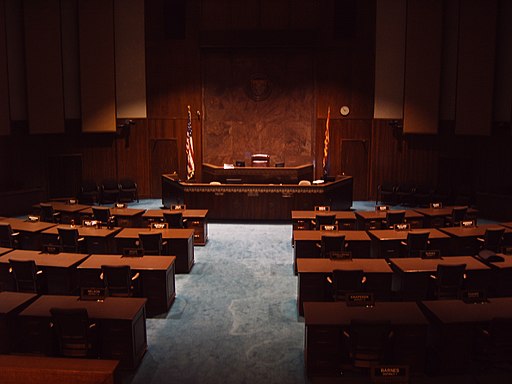
Elections for the Arizona State Senate will take place in 2026. The general election is on November 3, 2026. Arizona Public Media's Nick Rommel wrote, "While Republicans’ advantage in the Senate has remained fairly constant for the last decade, Democrats have chipped away at their majority in the House. Republicans clawed back a slightly larger…
-
Primaries in Providence, Rhode Island, highlight information that endorsements can provide voters

Across Rhode Island on Sept. 9, Democratic incumbents lost the gubernatorial primary and primaries in several of the state's largest cities. Democratic voter registration outpaces Republican registration in Rhode Island by 24 percentage points — meaning that in some heavily Democratic areas, these primaries might in effect decide who wins the general election. Endorsements are…
-
Washington Supreme Court overturns natural gas initiative approved by voters in 2024

On Sept. 17, 2026, the Washington Supreme Court overturned a voter-approved initiative on natural gas regulations, ruling it violated the state constitution's single-subject rule. The measure — known as Initiative 2066 — was approved on Nov. 5, 2024, and concerned natural gas regulations, prohibiting legal restrictions or penalties on access to natural gas and requiring…
-
Colorado voters will decide on 14 ballot measures in 2026

On Nov. 3, Colorado voters will decide on 14 ballot measures, including seven state statutes, six constitutional amendments, and one combined constitutional amendment and state statute. Of the proposed state statutes, six were led by citizen initiatives, and one was a legislative referral and would require a simple majority vote to be approved: Of the…
-
Nevada attorney general's role in suing the federal government a major theme in election between Nicole Cannizzaro (D) and Adriana Guzmán Fralick (R)

Nicole Cannizzaro (D) and Adriana Guzmán Fralick (R) are running in the general election for attorney general of Nevada on Nov. 3. Incumbent Aaron Ford (D) is term-limited and running for governor of Nevada. A major theme heading into the election is the attorney general's role in suing the federal government. The Nevada Independent's Eric…
-
ISS sues to block Oklahoma proxy advisor law

Institutional Shareholder Services (ISS), a proxy advisory firm that provides voting recommendations to institutional investors, sued to block an Oklahoma law requiring proxy advisors to provide additional financial analysis when recommending votes against company management. ISS filed the lawsuit against Oklahoma Attorney General Gentner Drummond (R) over HB 4429, which Gov. Kevin Stitt (R) signed…